Clean a House After a Flood: 7 Steps Once Water Recedes
Floodwater gone but mud everywhere? Follow seven clear steps to dry walls and floors, clear wiring safely and spot foundation cracks.
Published
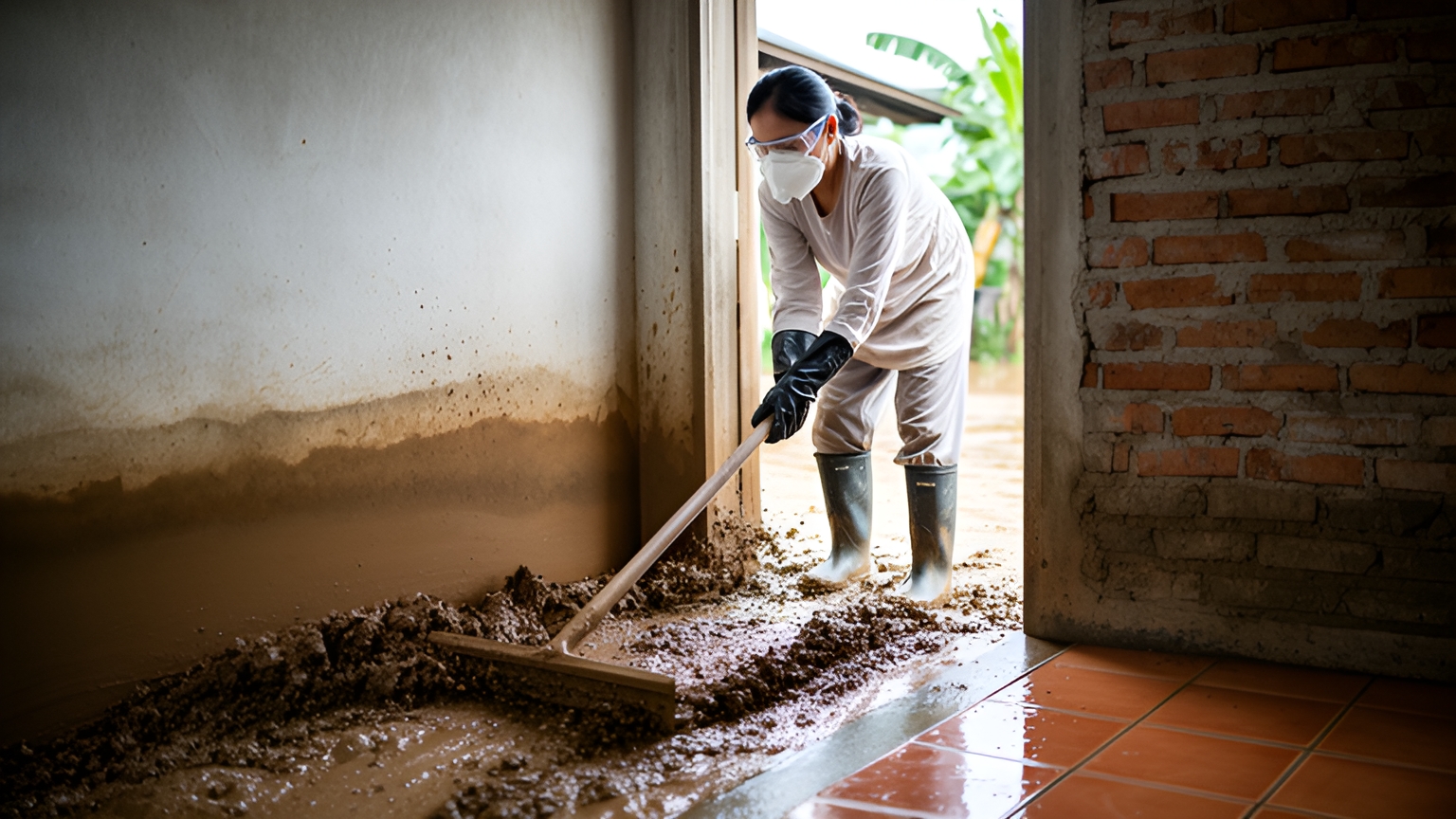
When the water goes down, the real work begins. To clean house after flood damage, work in a clear order: safety, power, mud, washing, drying, mould, then the foundation. This guide walks you through seven steps a family can do with buckets, shovels, brushes and common cleaners. It also shows where you must stop and call a professional. Conditions differ by country and place, so check local rules and ask an experienced local builder or your local authority if you are unsure.
Before You Start: Protect Yourself
Floodwater in many parts of Southeast Asia carries sewage, farm chemicals, fuel and dead animals. The mud it leaves behind is not clean soil. Treat everything it touched as dirty until you wash it.
Wear this gear for every step:
- Rubber boots or sturdy closed shoes with thick soles, because mud hides nails, glass and broken tiles
- Thick rubber gloves, with work gloves over them for carrying broken items
- Safety glasses or goggles when scrubbing, spraying or breaking plaster
- A well-fitted dust mask, ideally an N95 type, when working with mould or dry dust
- Long sleeves and long trousers
Cover any cuts with a waterproof plaster. Wash your hands with soap and clean water before eating or drinking. Keep children and animals out of the house until it is cleaned. Take photos of the damage before you move anything, in case you need them for insurance or local support.
7 Steps to Clean House After Flood Water Recedes
Step 1: Check the Building Before You Go In
Look from outside first. Do not enter if walls lean, the roof sags, the floor has sunk, or you smell gas. Look for large new cracks around doors and windows, and for soil washed away from under the walls. If you see any of this, stay out and ask a builder or engineer to check it. Open doors slowly, as they may stick or something may fall.
Step 2: Make the Electrics Safe
Do not touch any switch, socket or appliance while you are standing in water or on wet ground. If the main switch or breaker box is in a dry place and you can reach it while standing on a dry surface with dry hands, turn the main power off. If it is wet or you are unsure, leave it and call an electrician or your power company.
Mud inside sockets, switches and wall wiring is dangerous. Do not try to wash it out and turn the power back on. Sockets and switches that were under water usually need to be checked, cleaned or replaced by a qualified electrician before power returns. The same applies to water pumps, refrigerators and fans that were soaked. A check visit may cost roughly US$20 to US$100 depending on the country and the work, but it is far cheaper than a fire or a shock. If you use a generator, keep it outside, away from doors and windows, because its fumes can kill.
Step 3: Shovel Out Mud and Remove Wet Items
Start while the mud is still soft. It is much harder to remove once it sets. Use a flat shovel and a rubber squeegee or stiff broom to push mud out the door, working from the back of the house towards the front. Lift with your legs and fill buckets only halfway so they are not too heavy.
Carry out soaked mattresses, pillows, cardboard, foam sofas and rugs. These hold dirty water and grow mould fast, so most of them cannot be saved. Throw away food that touched floodwater, including sealed bags of rice or flour. Wooden furniture and plastic items can often be cleaned.
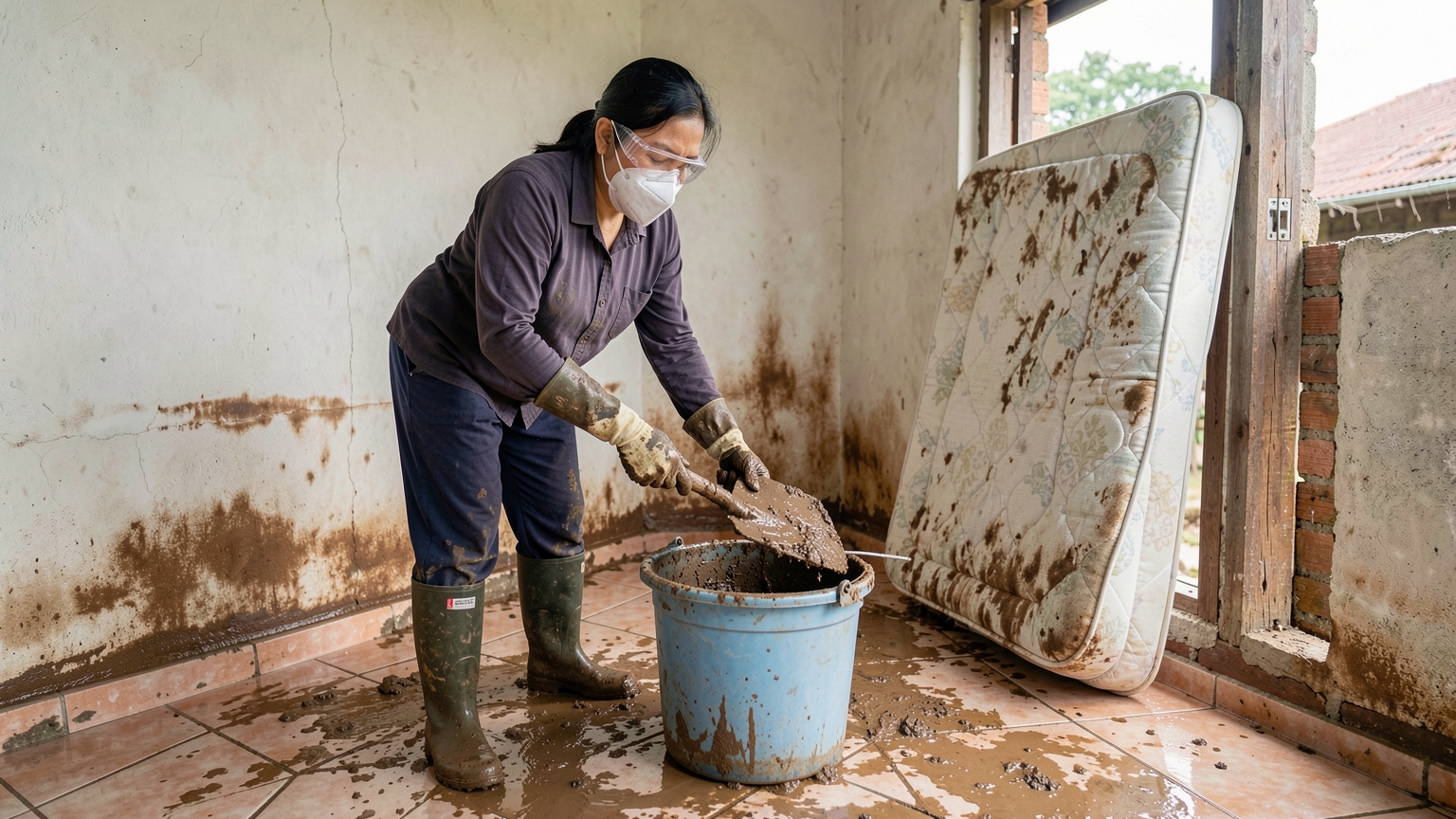
Pile mud and rubbish away from drains so you do not block them for the next heavy rain.
Step 4: Wash Floors and Walls
Hose or bucket-wash floors and walls from the top of the water line down. Scrub with a stiff brush, clean water and ordinary detergent or soap. Pay attention to corners, door frames and the bottom of walls where mud collects.
For cement, tile and brick, you can follow with a disinfecting wash. A common mix is about one cup of household bleach in a bucket of 4 to 5 litres of water, but always follow the label on your product. Never mix bleach with ammonia, vinegar or toilet cleaners, as this makes toxic gas. Keep doors and windows open while you work.
If you have plasterboard or gypsum walls, or soft wooden panels, that were soaked, they usually cannot be dried well. Cut them out about 30 to 50 centimetres above the water line. Wear goggles and a mask for this.
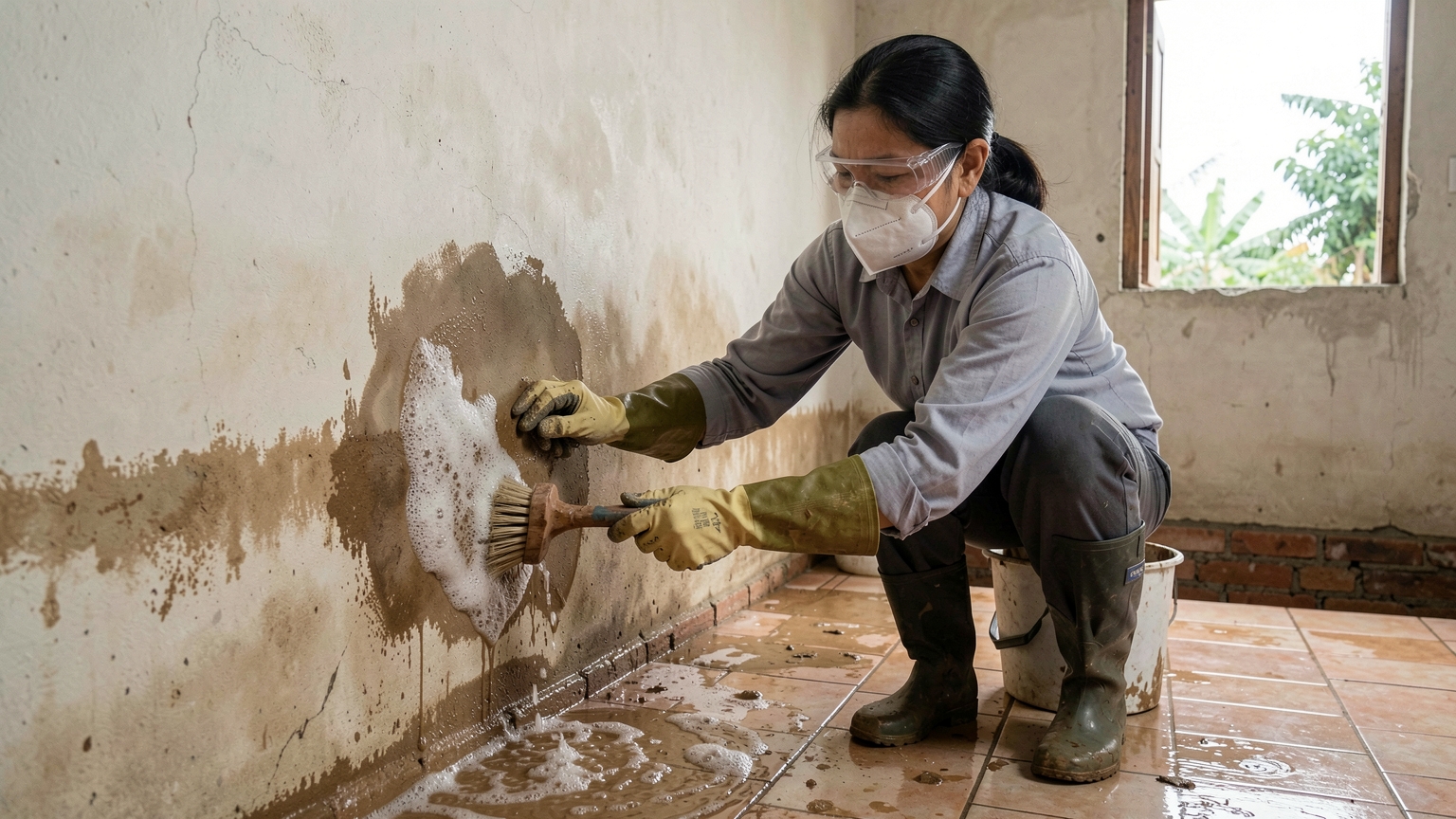
Rinse with clean water after washing so the floor is not slippery.
Step 5: Dry Walls and Floors
Drying is the most important step, and it is slow in humid weather. Open every door and window on dry hours of the day. Close them when rain comes so you do not soak the house again. Use fans only after an electrician says the wiring is safe, or run them from a safe, dry outlet with a working safety switch.
Helpful tips:
- Take off skirting boards and lower cupboard backs so air reaches the wall
- Lift floor mats, vinyl and wet carpet; they trap water underneath
- Prop wooden furniture up on bricks so air moves under it
- Brick and concrete walls may take several weeks to dry fully
Do not paint, tile or plaster over walls that still feel cool and damp. The new finish will peel and mould will grow behind it.
Step 6: Treat Mould
Mould often shows as black, green or white spots within a few days. On hard surfaces such as tile, concrete and painted brick, scrub it with detergent and water, then wipe with the diluted bleach mix from Step 4 or a vinegar wipe. Use one cleaner at a time, rinse between them, and never mix them. Wear gloves, goggles and a mask, and keep the room well aired.
Soft items with mould, such as mattresses, ceiling boards and fabric, are usually best thrown away. If mould covers a large area, keeps coming back, or anyone in the house has asthma or breathing problems, ask a professional cleaner to handle it.
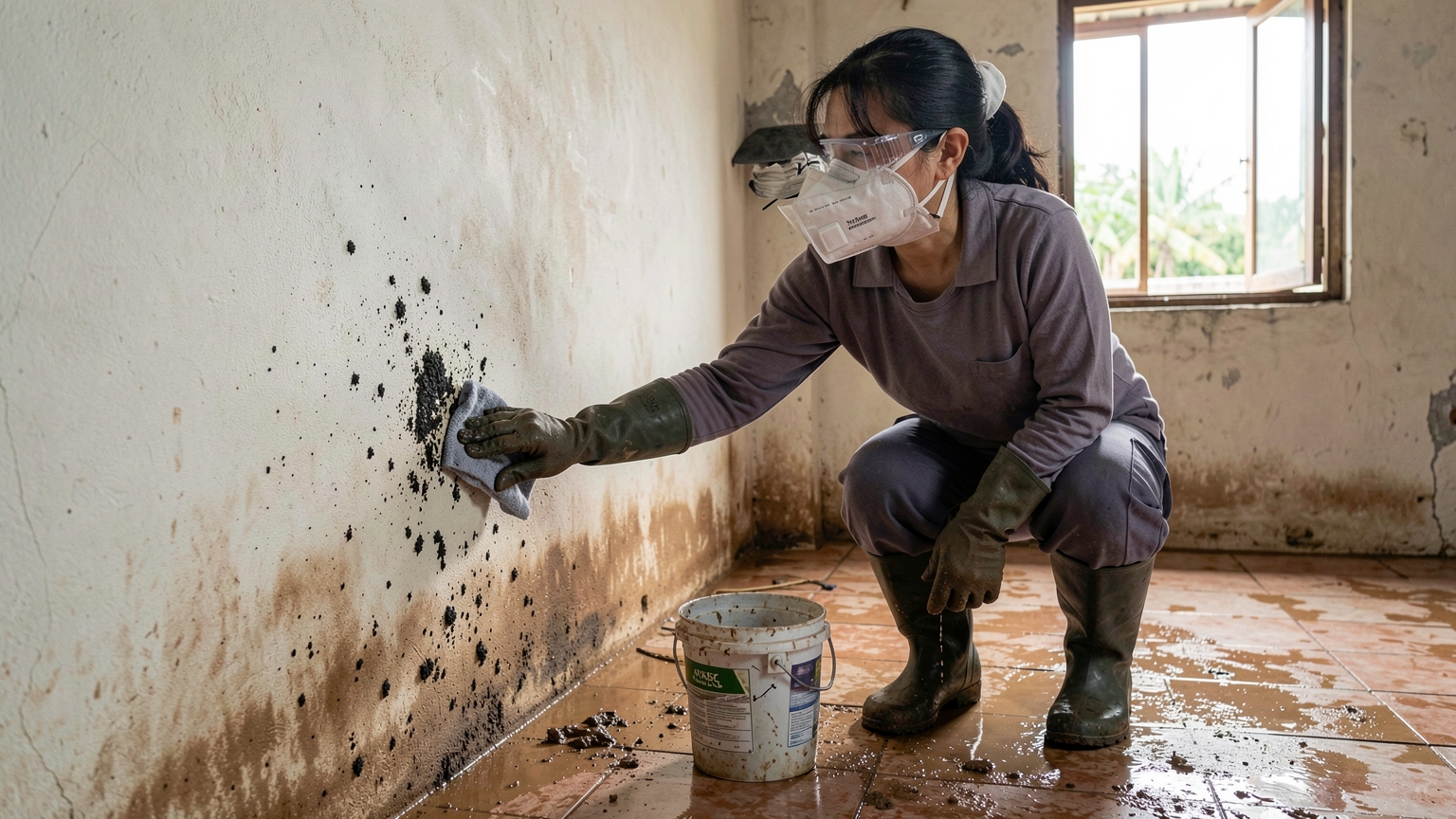
Check the same spots again every few days while the house is drying.
Step 7: Check the Foundation for Cracks
When the mud is gone, walk slowly around the outside of the house. Look at the base of walls, posts and stilts. Small hairline cracks in plaster are common. Watch for cracks wider than a coin edge, cracks shaped like stairs in brickwork, gaps between the wall and the ground, or posts that have moved or rotted at the base.
Tap concrete with a small hammer: a dull, hollow sound can mean damage. Push a thin stick under the edge of the slab to feel for washed-out soil. Mark the ends of a crack with chalk or a pencil and check it again after a week. If it grows, it needs a builder or engineer.
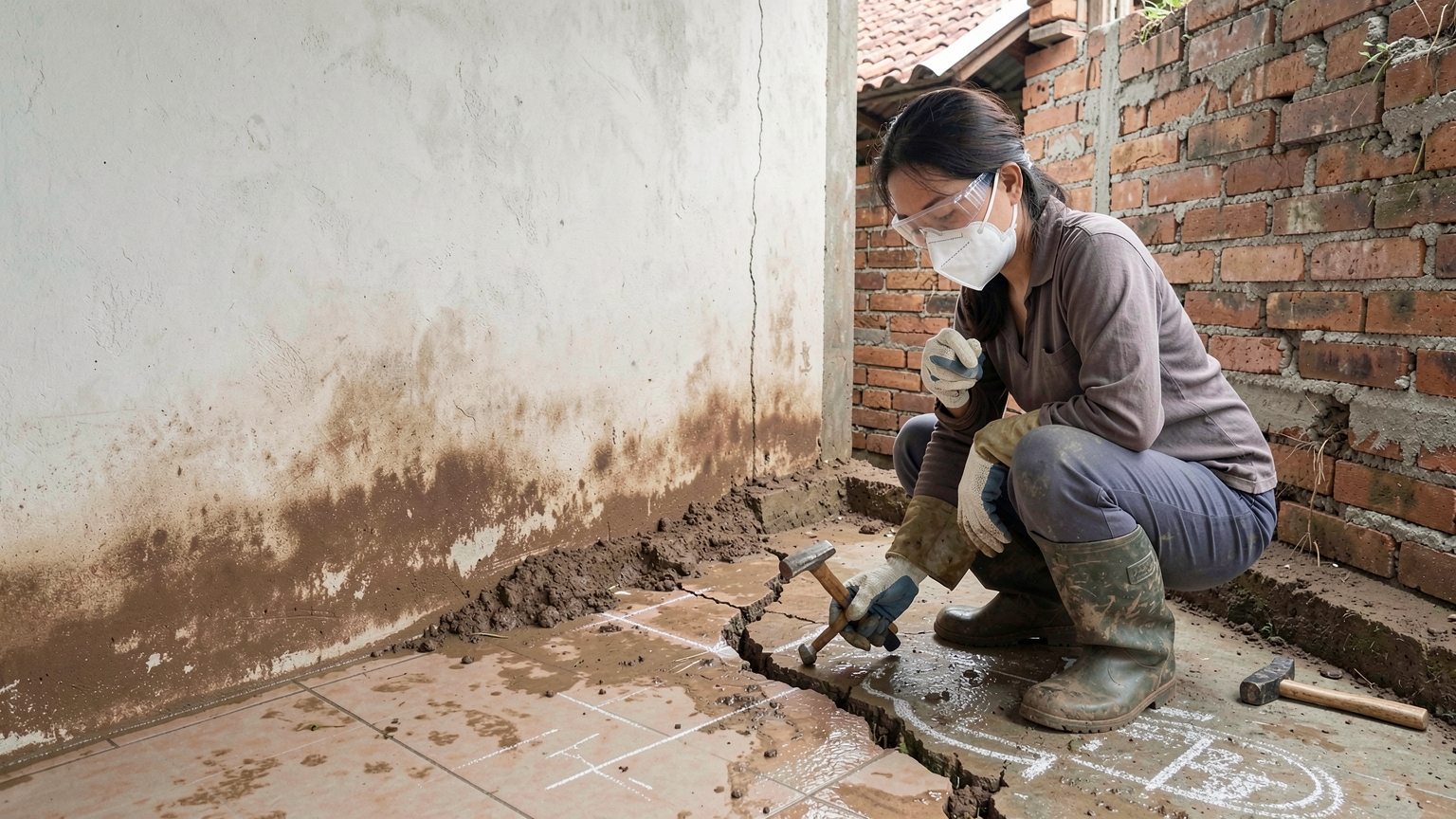
Fill washed-out soil gaps around the base with compacted soil sloping away from the house, so rain runs off rather than under it.
When to Stop and Call a Professional
Some jobs are not safe for a family to do alone. Call a qualified person for:
- Any wiring, sockets, switches, pumps or the main power box that were under water
- Leaning walls, sagging roofs, sinking floors or growing cracks
- Wells and water tanks that floodwater entered; do not drink from them until tested or properly cleaned
- Septic tanks or toilets that overflow or back up
- Gas smell or damaged gas bottles
Rules and support differ by country and area. In places such as Cambodia, Thailand, Vietnam, Laos, the Philippines, Malaysia and Indonesia, local offices sometimes offer checks or help after floods. Ask your village leader or local authority what is available.
While the rains continue in many places, keep drains clear and watch the weather. If heavy rain returns before the house is dry, lift what you can off the floor and stay safe first. A house can be repaired; people cannot be replaced.