How to Floodproof a Ground-Floor House: 4 Low-Cost Fixes
Keep floodwater and rising damp out of your home this rainy season with sandbags, raised thresholds, sealed pipe gaps and higher outlets.
Published
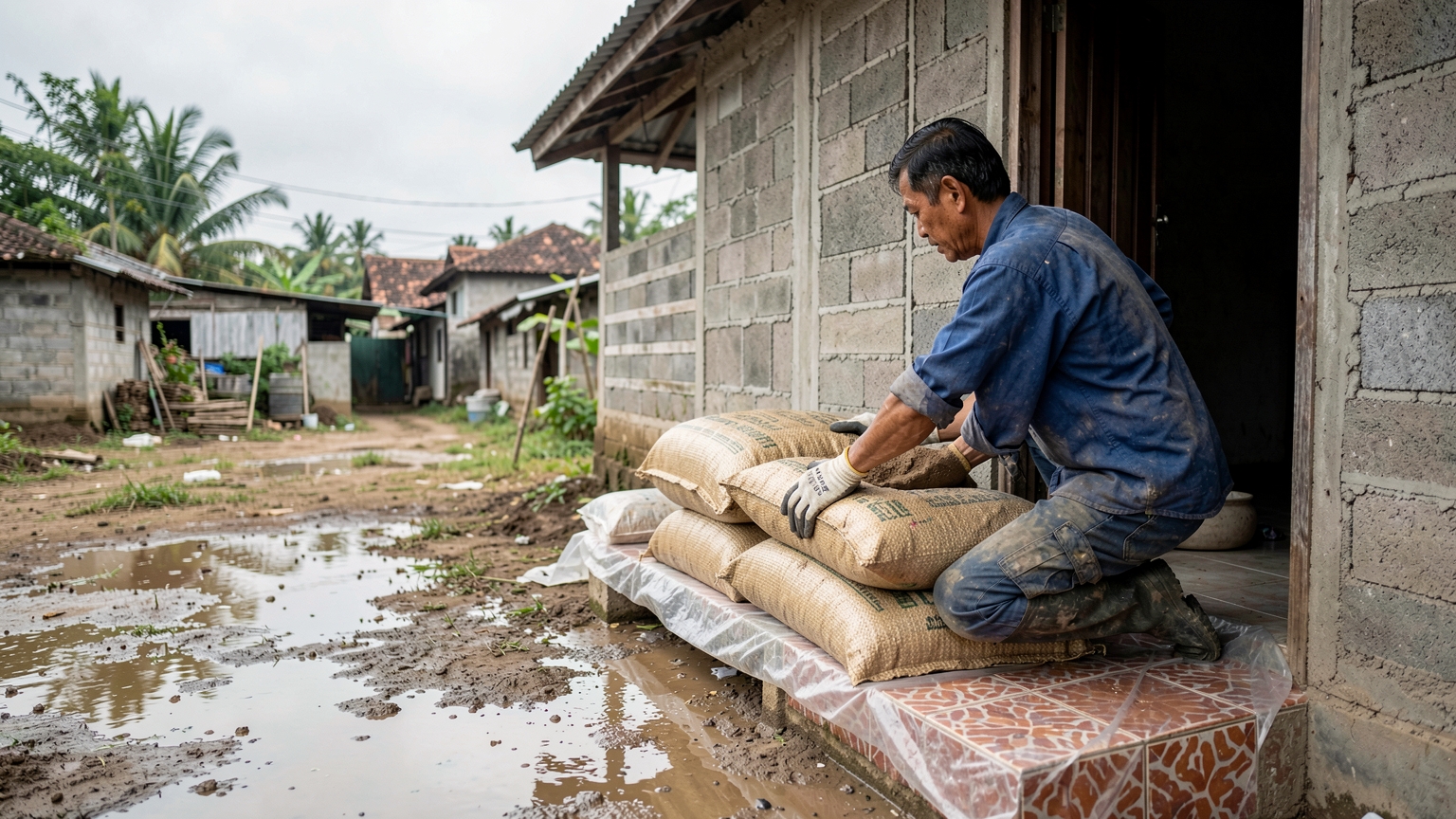
In many parts of Southeast Asia, these are the weeks of the heaviest rain. Low roads turn into rivers, and water can enter a ground-floor house through doorways, pipe holes and drains. This guide explains how to floodproof a house with four low-cost fixes: sandbag barriers, raised door thresholds, sealed pipe gaps and higher power outlets. These fixes help with shallow flooding and splash water. They will not stop a deep flood. If local authorities tell you to leave, leave.
Conditions differ by country and place. Soil, flood depth, building rules, permits and prices are not the same in Thailand, Vietnam, Laos, the Philippines or Indonesia. Check local rules and ask an experienced local builder or your village or district office before bigger work.
Before you start: safety and a quick check
Walk around the house on a dry, calm day or a break in the rain. Look for the places where water came in before. Common entry points are:
- The front and back doorways, especially if the floor is at the same level as the yard
- Holes where water pipes, drain pipes and cables pass through walls
- Floor drains, shower drains and toilets, where dirty water can push back up
- Low power outlets, which become dangerous once water reaches them
Mark the highest water line you remember. This tells you how high your barriers need to be. Wear work gloves and sturdy rubber-soled boots for all the work below. Add eye protection and a dust mask when you mix cement. Never work near electrics while standing in water, and never work outside during lightning.
How to floodproof a house: 4 low-cost fixes
Do these in order. The first two keep water out of doorways. The third closes hidden holes. The fourth keeps your family safe if water does get in.
Fix 1: Build a sandbag barrier at doorways
Sandbags are cheap and quick. Empty woven bags often cost roughly 0.10 to 0.50 US dollars each, but prices vary by country. You can fill them with sand or with soil from your yard.
- Fill each bag only half to two-thirds full, so it can flatten and press tightly against the next bag.
- Fold the open end under the bag. Do not tie it.
- Lay a sheet of thick plastic on the ground first, on the outside of the door.
- Lay the first row of bags across the doorway with the folded end facing the house. Push each bag tight against the one before.
- Stamp each bag flat with your boot to close gaps.
- Lay the next row like bricks, so each bag covers the joint between two bags below.
- Pull the plastic sheet up over the outside face of the bags and weigh the top edge down.
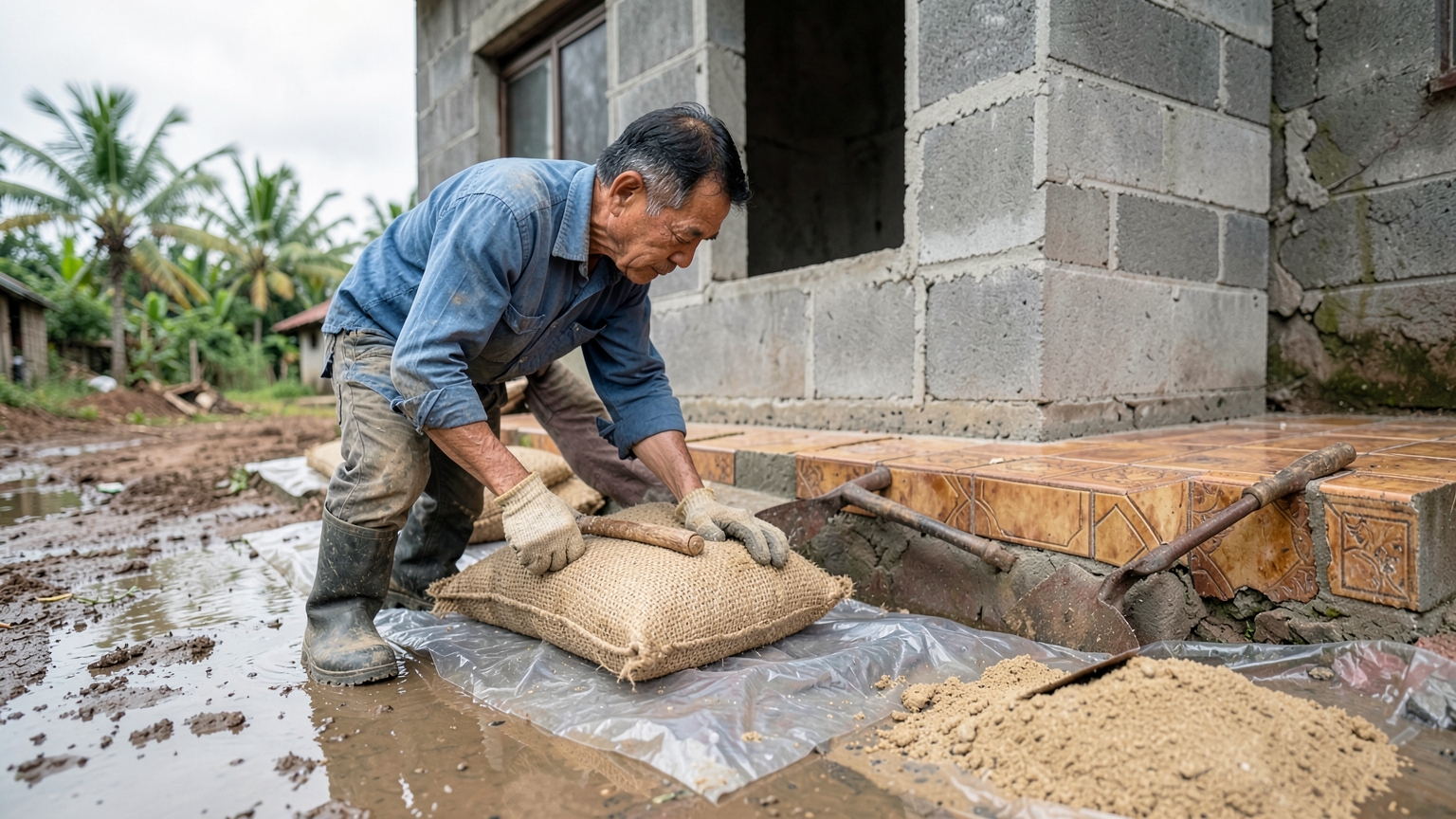
Keep the barrier low, about two or three rows for a doorway. Higher walls need a wider base and more skill. Bend your knees when lifting, and share heavy bags with a second person. Wet bags are much heavier than dry ones.
Fix 2: Raise the door threshold
A raised threshold is a low step built across the doorway. Even 10 to 15 cm can stop splash water and shallow street flooding. Many families in Cambodia, Thailand and the Philippines build one from brick and cement mortar.
- Measure the width of the doorway and check that the door can still open over a raised step. You may need to trim the door bottom.
- Clean the floor surface and roughen it with a hammer and chisel so the mortar grips. Wear eye protection.
- Mix mortar in a tub, wearing gloves and a dust mask. Add water slowly until it is thick, like porridge.
- Lay one or two rows of bricks across the opening on a bed of mortar. Check that they are level.
- Cover the bricks with a smooth mortar layer, slightly rounded on top so water runs off.
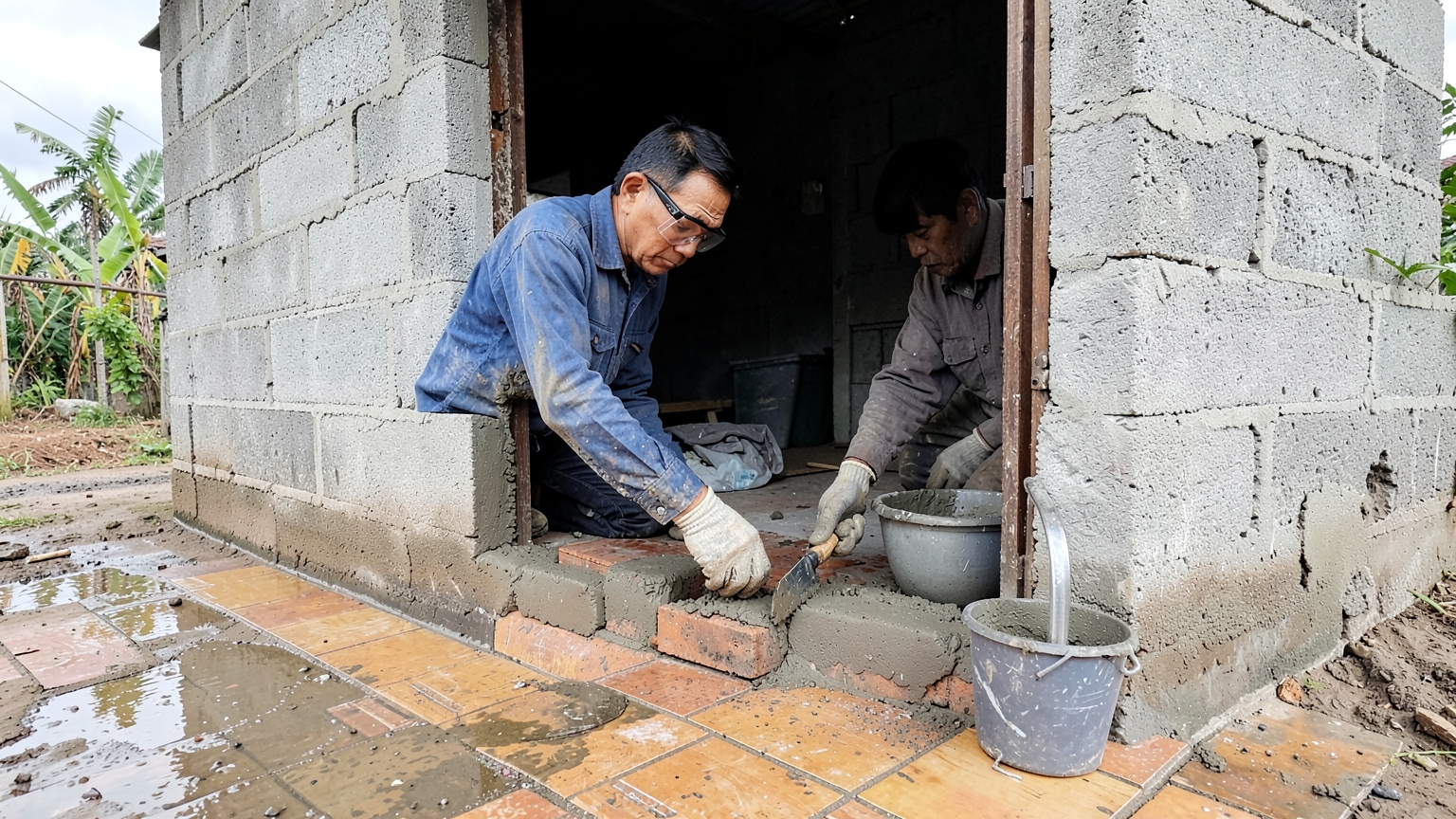
Work under a roof or a tarp, because heavy rain will wash fresh mortar away. Keep the new step covered and slightly damp for several days while it hardens. If you rent or cannot build, a removable flood board is another choice: a thick plank with a rubber strip, slid into wooden or metal guides fixed on each side of the door.
Fix 3: Seal gaps around pipes and drains
Water finds small holes. Gaps around pipes and cables at the bottom of walls can let in a lot of water.
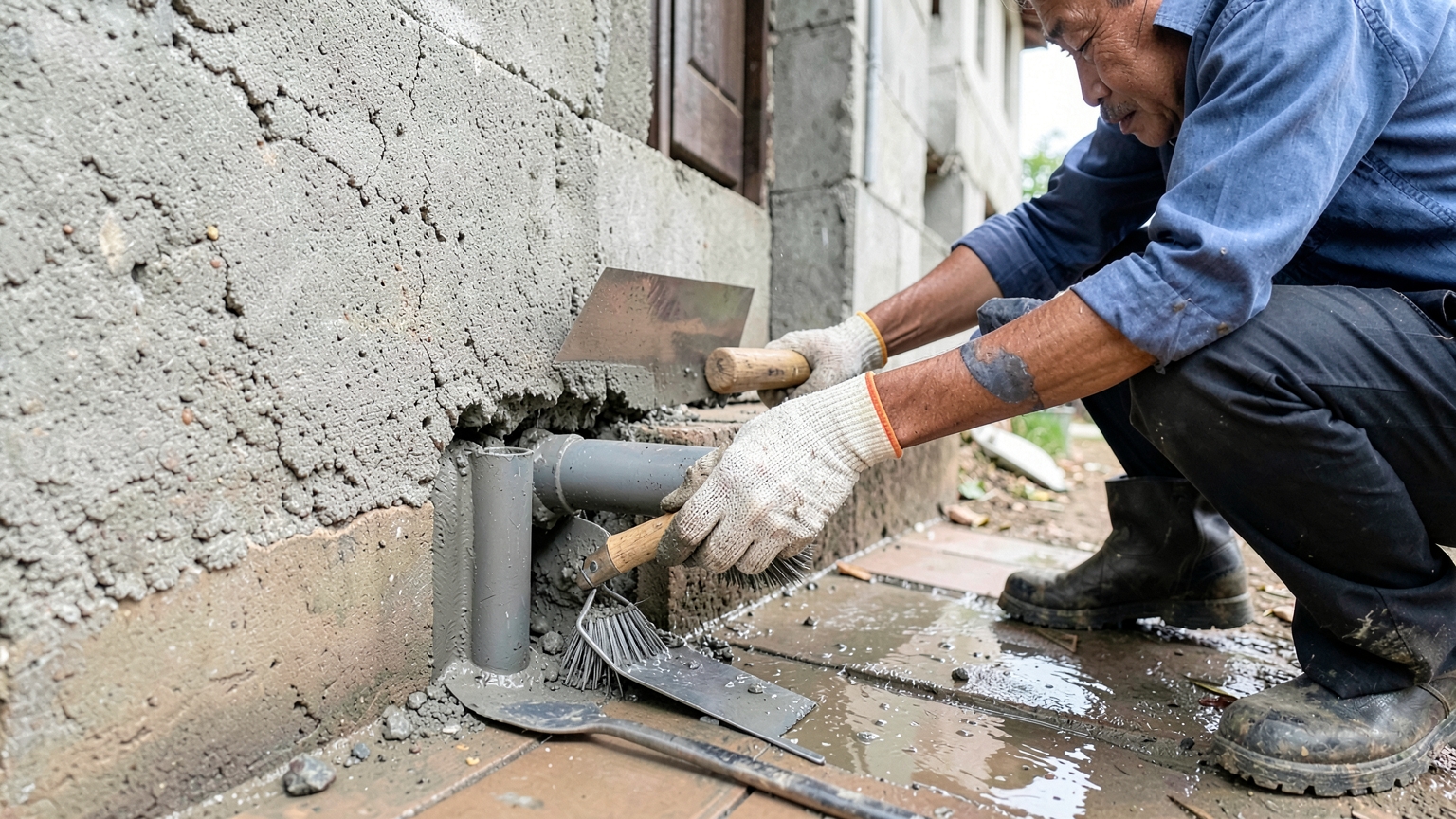
- Scrape out loose plaster, old filler and dirt with a screwdriver or small chisel.
- Brush the hole clean and wipe it as dry as you can.
- For holes in concrete or brick, press in quick-setting waterproof cement, sometimes sold as hydraulic cement. It can set even on damp surfaces. Follow the packet and wear gloves.
- For small gaps around plastic pipes, use an outdoor sealant that stays flexible.
- Smooth the filler with a wet finger in a glove or a small trowel.
Floor drains and toilets can push dirty water back into the house when the street drains are full. A plumber can fit a one-way valve, often called a non-return valve, on the main drain. As a short-term step, some families cover floor drains with a plastic bag filled with water or sand. Do not use chemicals to block drains.
Fix 4: Move power outlets higher
This fix needs a qualified electrician. Do not move wiring yourself. What the family can do is plan the work and stay safe until it is done.
- Learn where your main switch or breaker box is, and show every adult in the house how to turn it off.
- If water starts to enter, turn off the main power only if you can reach it while standing on a dry floor. If not, stay away and call for help.
- Mark where you want new outlets, well above the highest flood line you remember. Many electricians suggest around 1 to 1.2 metres above the floor, but follow local rules.
- Ask the electrician about a separate circuit for the ground floor and a safety switch (RCD) that cuts power if there is a fault.
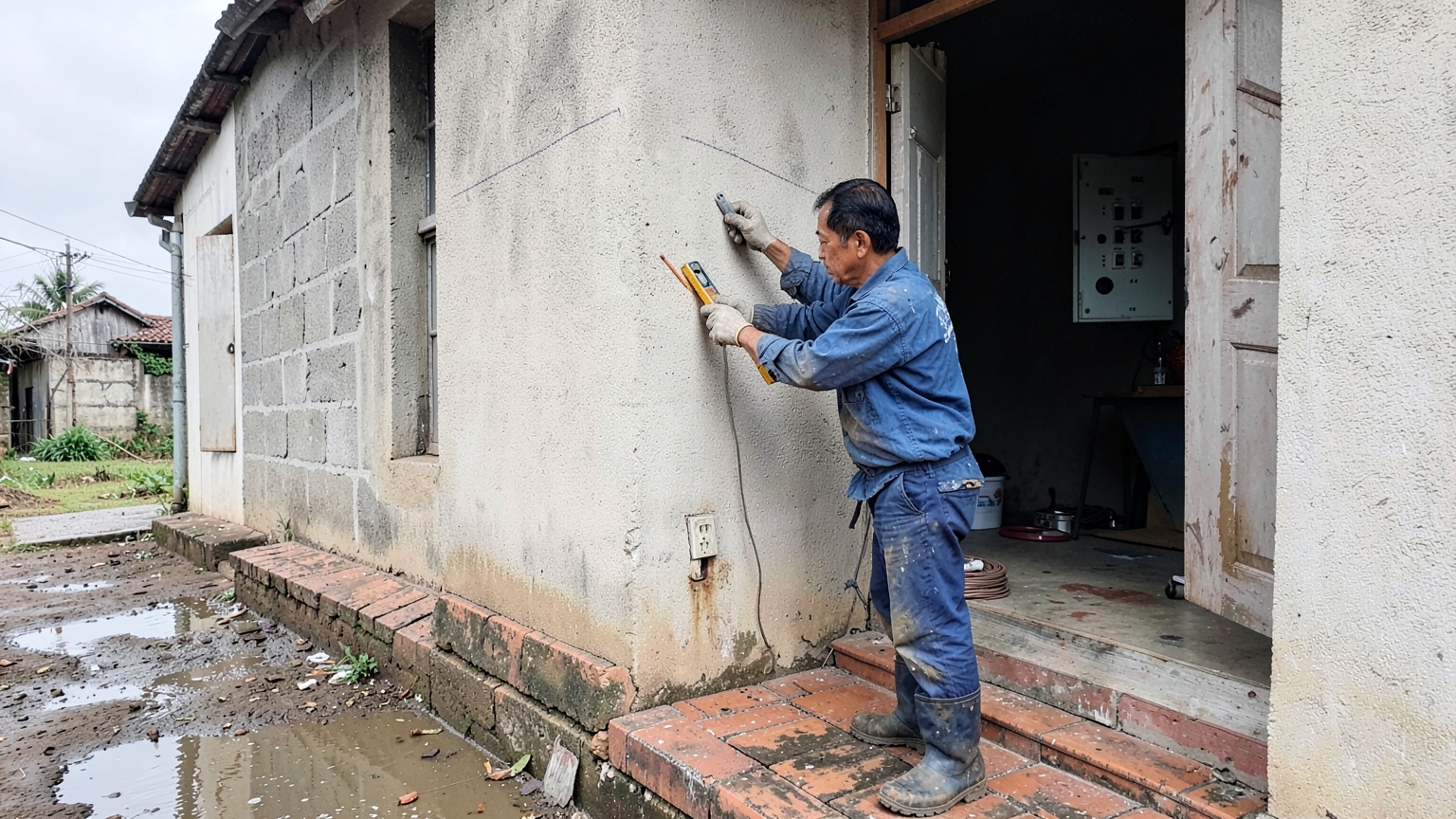
Until the outlets are moved, keep extension cords off the floor and place fridges, pumps and rice cookers on raised stands. Costs for moving outlets vary widely by country and by how many points you need, so ask for a price before work starts.
Dealing with rising damp during the rains
Even without a flood, wet ground pulls water up into walls. You see dark patches, peeling paint and a musty smell at the bottom of walls. A full damp-proof layer inside the wall is a job for a builder, but these simple steps help now:
- Clear gutters and point downpipes away from the walls, onto a splash stone or into a drain.
- Keep soil and plants away from the base of walls, and slope the ground so water runs away.
- Clear blocked drains around the house after each heavy storm.
- Keep furniture, rice sacks and mattresses a few centimetres away from walls and up on bricks or pallets.
- Open windows when it is not raining to let damp air out.
- Wipe mould with soapy water while wearing gloves and a mask, and dry the area well.
When to stop and call a professional
Stop and get help if you see new cracks in walls or floors, if the ground near the foundation is sinking or washing away, or if water has reached any outlet or the breaker box. Call a licensed electrician for any wiring work and before turning power back on after a flood. Ask an experienced local builder before changing the floor level, digging near foundations or building walls higher than knee height. These four low-cost fixes can reduce damage from shallow flooding, but every house and every place is different, so adapt them to your home and your local rules.