Waterlogged Yard? 3 Simple Fixes to Stop Pooling Rainwater
Stop rainwater pooling around your house in heavy rain with surface drains, gravel trenches and soil sloped away from the foundation.
Published
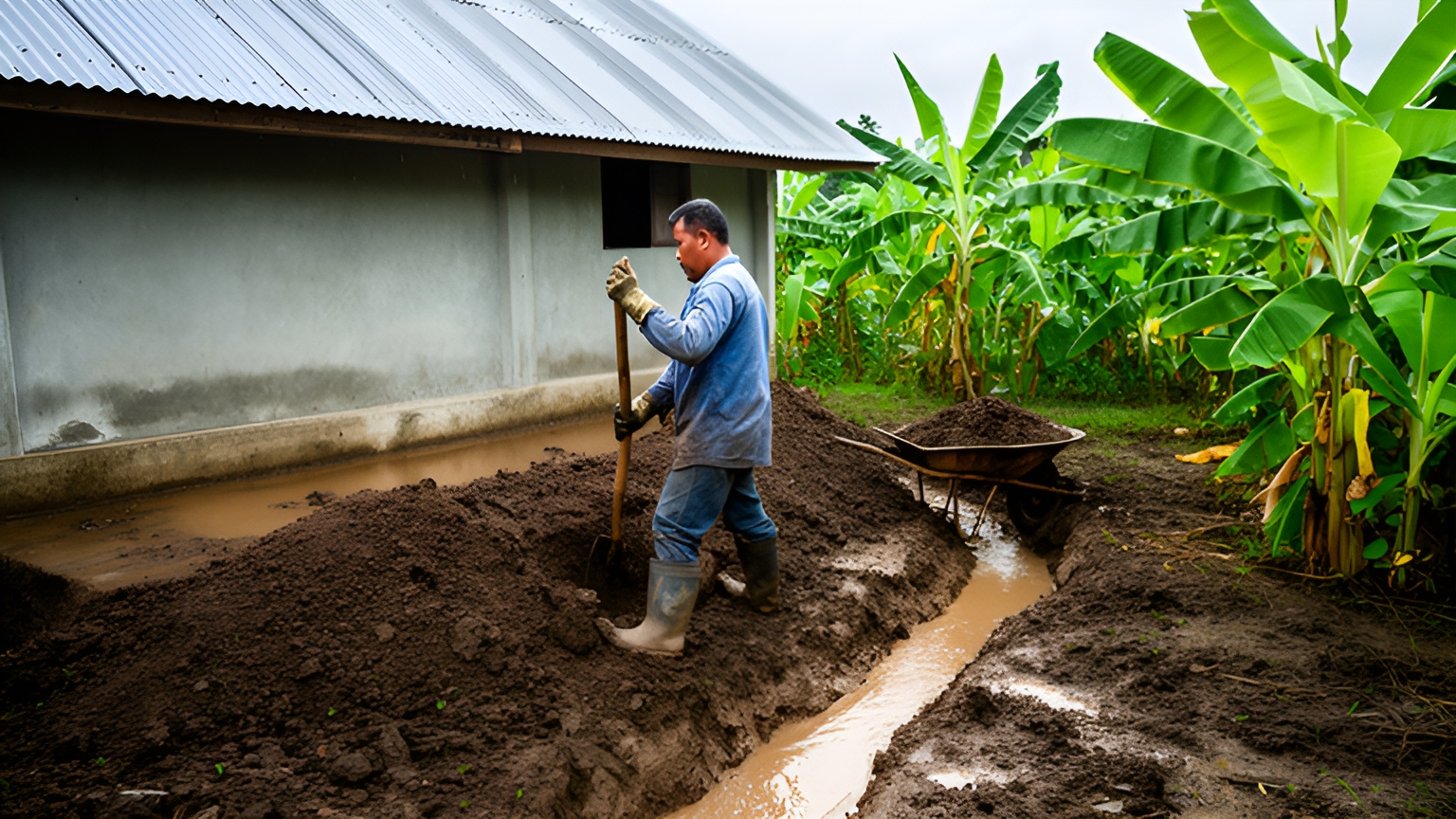
A waterlogged yard is more than a muddy mess. When rainwater sits against your house for days, it can soak into walls, weaken the soil under the foundation, bring mosquitoes and make paths slippery. In many parts of Southeast Asia the heaviest rains are falling right now, so this is the best time to see where water goes and fix it. This guide shows three simple fixes a family can do with shovels, a hoe, gravel and some pipe: sloping the soil away from the house, digging a surface drain, and building a gravel trench.
Conditions differ a lot from place to place. Soil, rainfall, local building rules and prices are not the same in Cambodia, Thailand, Vietnam, Laos, the Philippines, Malaysia or Indonesia. Use these ideas as a starting point, and ask an experienced local builder or your agriculture or public works office before bigger work.
First, Read Your Waterlogged Yard
The rain itself is your best teacher. During or just after a heavy shower, walk around the house and watch.
- Mark each puddle with a stick or a stone.
- Note where water runs off the roof. Missing or broken gutters often cause most of the problem.
- See which way water wants to flow, and where it stops.
- Find a safe place to send the water: a ditch, a lower part of your land, a pond or a rain barrel.
Never send water onto a neighbour's land, a road or a shared path without agreement. In many places there are local rules about this, so check first.
To check the slope, tie a string between two stakes, pull it tight and level it with a cheap line level or a clear hose filled with water. Measure from the string down to the ground at several points. If the ground is higher near the wall than further out, water will run toward your house.
Also check for hidden dangers before any digging. Ask where water pipes, electric cables and septic tanks are buried. If you are not sure, dig slowly by hand and stop if you hit anything.
Fix 1: Slope the Soil Away From the Foundation
This is often the cheapest and most useful fix. The aim is simple: the ground next to the house should be the highest point, and it should fall away gently.
A common guide is a drop of about 10 to 15 cm over the first 2 to 3 metres from the wall. Your local builder may suggest a different figure for your soil.
- Wear work gloves and sturdy rubber boots with good grip. Wet clay is slippery.
- Scrape away loose mud and plants close to the wall.
- Bring in firm soil. Clay-rich soil sheds water better than sandy soil or garden compost. Do not use rubbish, wood or leaves as fill.
- Spread the soil in thin layers of 5 to 10 cm and press each layer down with a tamper or the back of a shovel.
- Use your string line to check that the surface falls away from the house.
- Keep the soil well below the bottom of wooden walls, door frames and air vents. Do not bury the base of timber posts, as wet soil makes them rot.
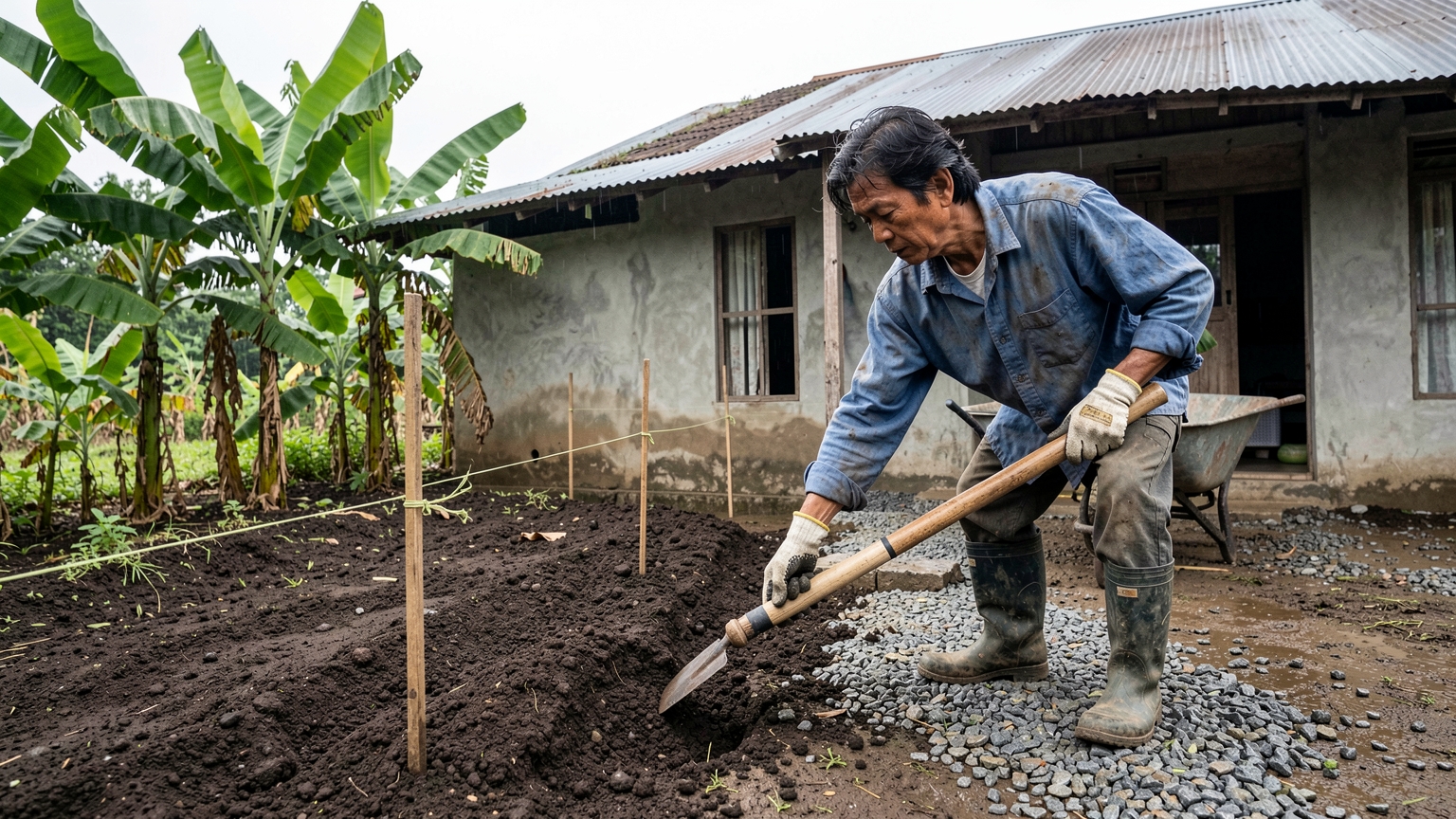
Work between showers, not during heavy rain, because soaked soil cannot be packed well. After the next rain, look again. If water still collects in one spot, add a little more soil there. Planting grass or a low ground cover on the new slope helps stop the rain washing it away.
Fix 2: Dig a Simple Surface Drain
If water still runs toward the house from higher ground, catch it before it arrives. A shallow open drain, sometimes called a swale, carries water around the house to a safe outlet.
- Mark the line with stakes and string, a few metres uphill of the house.
- Dig a shallow channel with sloping sides, about 20 to 40 cm deep and wider at the top than at the bottom.
- Make the bottom fall steadily toward the outlet. Even a small, even fall works. Check it with your string line.
- Pile the dug soil on the downhill side, away from the house, and pack it to form a small bank.
- Line the channel with grass, or with stones or old bricks where the water runs fast, so it does not wash out.

For roof water, add gutters and downpipes, and fix a short pipe or a concrete splash block at the bottom so water lands at least a metre from the wall. Many families also lead downpipes into rain barrels or tanks for garden use. Cover any stored water to keep mosquitoes out.
If you want a concrete-lined drain, wear a dust mask, eye protection and gloves when mixing cement, because wet cement can burn the skin.
Fix 3: Build a Gravel Trench
Some yards are flat, or the soil is heavy clay that stays wet. Here a gravel trench, often called a French drain, can help. Water soaks into the gravel and runs along a pipe to a lower outlet.
- Dig a trench about 30 cm wide and 40 to 60 cm deep along the problem area. Keep it at least 1 metre away from the foundation, and do not dig deeper than the footing near the house.
- Give the bottom a steady fall toward the outlet.
- Line the trench with geotextile fabric if you can get it. It keeps soil from clogging the gravel. Leave extra fabric hanging over both sides.
- Add 5 cm of washed gravel, then lay a perforated drainage pipe with the holes facing down.
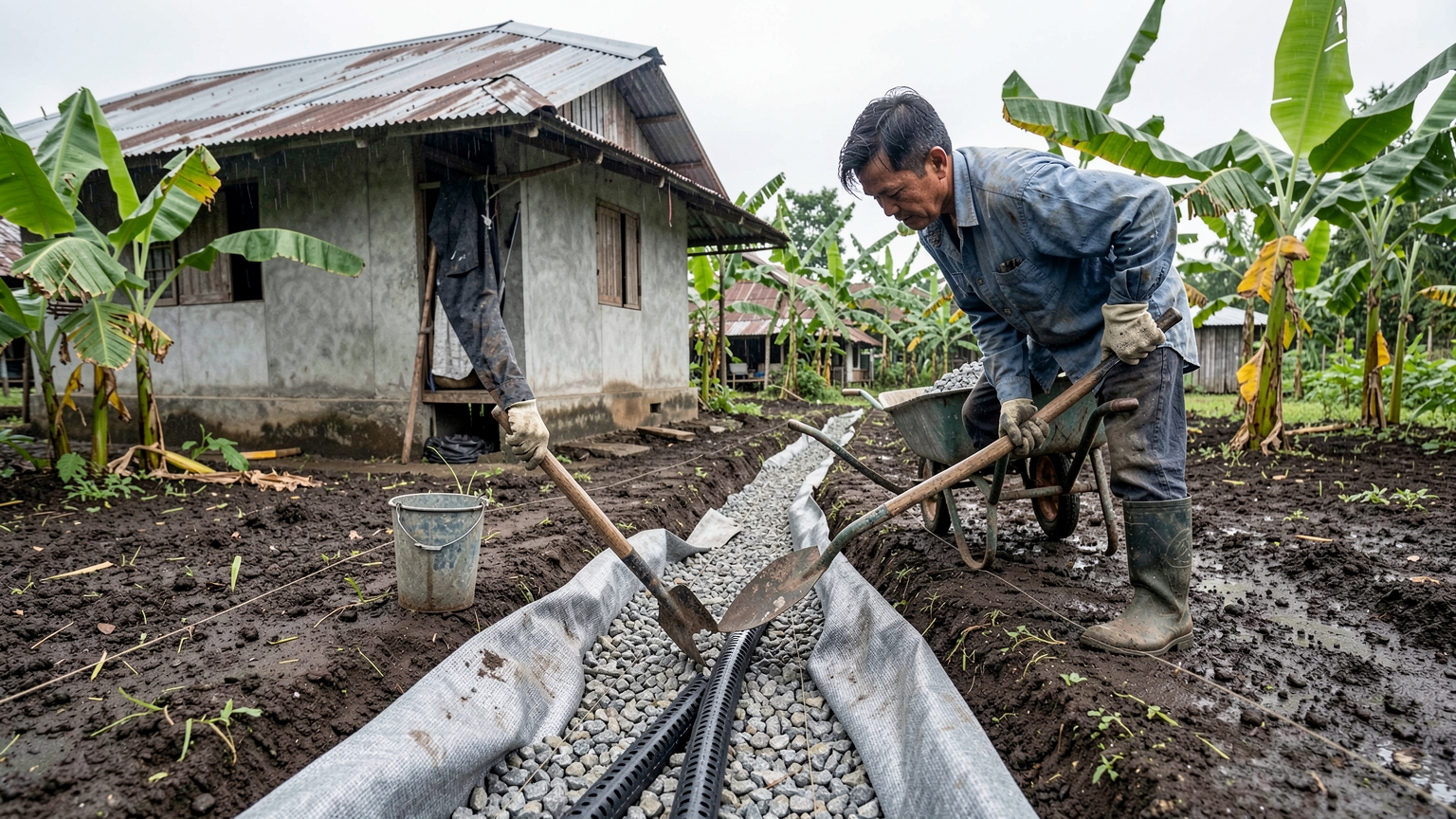
- Fill around and over the pipe with more gravel, up to about 10 cm below the surface.
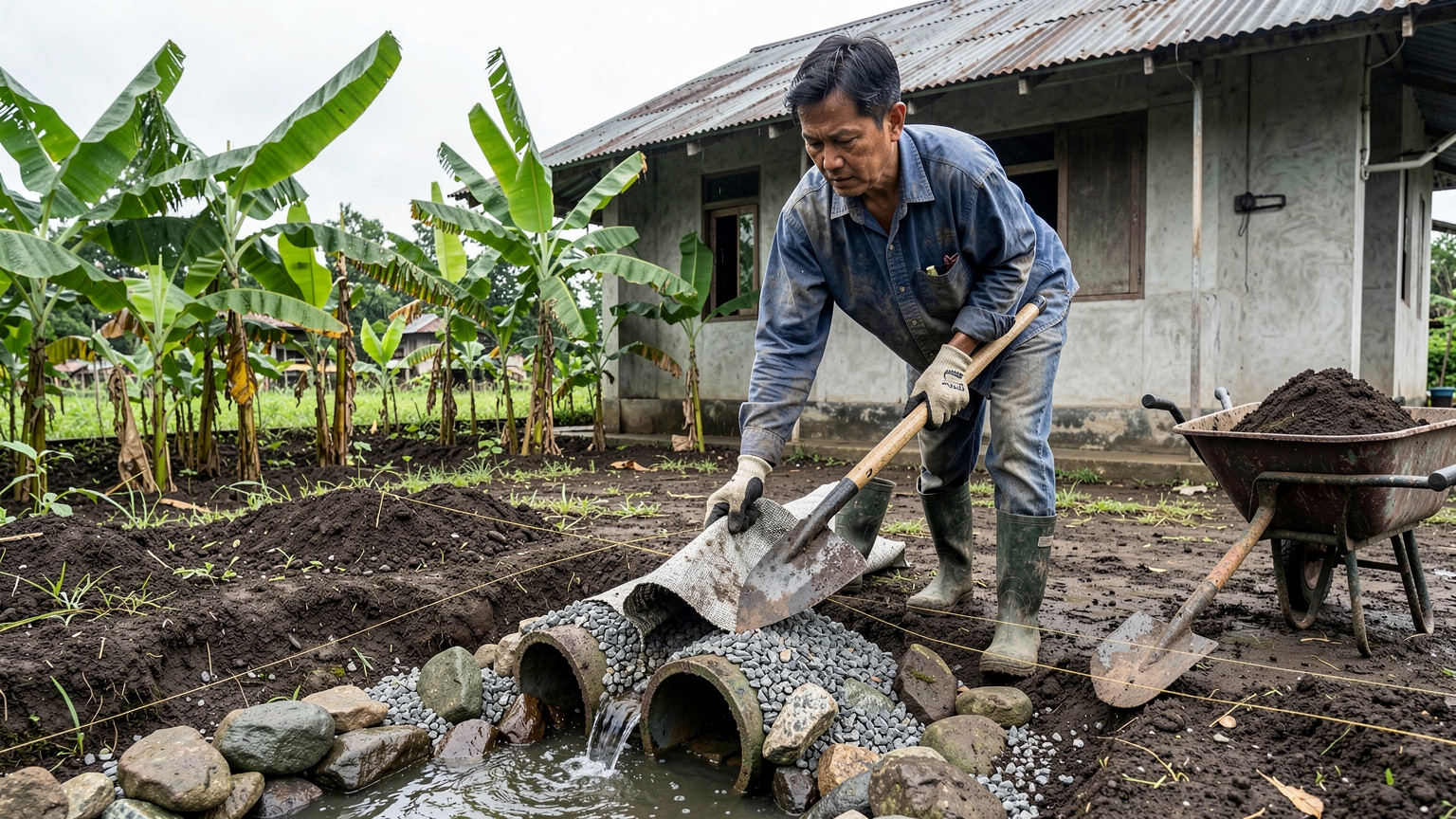
- Fold the fabric over the top of the gravel.
- Cover with soil and grass, or leave the gravel showing if you want it to catch surface water too.
- Finish the outlet in a safe place, and protect the pipe end with stones so it does not wash out or fill with mud.
Costs vary widely by country and by how far materials must be carried. As a rough guide, washed gravel may cost about US$15 to US$40 per cubic metre, and perforated pipe about US$1 to US$3 per metre. Ask a few local suppliers. If you cannot find perforated pipe, a trench filled only with gravel still helps, but it may clog sooner.
Safety, Limits and When to Get Help
Digging in wet ground is heavy work, and floodwater can carry germs and hidden dangers.
- Wear gloves and boots. Cover any cuts, and wash your hands and skin well after working in muddy water. Floodwater can spread illness, so see a health worker if you get a fever after contact with it.
- Wear eye protection when cutting pipe or breaking stones.
- Watch for snakes, scorpions and broken glass in long grass and mud.
- Stop work if there is thunder or lightning, or if water is rising fast.
- Lift with your legs, take breaks, drink water and do not work alone on big trenches.
- Never dig trenches deeper than your waist without proper shoring. Wet soil can collapse suddenly.
Call a professional if you see cracks in walls or floors, if the foundation seems to be sinking, if water enters the house through the floor, or if your land floods from a river or from a whole neighbourhood. These are bigger problems than a yard drain can solve, and may need a structural engineer, a raised floor or work with your local authority.
Start small. Fix the worst puddle first, watch what happens in the next heavy rain, and adjust. A little slope, a shallow drain and a gravel trench can make a big difference to a dry, safe home.