Chicken Coop in Rainy Season: 7 Ways to Keep Hens Laying
Long rainy spells mean wet litter, leaks and mouldy feed. Seven practical fixes keep your hens dry, comfortable and laying through the rains.
Published
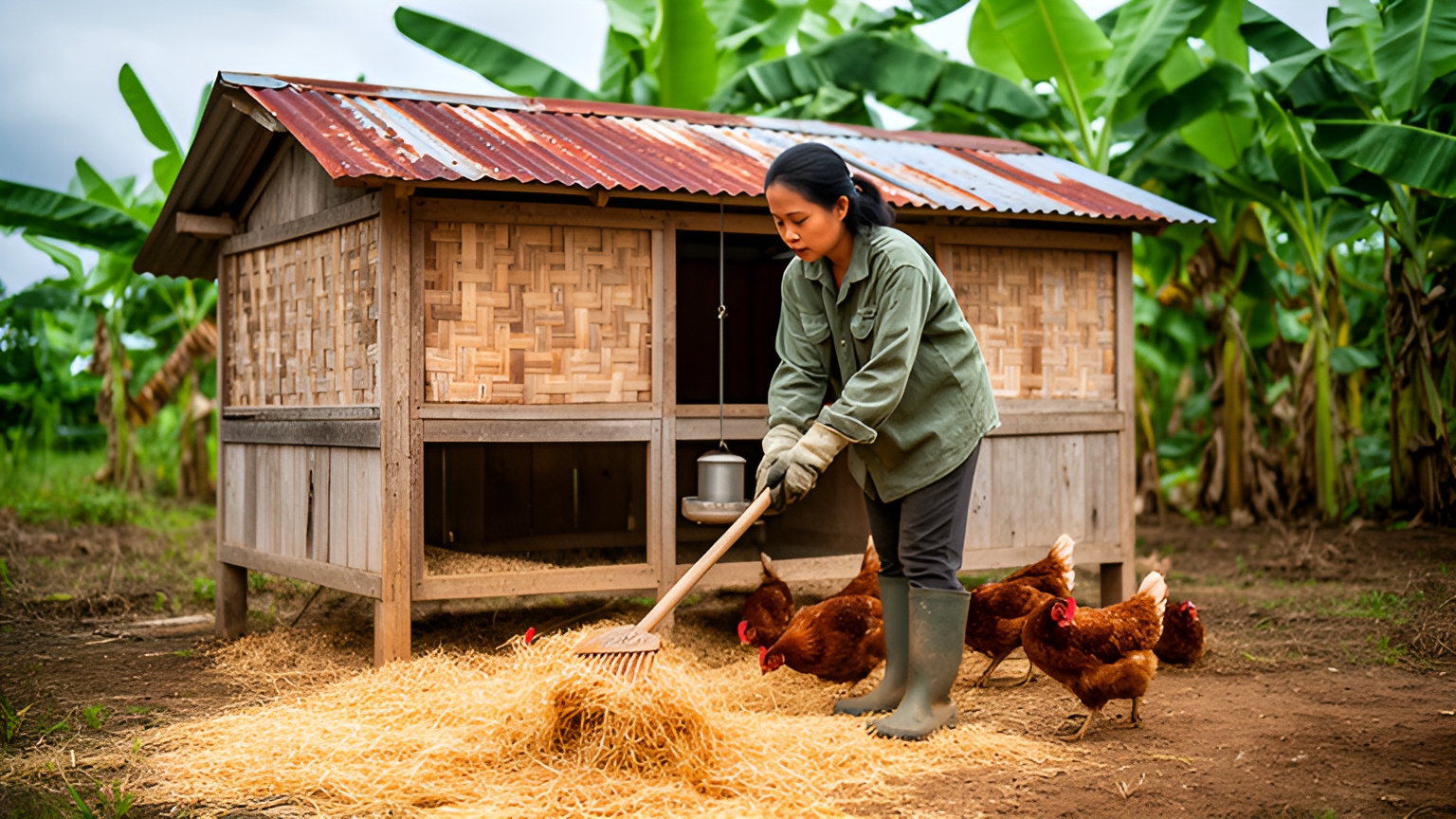
Long weeks of rain are hard on chickens. Wet litter, a leaking roof, damp air and mouldy feed can leave hens stressed and sick, and stressed hens often lay fewer eggs. The good news is that most chicken coop rainy season problems have simple fixes a family can do with common materials. This guide walks you through seven of them, in the order that works best: stop the water, dry the floor, move the air, then protect the feed and watch the flock.
Conditions differ a lot across Southeast Asia. Rain, soil, building rules and animal health rules are not the same in Thailand, Vietnam, the Philippines or Indonesia, and they can change from one village to the next. Use these ideas as a starting point, and ask an experienced local farmer or your livestock extension officer if your flock shows signs of illness.
The chicken coop rainy season problem
In many places the late rains bring the heaviest downpours and flooding in low areas. Water comes into a coop in three ways: through the roof, through the walls on windy days, and up from the ground. Once litter gets wet and mixes with droppings, it starts to smell of ammonia. That gas irritates the eyes and breathing of chickens. Wet, warm litter is also where many parasites and germs grow well, including the ones that cause coccidiosis, a common gut disease in young birds.
So the goal is simple: keep the inside of the coop dry, keep fresh air moving, and keep feed away from moisture. Walk around your coop on a rainy morning and note where water drips, where puddles form and where the litter feels wet. That list tells you where to start.
Step 1: Stop the water getting in
Way 1: Fix roof leaks safely
Look up from inside the coop after rain. Wet patches on the litter usually sit right under a leak. Common causes are old screw or nail holes in metal sheets, rusted spots, cracked thatch, and sheets that have slipped in the wind.
- Wait for a dry, calm break in the weather. Never climb onto or lean on a wet roof, and never work during rain, wind or lightning.
- Use a sturdy ladder on firm, level ground, tied or held at the base by a second person. Stay close by each other the whole time.
- Wear work gloves, as metal edges are sharp, and rubber-soled shoes with good grip.
- Seal small holes with roofing sealant or a rubber washer under a new screw. Cover rust holes with a patch of sheet and sealant.
- Re-tie loose thatch or add a layer of fresh nipa, cogon grass or palm leaves on top.
A tube of roofing sealant often costs roughly 3 to 10 US dollars, and new metal sheets more, but prices vary widely by country. If the roof frame is rotten, sagging or high off the ground, ask a local builder to help. Do not climb on a weak structure.
Way 2: Move water away from the coop
Add a short overhang or a strip of plastic or metal sheet on the windy side so rain cannot blow straight in. Then deal with the ground. Dig a shallow trench around the coop, about the width of a hoe, so rainwater runs downhill and away instead of soaking under the walls. Wear gloves and sturdy boots, and do not dig near buried pipes or electric cables. If your land floods often, raising the coop floor on posts, bricks or a packed earth base is a bigger job worth planning with someone experienced.

Check the trench after each heavy rain and clear out leaves and mud so water keeps flowing.
Step 2: Keep the litter dry
Way 3: Remove wet litter and add a dry layer
Litter is the material on the coop floor: rice husks, wood shavings, dry straw or chopped dry grass. During long rainy spells, check it every day. Pick up a handful. If it sticks together in a ball, it is too wet.
- Wear gloves and a dust mask. Old, wet litter can carry mould spores and ammonia.
- Shovel out the wet, caked patches, especially under drinkers and near doors, into a wheelbarrow or sack.
- Spread a fresh dry layer about 5 to 10 cm deep. Rice husks are cheap or free in many rice-growing areas and dry well.
- Turn the remaining litter with a rake every few days so the top dries.
- Put the old litter in a covered compost pile away from the coop and from wells.
Keep a few sacks of dry litter under cover so you are never without it. Wash your hands well after the job.
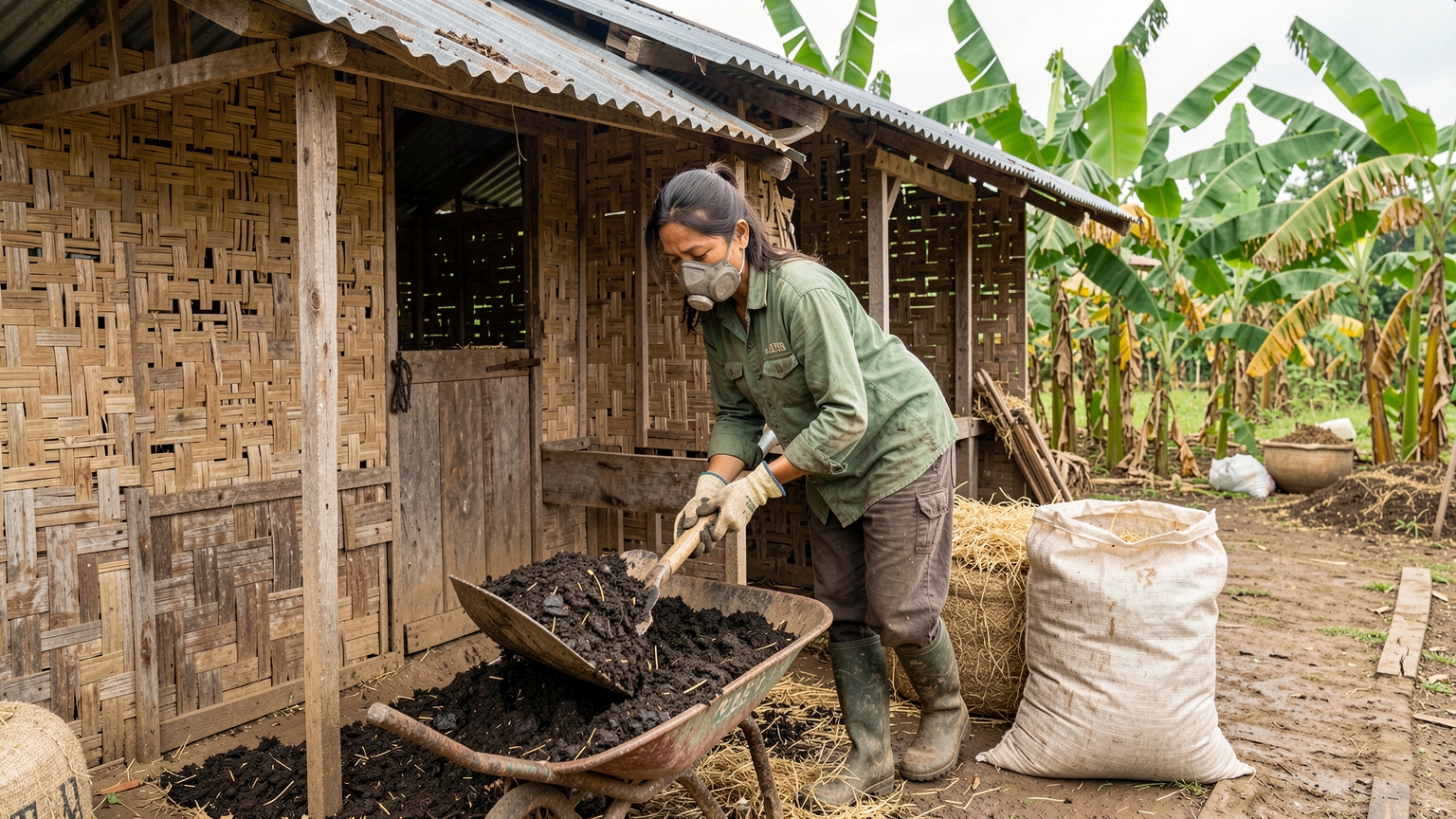
If the floor stays wet even with fresh litter, the water is probably still coming in from the roof or ground. Go back to Step 1.
Way 4: Raise feeders and drinkers
Spilled water is the second biggest cause of wet litter after leaks. Hang drinkers or set them on a flat stone or board so the lip sits at about the height of a hen's back. Fix any leaking drinkers. Place a shallow tray of gravel or a slatted wooden platform under them so spills drain through. Raise feeders too, so hens do not scratch feed into damp litter.
Step 3: Let damp air out
Way 5: Improve airflow without letting rain in
A closed-up coop traps warm, wet air and ammonia. You want air to move in and out high up, above the birds, while the walls stay closed lower down.
- Open gaps or add wire mesh panels under the roof edge on both sides, so air can pass straight through.
- Keep the overhang long enough that rain does not blow in through these gaps.
- Use woven bamboo or mesh on the upper walls instead of solid boards where you can.
- On windy, stormy nights, hang a rice sack or tarpaulin over the windward side, then roll it up in the morning.
If you smell ammonia when you walk in, or your eyes sting, airflow is too low. Do not crowd the coop with too many birds, as more birds mean more moisture and more droppings.
Step 4: Protect the feed and watch the flock
Way 6: Store feed so it does not go mouldy
Feed takes up water from damp air, and mouldy feed can contain toxins that harm chickens. Never feed mouldy, clumpy or bad-smelling feed. Throw it away where animals cannot reach it.
- Buy smaller amounts more often during long rainy spells, enough for one to two weeks if possible.
- Store feed in a sealed plastic drum or a metal bin with a tight lid.
- Keep the container off the floor on a wooden pallet or bricks, and away from walls that get wet.
- Keep it in the driest place you have, out of direct rain splash.
- Use a clean, dry scoop, and close the lid each time.
- Use older feed first.
A sealed drum often costs roughly 5 to 20 US dollars, depending on size and country. It also keeps rats out, which matters when they look for dry shelter in the rains.
If you mix your own feed with rice bran, broken rice or maize, dry the grains well before storing and check them often for mould, insects and musty smells.
Way 7: Check the hens every day
Give the flock a quick look each morning. Dry, comfortable hens tend to keep a steady laying routine, but rain can still bring problems. Watch for:
- Hens sitting puffed up, dull or not eating.
- Runny or bloody droppings, which can be a sign of coccidiosis.
- Wet, dirty feathers or swollen, sore feet.
- Sneezing, wet eyes or noisy breathing.
Give clean water every day and keep nest boxes lined with dry material so eggs stay clean. Collect eggs often and do not keep cracked or very dirty eggs. Separate any sick bird from the flock, wear gloves when handling it, and contact your local extension officer or animal health worker. Rules on reporting bird diseases differ by country, so follow local advice, especially if several birds fall sick or die suddenly.
None of these steps can promise a set number of eggs, as breed, age, feed and daylight all play a part. But a dry roof, dry litter, fresh air and clean feed give your hens the best chance to stay healthy and keep laying until the rains ease.