Drainage Ditches for Waterlogged Crops: Dig Them by Hand
Days of heavy rain drowning your vegetables? Dig simple drainage ditches with a hoe and spade to pull water off roots fast.
Published
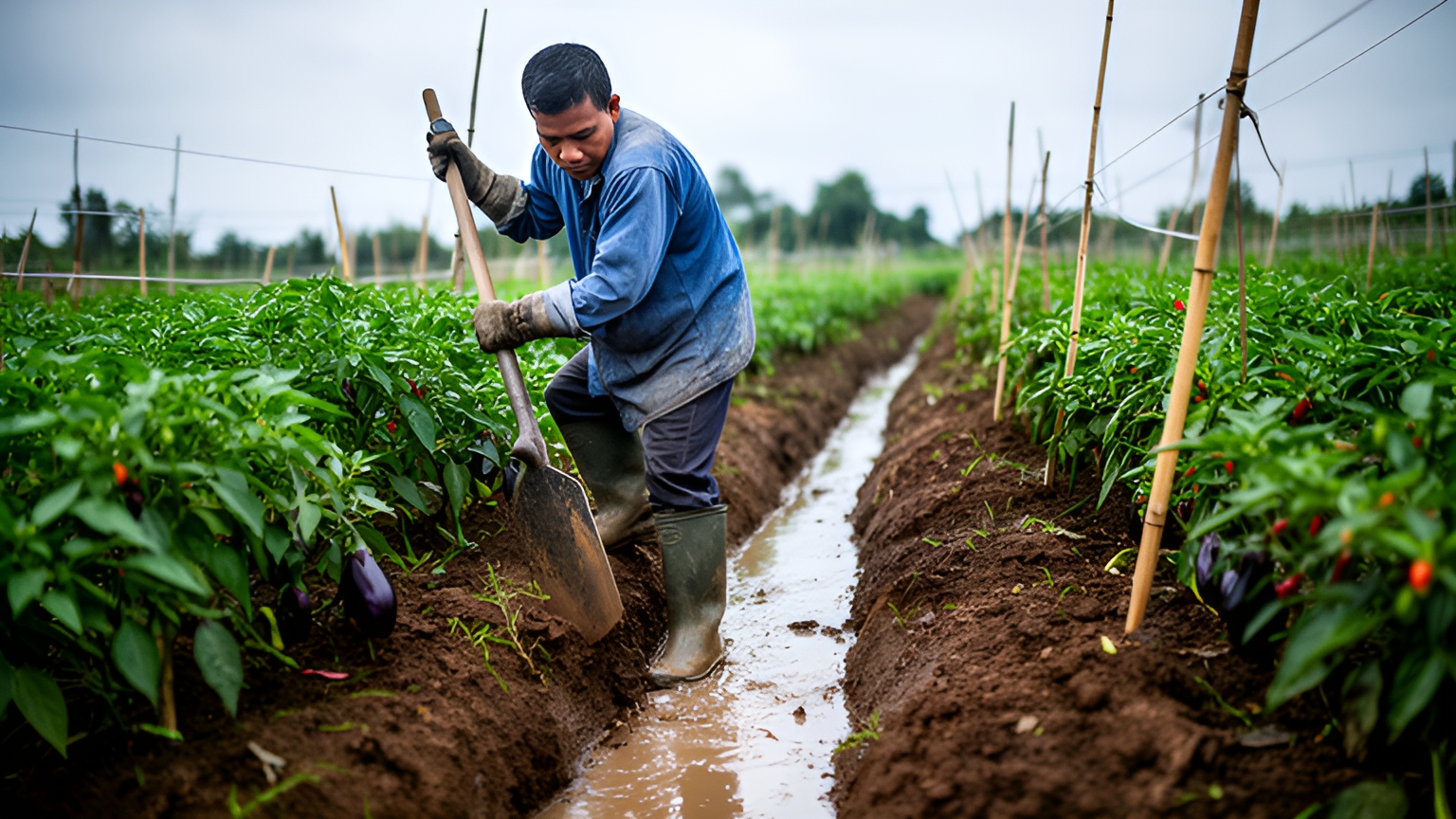
When water sits around plant roots for more than a day or two, the roots cannot breathe. Leaves turn yellow, stems go soft and plants start to die, even after the rain stops. Digging drainage ditches for waterlogged crops is one of the fastest ways to save a vegetable plot or a field of cash crops such as chili, eggplant, long beans, corn or cassava. You only need a hoe, a spade, some string and a few bamboo stakes. This guide walks you through the work step by step, from reading your field to lifting plants onto raised beds.
Conditions differ across Southeast Asia. Soil, rainfall, slope and local rules about water are not the same in Cambodia, Thailand, Laos, Vietnam, the Philippines, Malaysia or Indonesia. Use these ideas as a starting point, and ask an experienced local farmer or an agricultural extension officer if you are not sure what will work on your land.
Check Your Field and Stay Safe
Wait for a break in the rain before you start. Never dig during a thunderstorm. An open field with a metal tool in your hand is a dangerous place when there is lightning. Go out when the sky is calm and you can see clearly.
Walk around the plot and look for these signs:
- Standing water that stays for more than a day after rain.
- Yellow lower leaves, wilting in the morning, or a sour smell from the soil.
- Soft, brown roots when you gently pull up one dead plant.
- The lowest corner of the field, where water collects first.
- The place where water can safely leave: a lower field you own, a natural stream, or a farm canal.
Think about where the water will go before you move any soil. Do not send water onto a neighbor's field, a road, a house or a well. In many places there are rules about draining into public canals, so check with your village head or local office first.
Dress for wet, dirty work. Wear rubber boots with a good grip, thick work gloves and long sleeves. Floodwater can carry germs from animals and toilets, so cover any cuts on your hands and feet, and wash well with soap and clean water after work. Watch for snakes in wet grass and under piles of plant waste. Never dig near power lines, buried pipes or cables. Stay away from fast-moving water, and do not work alone if the ground is deep and muddy.
Plan Drainage Ditches for Waterlogged Crops
A simple plan uses two kinds of ditch:
- One main ditch along the low edge of the field, leading to the outlet.
- Smaller side channels between crop rows, feeding into the main ditch.
Water needs a slope to move. A gentle fall of about 1 to 2 centimetres for each metre of ditch is a common rule of thumb, but this varies with your soil. Too steep and the ditch will wash out. Too flat and the water will sit still.
To mark the line, push bamboo stakes into the ground every few metres and tie string between them. If the ground looks flat, pour a bucket of water at the top end and watch which way it runs. Water always shows you the low path.
A main ditch about 30 to 50 cm deep and 30 to 40 cm wide is enough for most family plots. Side channels can be smaller, about 15 to 25 cm deep. In heavy clay soil, which holds water, you may need more channels closer together. In sandy soil, fewer channels may be enough.
Dig the Main Ditch and Side Channels
Start at the outlet, the lowest point, and work uphill. This way, water begins to flow out as soon as you open the ditch, and you do not trap a pool behind you.
- Stand with your feet apart and bend your knees, not your back.
- Use the spade to cut the edges of the ditch along the string line.
- Use the hoe to pull loose soil out of the ditch.
- Make the sides slope outward a little, like a wide V or U. Straight walls fall in when wet.
- Take short breaks. Wet soil is heavy, and tired people make mistakes.
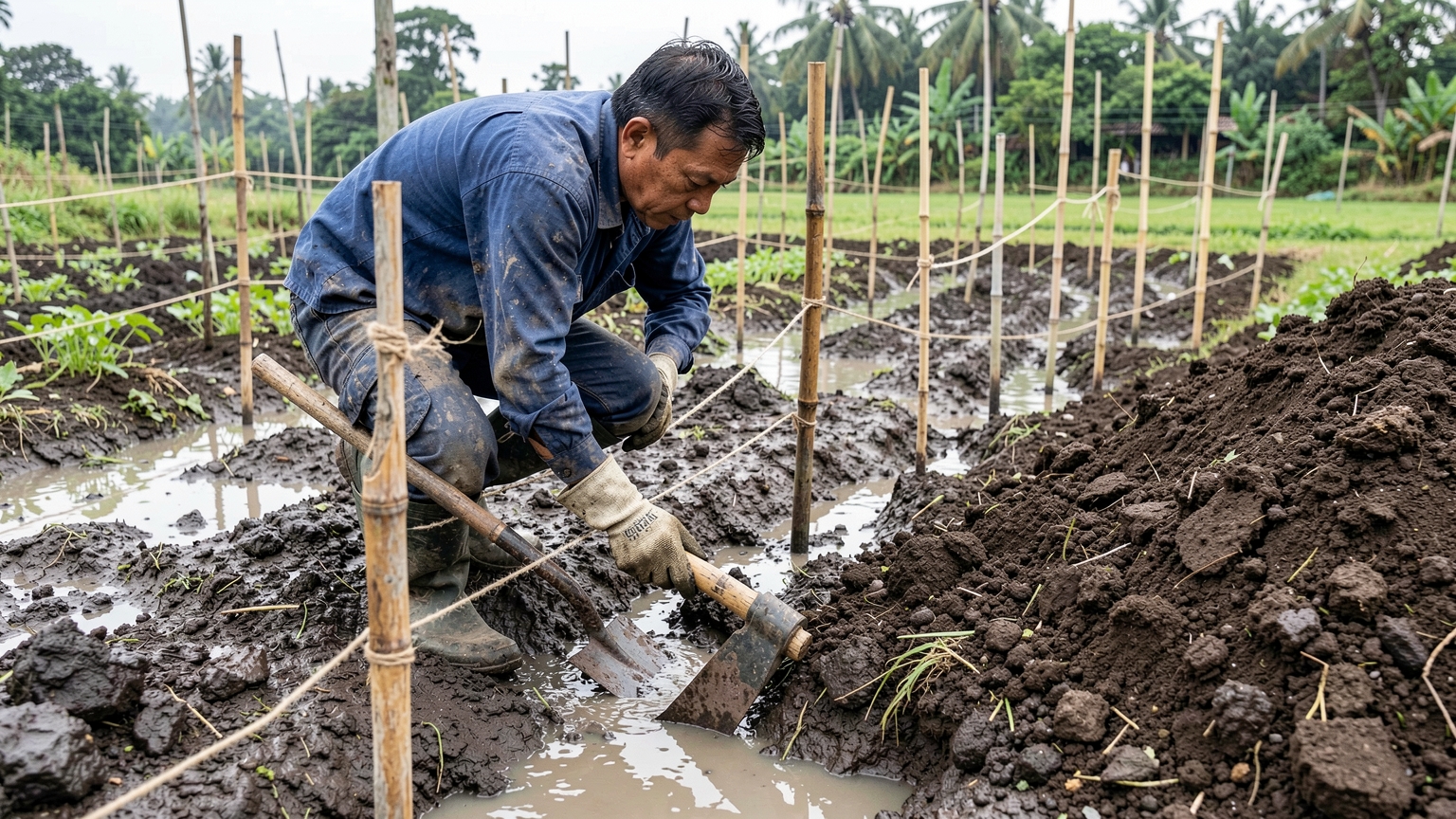
Put the soil you remove on the side away from the crops, or use it for raised beds in the next step. Do not pile it where rain can wash it straight back into the ditch.
Next, dig the side channels between crop rows. Cut each one so it joins the main ditch at an angle, not at a sharp right angle. This helps water flow smoothly and stops the joint from washing out. Dig carefully near plants so you do not cut too many roots. Keep the channels about a hand's width away from the stems if you can.
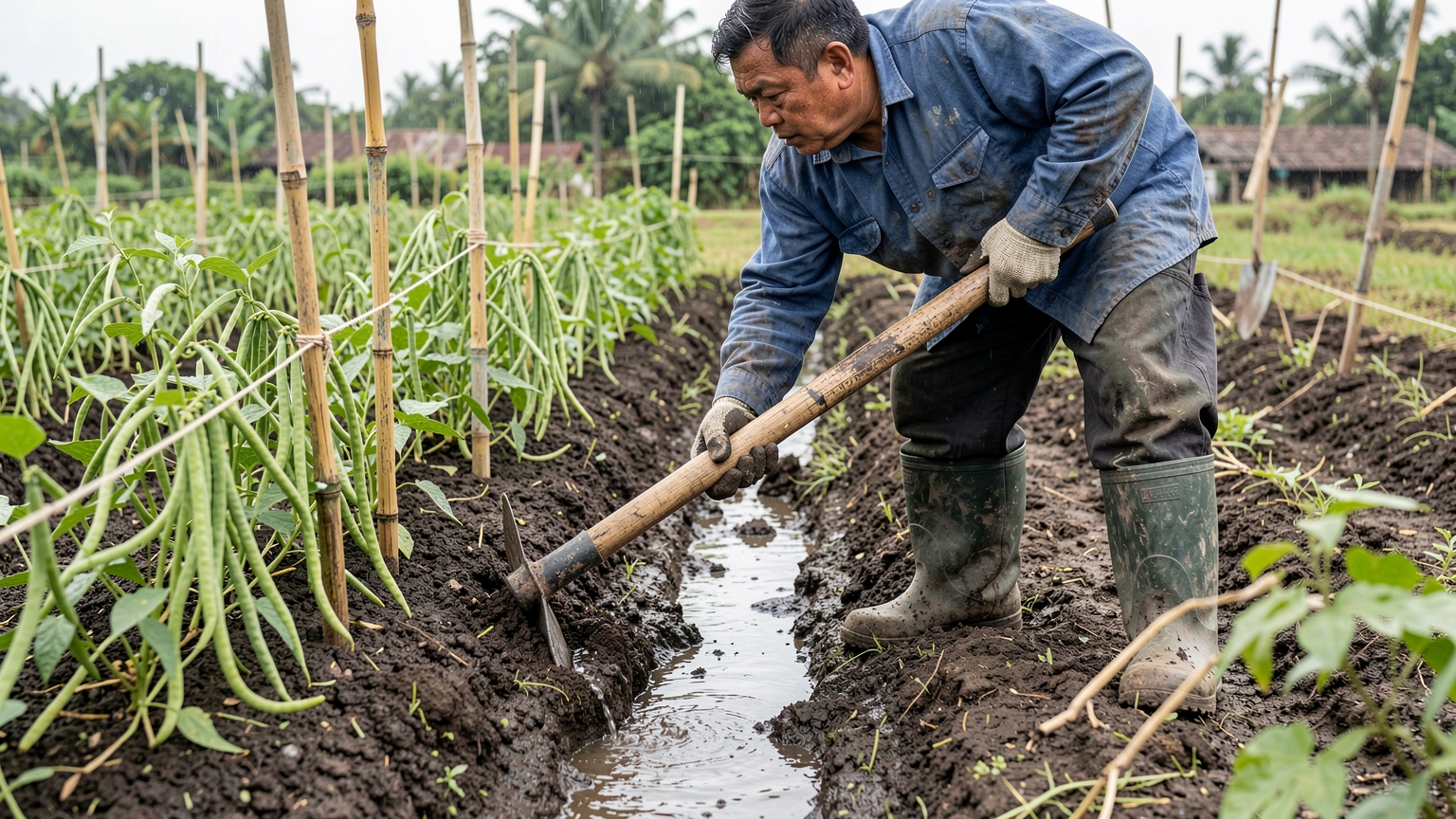
When the channels are open, check the flow. Water should move slowly and steadily toward the outlet. If it pools in one spot, scrape that section a little deeper. If it runs fast and cuts the soil, make the slope gentler.
Lift Crops onto Raised Beds
Ditches take water away, but raised beds lift roots above it. They work well for vegetables such as leafy greens, chili, tomato, eggplant and herbs, and for replanting after a crop is lost.
- Mark beds about 1 metre wide, so you can reach the middle from both sides.
- Leave paths about 30 to 40 cm wide between beds. These paths also act as drainage channels.
- Pull soil from the paths onto the bed with the hoe. Add the soil you dug from the ditches.
- Build each bed about 20 to 30 cm high, with a flat top and gently sloped sides.
- Mix in compost or well-rotted manure if you have it, to keep the soil loose.
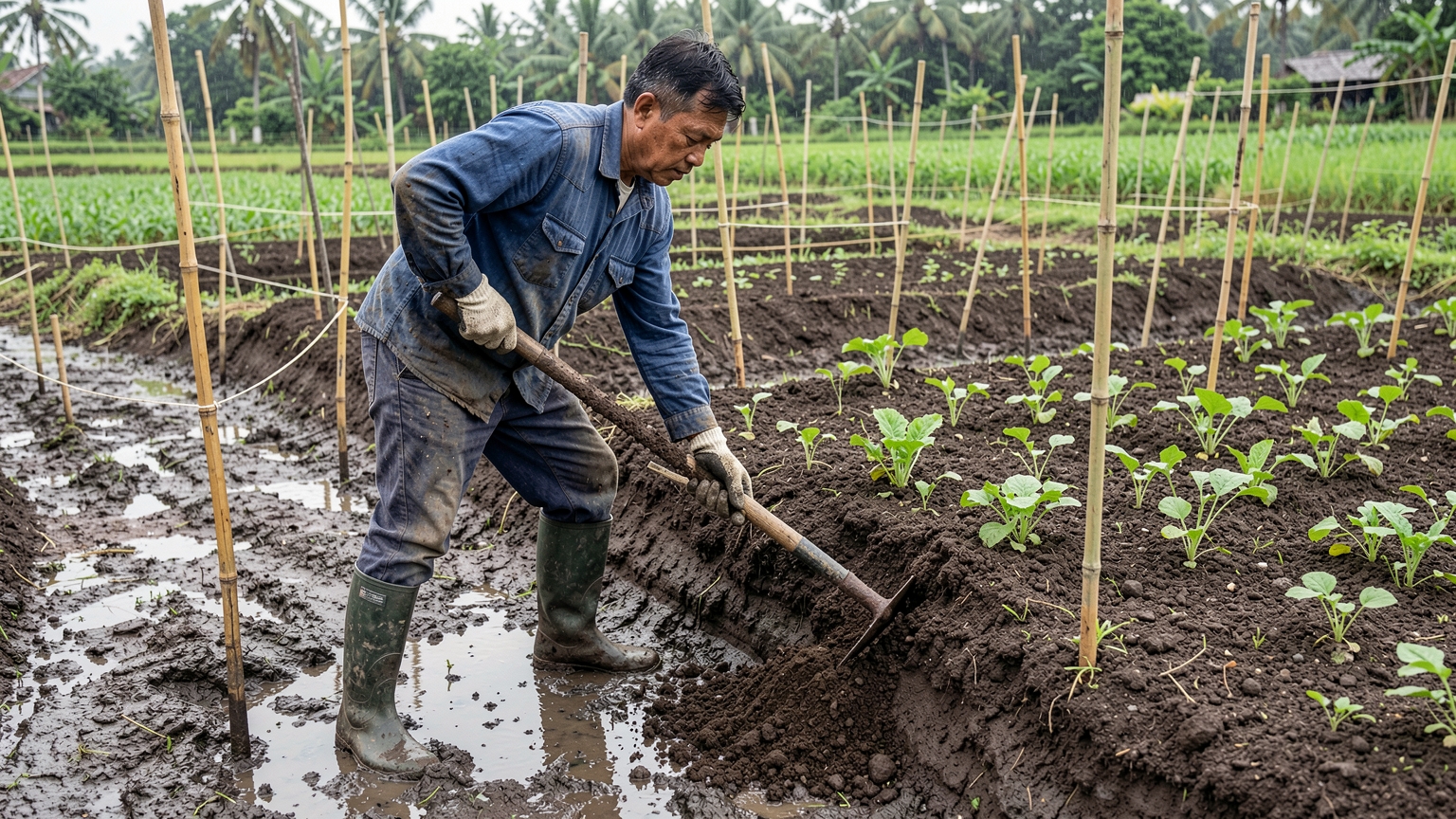
For plants that are still alive but standing in wet soil, you can hill up soil around the base of each row instead of building a full bed. Pull soil from between the rows toward the stems, making a small ridge. This keeps the root zone higher and drier. Corn, cassava, sweet potato and peanuts often respond well to this.
Remove plants that are already dead or rotting. Put them in a compost pile away from the field, not in the ditches, where they will block the flow.
Protect the Ditches and Help Plants Recover
New ditches in soft soil can collapse or wash away in the next storm. A few simple, local materials help them last:
- Line the bottom of the outlet and any steep sections with stones, broken bricks or old roof tiles.
- Push short bamboo stakes along weak edges and weave split bamboo or old branches between them.
- Lay rice straw or dry grass on the sides of raised beds to stop rain from washing soil away.
- Plant grasses with strong roots, such as vetiver, along the main ditch banks if they grow in your area.
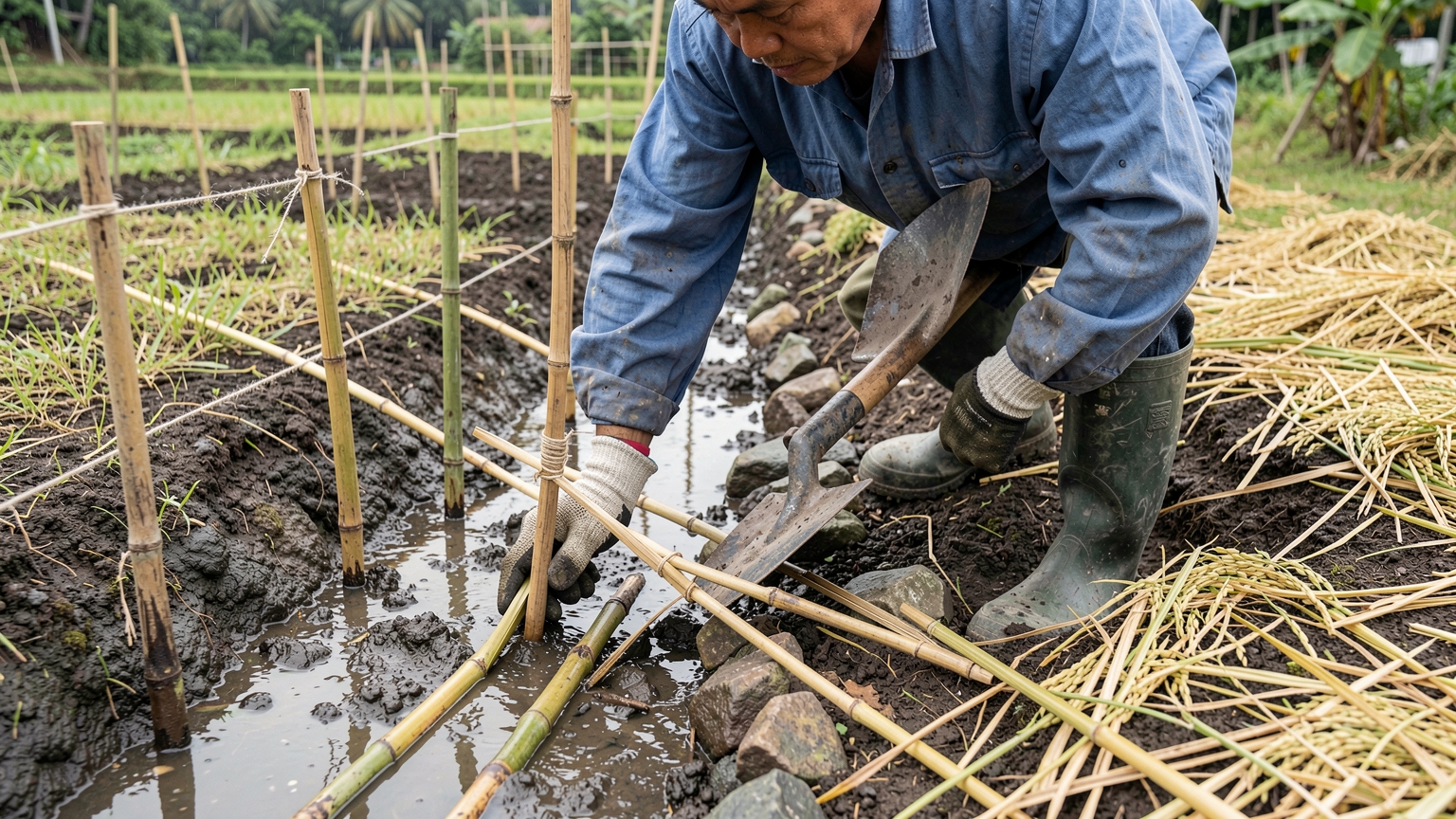
Walk the ditches after every heavy rain. Clear out leaves, mud and plant waste with the hoe. A blocked ditch can flood the field again in one night.
Give waterlogged plants a little time. Do not add strong fertilizer right away, because damaged roots cannot use it well and may burn. Once new green leaves appear, a light feed of compost or diluted manure tea can help. Results will vary with the crop, the soil and how long the roots were under water. Some plants will not recover, and that is normal.
Tools for this work are cheap. A hoe or spade often costs around 5 to 20 US dollars, depending on the country and the quality. If your whole farm floods every year, or water comes from a river or a large canal, the problem is bigger than hand ditches can fix. In that case, talk to your local extension officer or an experienced farmer about field levels, bunds and shared village drainage. Large earthworks and changes to public waterways usually need permission and proper planning.