How to Dry Rice in Wet Weather Without Mould or Sprouting
Rain keeps falling after harvest? Learn simple ways to dry rice on raised racks and under covers so grain stays clean and does not sprout.
Published

Freshly harvested rice is wet inside. If it stays wet for more than a day or two, it can grow mould, smell sour, turn yellow or start to sprout. Learning how to dry rice in wet weather comes down to three things: keep the grain off the wet ground, keep rain off it while air still moves through it, and only store it when it is truly dry. This guide walks you through each step using bamboo, wood, plastic sheeting and containers that many farm families already have.
Conditions differ across Southeast Asia. Rainfall, humidity, rice varieties, local rules on grain storage and prices are not the same in Cambodia, Thailand, Vietnam, Laos, the Philippines, Malaysia or Indonesia, or even between two villages. Use these ideas as a starting point and ask an experienced local farmer or your agricultural extension officer what works best where you live.
Why Wet Rice Spoils So Fast
Rice cut in the field often holds a lot of water. In hot, humid air, mould spores grow quickly on damp grain. Grain piled in a heap also warms up inside, which speeds up mould. If the grain gets soaked by rain while it is still ripe, it can begin to sprout within a few days.
Some moulds on grain can make it unsafe to eat or feed to animals. Throw away grain that is badly mouldy, black, or smells musty. Do not try to save it by mixing it with good grain.
The aim is to bring the grain down to a safe moisture level for storage. Extension services in many countries suggest about 14 percent moisture or lower for storing rice for a few months, and lower again for longer storage or seed. You do not need a meter to start, but some cooperatives and extension offices lend them.
Step 1: Thresh Quickly and Never Leave Wet Heaps
In wet weather, do not leave cut rice lying in the field or stacked in tight piles for days. Thresh it as soon as you can, ideally the same day or the next day. Loose grain dries much faster than grain still on the stalk.
- Wear gloves, long sleeves and sturdy shoes. Rice straw and chaff scratch the skin.
- Wear a dust mask when threshing or winnowing. The dust can irritate the nose and lungs.
- If you use a motor thresher, keep hands, loose clothes and long hair away from moving parts, and turn it off before clearing a blockage.
- If you cannot thresh at once, spread the cut bundles thinly under a roof or shelter, not in a heap.
After threshing, clean out leaves, broken stems and weed seeds. This trash holds water and helps mould grow.
Step 2: Build a Raised Drying Rack
A raised rack keeps grain away from puddles and ground moisture, and lets air move underneath. Build it in an open, breezy spot on higher ground, away from places that flood.
- Use bamboo poles or wooden posts for legs, about knee to waist height.
- Lay a flat top of split bamboo, wooden slats or strong wire mesh.
- Cover the top with woven mats, fine nylon net or old rice sacks so grain does not fall through, but air can still pass.
- Tie every joint firmly with wire or strong rope and check that the rack does not wobble.
- Keep the rack low enough to reach the middle without climbing. If you build a taller shelf rack, use a stable, secured ladder with a second person holding it, and never climb it in rain or wind.
Spread the grain thinly, about 2 to 4 centimetres deep. Thin layers dry faster and are less likely to heat up.
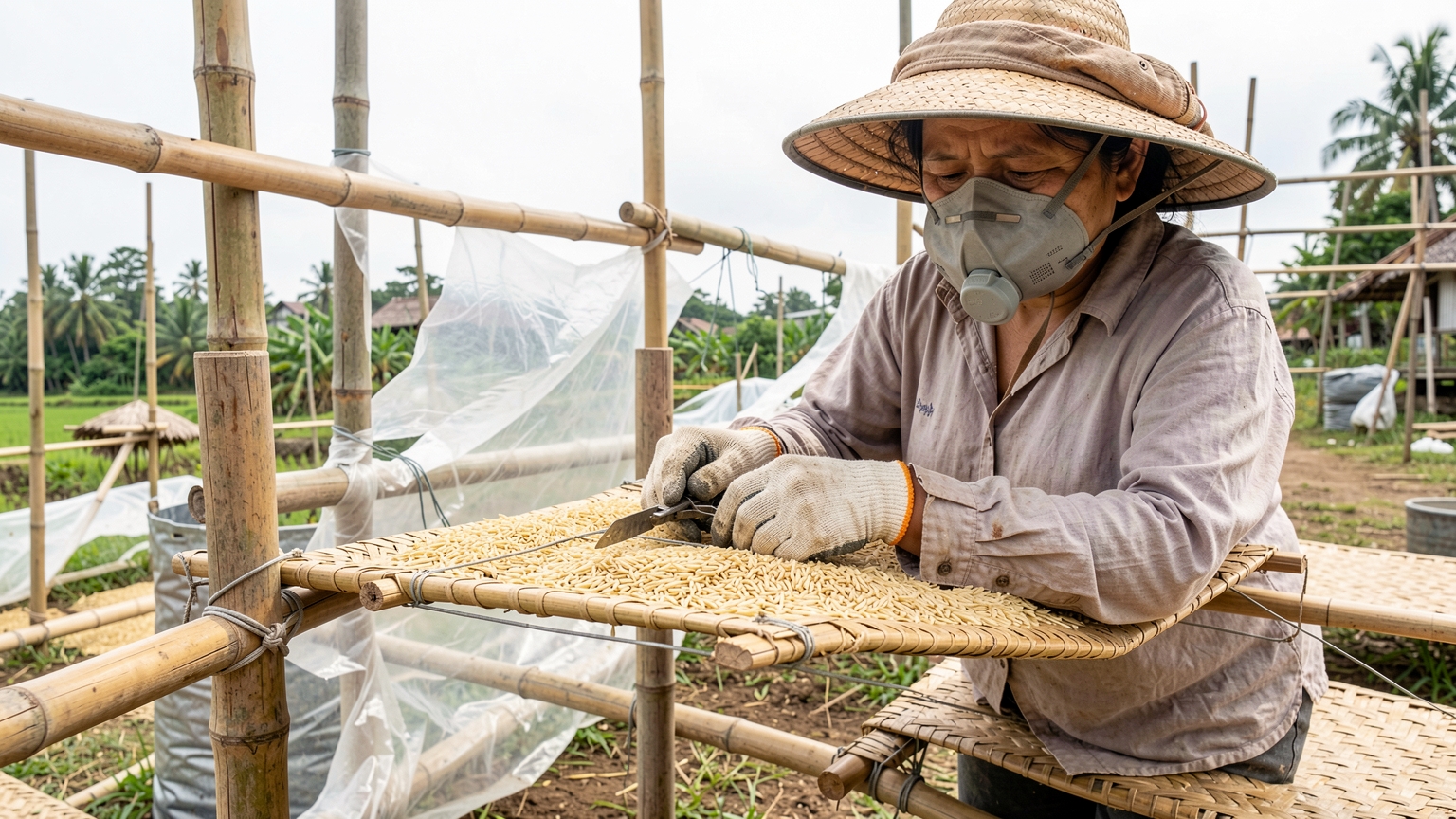
Turn the grain every hour or two with a wooden rake or your gloved hands while the weather allows. This stops the bottom layer from staying damp.
Step 3: Cover It Against Rain but Keep the Air Moving
The most common mistake is wrapping wet grain tightly in plastic. This traps moisture and makes mould worse. The cover should keep rain off from above while air flows in from the sides.
- Build a simple frame of bamboo above the rack, shaped like a low roof with a slope so water runs off.
- Stretch clear or light-coloured plastic sheeting over the frame. Clear plastic lets light and warmth through.
- Leave the sides open, or roll the side sheets up whenever it is not raining.
- Tie the sheet down well at the corners so wind cannot lift it.
- Make sure rainwater drains away from the rack, not onto the grain or under the legs.
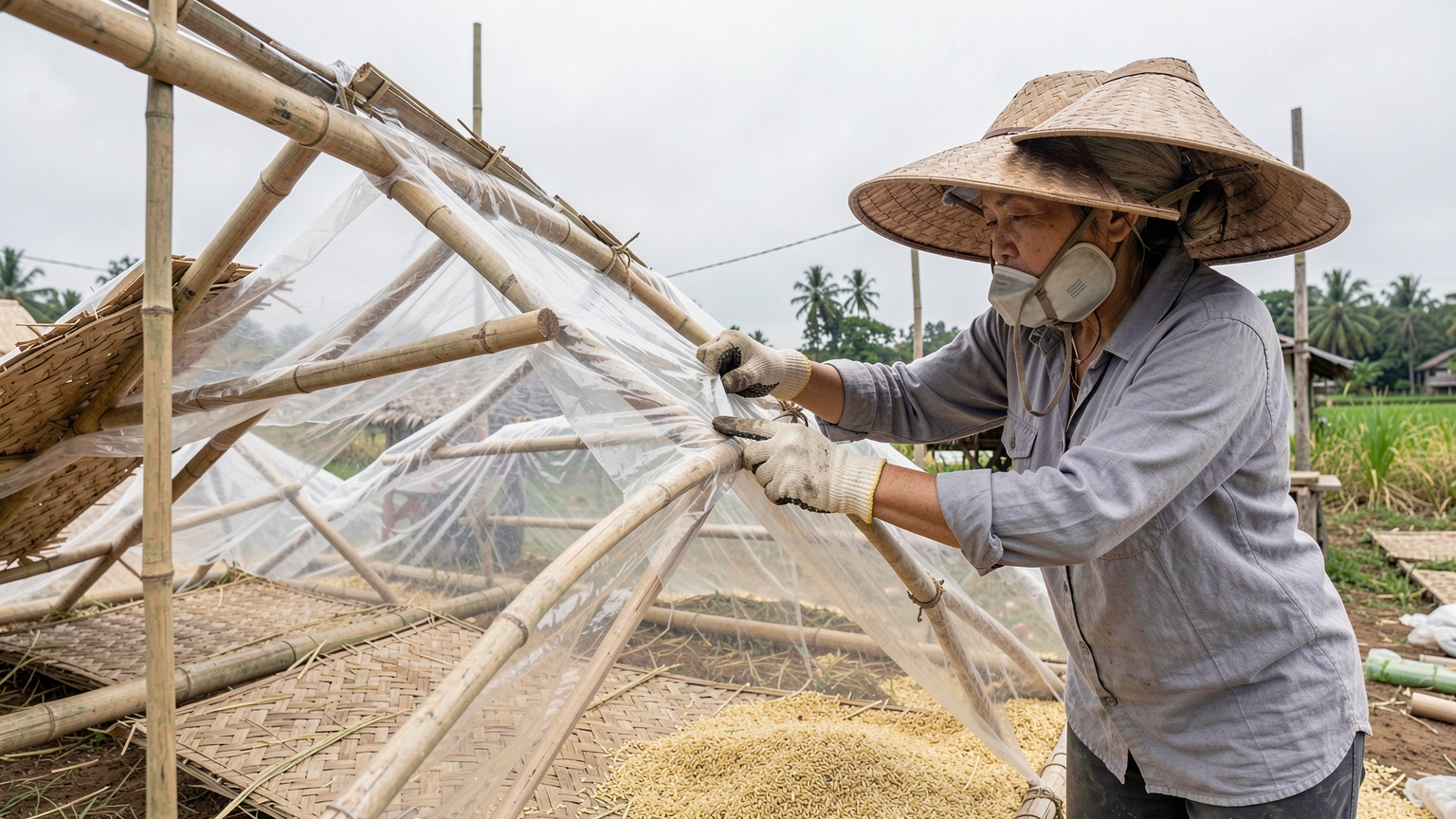
Plastic sheeting and rope are usually cheap. A sheet large enough for a small rack may cost roughly 2 to 10 US dollars, but prices vary a lot by country and thickness.
When the sun comes out, open the cover fully so the grain gets sun and wind. When dark clouds come, pull it back over quickly. Keep the cover ready on the frame so one person can close it in a minute.
If rain lasts for days, move the grain under a house, shed or other roofed space with good airflow. An electric fan can help. Do not use charcoal stoves, gas heaters or engines to warm grain in a closed room, because the smoke and fumes can kill people. Heated grain dryers are useful for larger farms, but ask a trained installer or your cooperative about using them safely.
Step 4: Check That the Grain Is Dry Enough
Drying can take a few days to more than a week in cloudy weather. Check the grain every day before storing it.
- Bite test: a dry grain is hard and cracks cleanly. If it feels soft or chewy, it is still wet.
- Sound test: dry grain makes a light, clear rattling sound when shaken in the hand.
- Jar test: put a handful of grain into a dry glass jar with a spoon of dry salt, close it and shake. If the salt sticks to the glass after some minutes, the grain is still too wet.
- Moisture meter: if you can borrow one, it gives the most reliable reading.

Take samples from several parts of the rack, including the middle and bottom. Let the grain cool in the shade for a few hours before you store it. Warm grain sealed in a container can sweat and become damp again.
Step 5: Store Rice in Sealed Containers
Once the grain is dry and cool, keep humid air away from it. Sealed containers help keep moisture out and limit insects.
- Use food-grade plastic drums or bins with tight lids, metal containers, or special airtight grain storage bags. Airtight bags may cost roughly 2 to 6 US dollars each, depending on the country and size.
- Make sure every container is clean and fully dry inside before filling.
- Fill containers close to the top to leave little air space, then seal tightly.
- Place containers on wooden pallets or bricks, not on bare concrete or soil, and away from walls that get damp.
- Keep them in a shaded, roofed place that does not flood. In low areas, store them on a raised platform.
- Do not reuse containers that held fuel, pesticide or other chemicals.
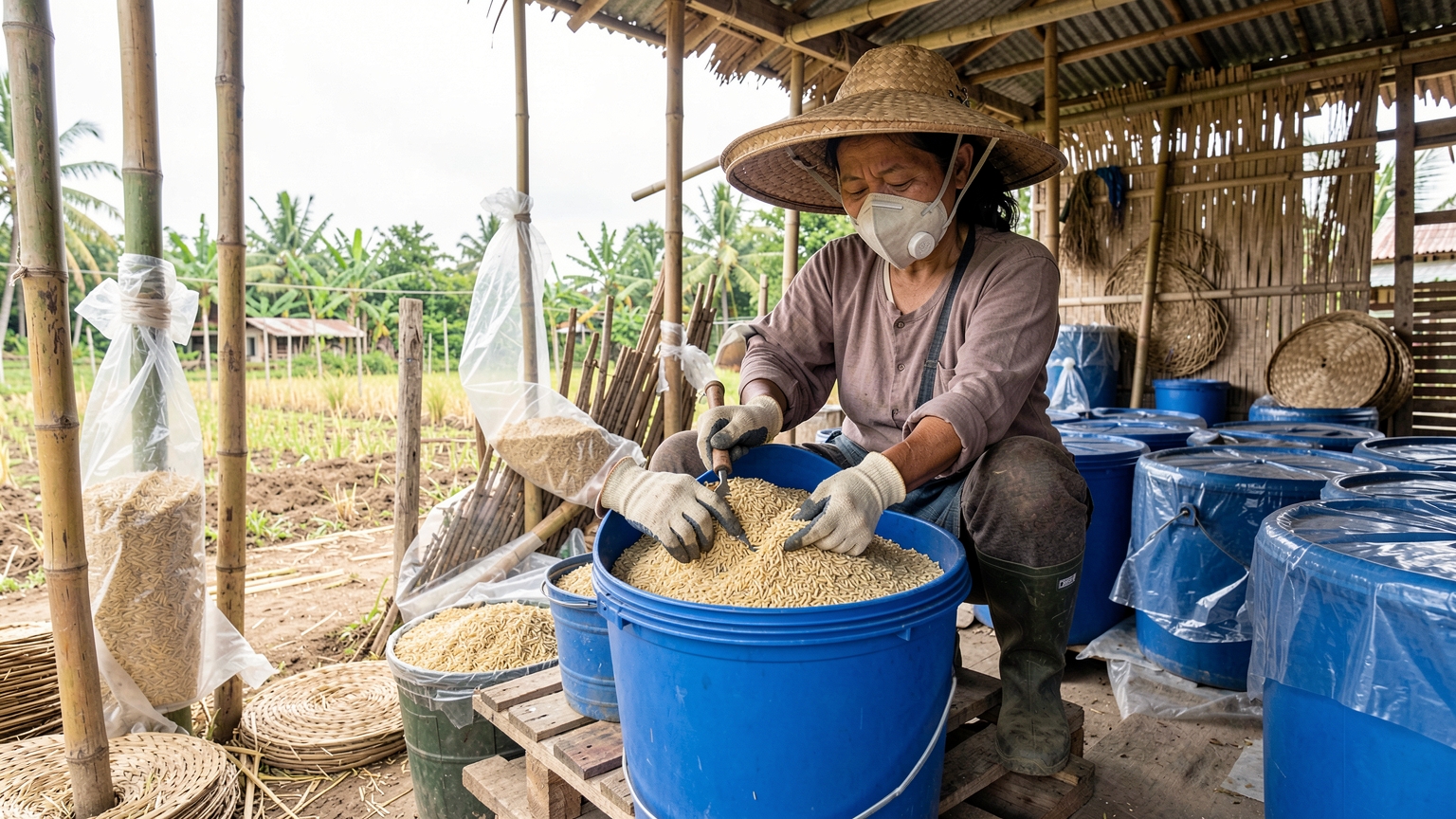
Avoid using pesticides or chemical powders in food grain unless an extension officer has advised a specific product and method for your country. Many products are not safe for food grain.
Keep Checking Your Stored Grain
Open and look at stored rice every week or two at first. Smell it, feel it and look for clumps, warmth, insects or white and green patches. If one container shows a problem, take the grain out, dry it again if it is only slightly damp, or throw it away if it is mouldy. Keep seed rice separate, dry it with extra care, and label containers by date in your own records.
With a raised rack, a well-tied cover and sealed containers, a family can protect much of its harvest even when rain keeps coming. Results depend on your weather, your rice and your storage place, so learn from neighbours who have done this for years and ask your extension officer when in doubt.