Flood-Proof Chicken Coop: Raised Bamboo Design for Floods
Floodwater rising near your flock? Build a raised bamboo coop that keeps chickens and ducks dry using materials you already have.
Published
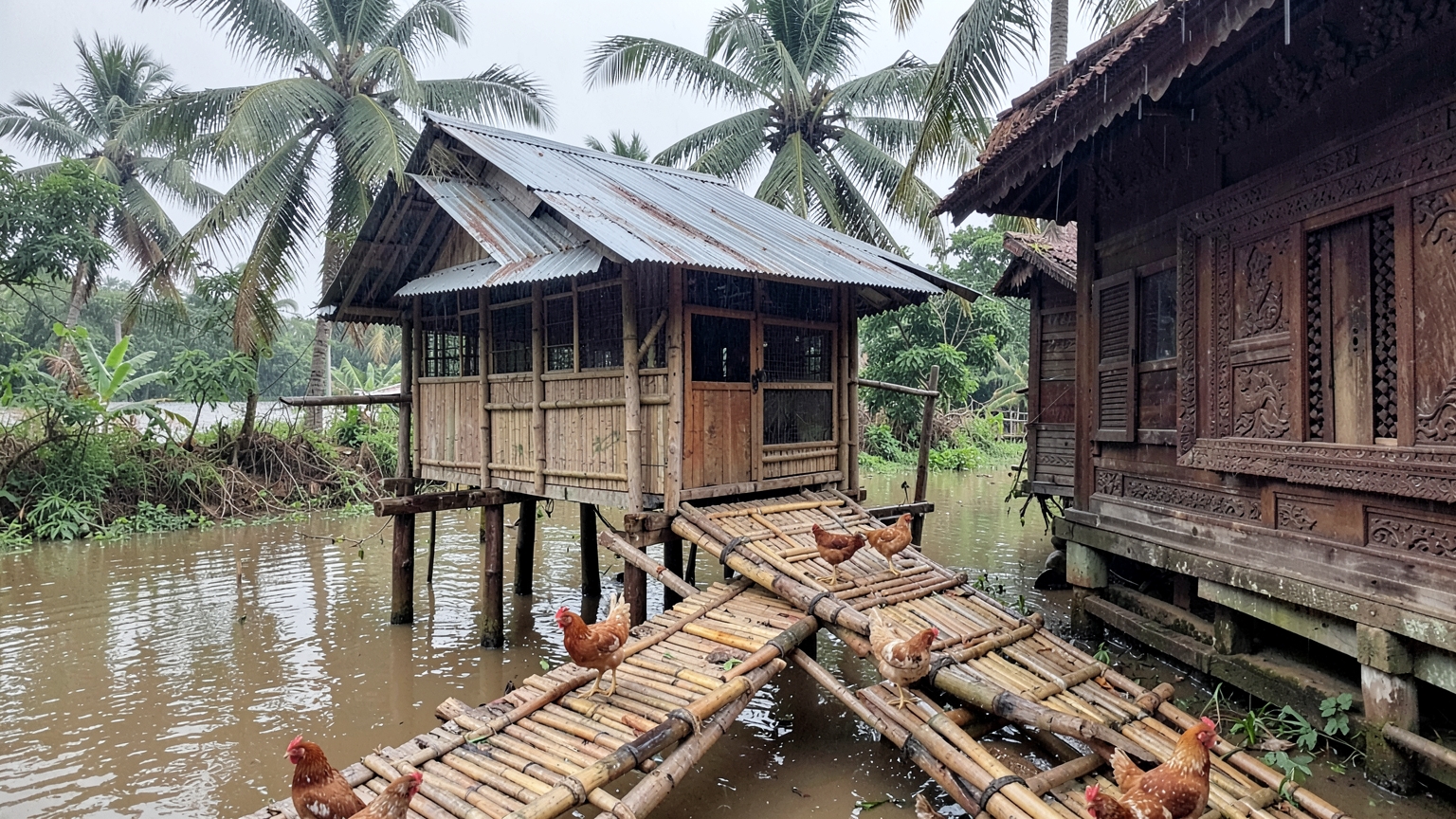
Water is rising in many low villages right now, and chickens drown fast when a coop floods at night. A flood-proof chicken coop is simply a house for your birds that stands above the highest water, or floats on top of it. You can build one in one or two days with bamboo, old plastic drums, scrap wood and rope. This guide shows how to choose the height, build a strong raised coop, and make a floating platform for ducks or emergencies.
Why a Flood-Proof Chicken Coop Matters Now
The heaviest rain often comes at the end of the wet season. Rivers and the Tonle Sap rise, rice fields fill, and water can come up in a few hours after a big storm upstream. Chickens cannot swim. Ducks can swim, but they get tired, cold and lost in fast water, and they are easy prey for dogs, snakes and thieves when they scatter.
A raised coop also helps on days with no flood. The floor stays dry, mud does not collect under the birds, and snakes and rats find it harder to get in. Many families who build one keep using it all year.
- Chickens stay dry at night, when water often rises without warning.
- You do not need to carry birds into the house during a storm.
- Wet bedding and standing water are kept away from the flock.
- Feed stored up high stays dry and does not go mouldy as fast.
Choose the Right Height and Spot
Height is the most important choice. Find the highest flood mark you or your neighbours remember. Look for old water lines on house posts, trees or walls. Ask older people in the village. Then add a safety margin of at least 50 cm, and more if your land is very low or near a river bank.
If your worst flood reached 1 metre, build the coop floor at around 1.5 metres or higher. If you are not sure, go higher. A coop that is too high only needs a longer ramp. A coop that is too low can drown the whole flock.
Pick the spot carefully:
- Choose the highest ground you have, close to the house so you can check the birds easily.
- Stay away from the path of fast water, such as a canal edge or a low gap between fields.
- Avoid places under big old trees with weak branches. Storm winds can drop them on the roof.
- Keep the coop away from electric wires and pumps. Never run power to a coop through flood water. If you want a light, ask a trained electrician.
Build the Raised Bamboo Coop
This design is a small stilt house, like a mini Khmer house on posts. It suits around 10 to 20 chickens. For a bigger flock, build two coops rather than one very large one.
Materials
- 4 to 6 thick, mature bamboo poles or hardwood posts for the legs. Old bamboo is stronger than young green bamboo.
- Smaller bamboo for the frame, braces and floor slats.
- Split bamboo or scrap planks for the floor.
- Zinc sheets, old roofing, or palm leaf thatch for the roof.
- Wire, nails, nylon rope and rubber strips from old tyres or inner tubes for tying.
- Chicken wire or woven bamboo for the walls.
Posts and Bracing
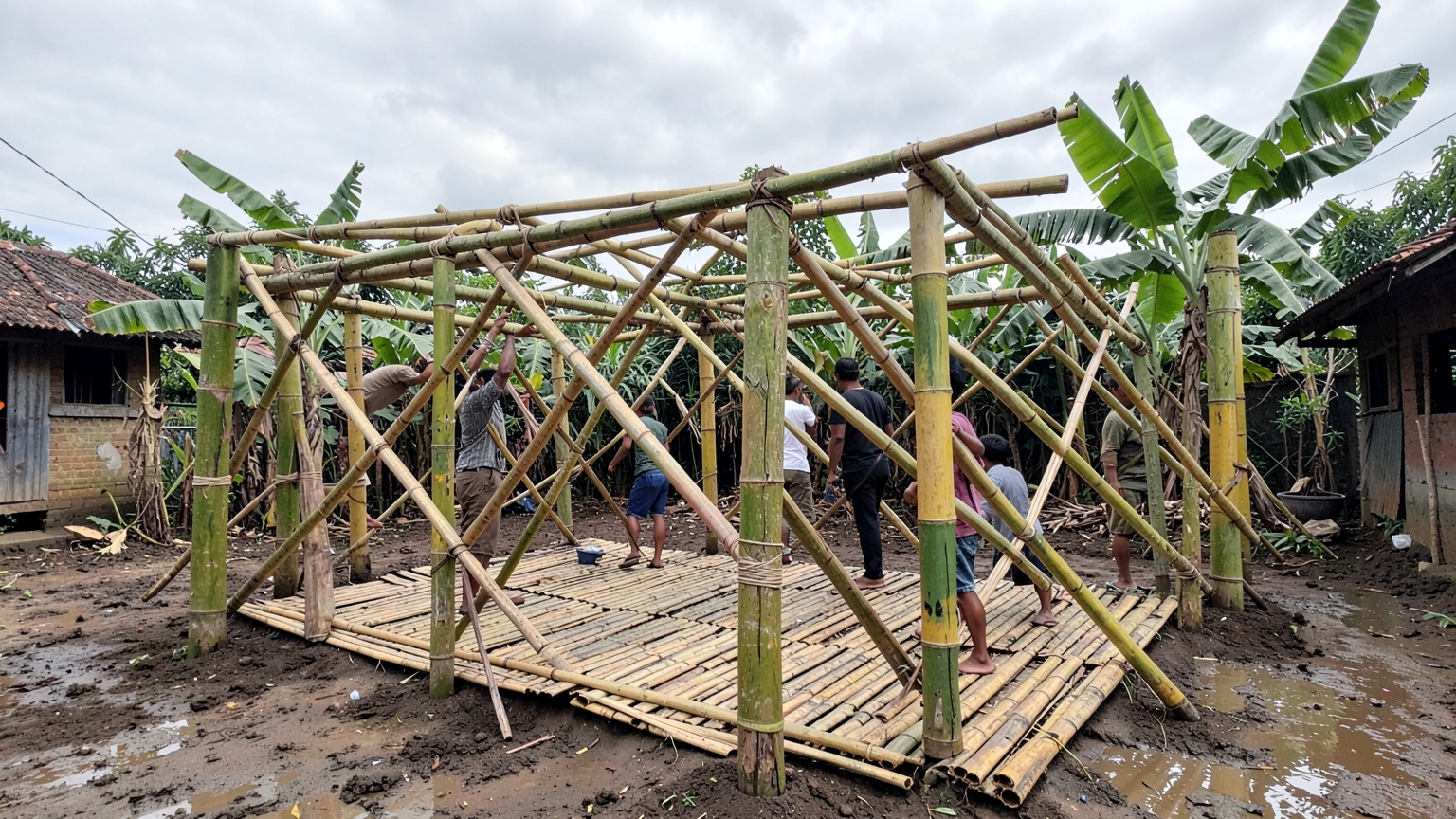
Dig holes 60 to 80 cm deep for each post. In soft, wet soil, put broken bricks or stones in the bottom and pack them hard around the post. If you have some cement, a small concrete footing helps a lot. Wrap the bottom of bamboo posts in old plastic, or char them a little in a fire, to slow rotting in wet ground.
Add diagonal braces between the posts in an X shape on every side. Flood water pushes sideways, and floating logs can hit the posts. Bracing stops the coop from leaning or falling. This is the step people skip most often, so do not skip it.
Floor
Lay strong cross beams on top of the posts, then a floor of split bamboo slats. Leave small gaps of about 1 to 1.5 cm between slats so droppings fall through and air moves. Make the gaps small enough that chicken feet do not get stuck. Put a few roosting poles inside, about 40 to 60 cm above the floor.
As a rough guide, give each adult chicken enough room to stand and turn without crowding. Crowded birds fight and get sick more easily, so build a little larger than you think you need.
Walls, Roof and Ramp
Use chicken wire or tight woven bamboo for the walls so air flows but snakes and wild cats cannot get in. Make the roof slope so rain runs off, and let it hang over the walls by at least 30 cm to stop rain blowing in. Tie every zinc sheet down with wire. Monsoon storms lift loose sheets very easily.
Build a ramp from a wide plank or bamboo with small cross slats every 15 to 20 cm, so birds can grip it. Lift the ramp or close the door at night. A small hinged door with a wooden latch is enough.
If you want to build a large coop attached to your house, or use the house structure to hold it up, ask an experienced builder first. Extra weight and water pressure can damage a house that was not made for it.
Make a Floating Platform for Ducks and Emergencies
Sometimes water rises higher than anyone expected. A floating platform is a good backup. It rises and falls with the water, so the birds never go under. Ducks especially like it because they can swim off and climb back on.
You need plastic drums, such as old 200-litre water or chemical drums, or large sealed plastic containers. Wash old chemical drums very well before use. Check that every cap is tight. Seal caps with rubber strips or melted plastic if they leak.
How to build it:
- Lay 2 to 4 drums side by side.
- Tie a frame of thick bamboo across the top and bottom of the drums with strong rope or wire.
- Lay a floor of planks or split bamboo on top.
- Add a small roof or shade cover, and low walls of wire or woven bamboo.
- Make a gentle ramp into the water for ducks.
A sealed drum can hold up a lot of weight, but do not load it to the limit. Use only about half of what it can carry, so the platform stays stable in waves and wind. Test it in a pond or flooded field before you need it, with some bags of soil or rice husk as weight.
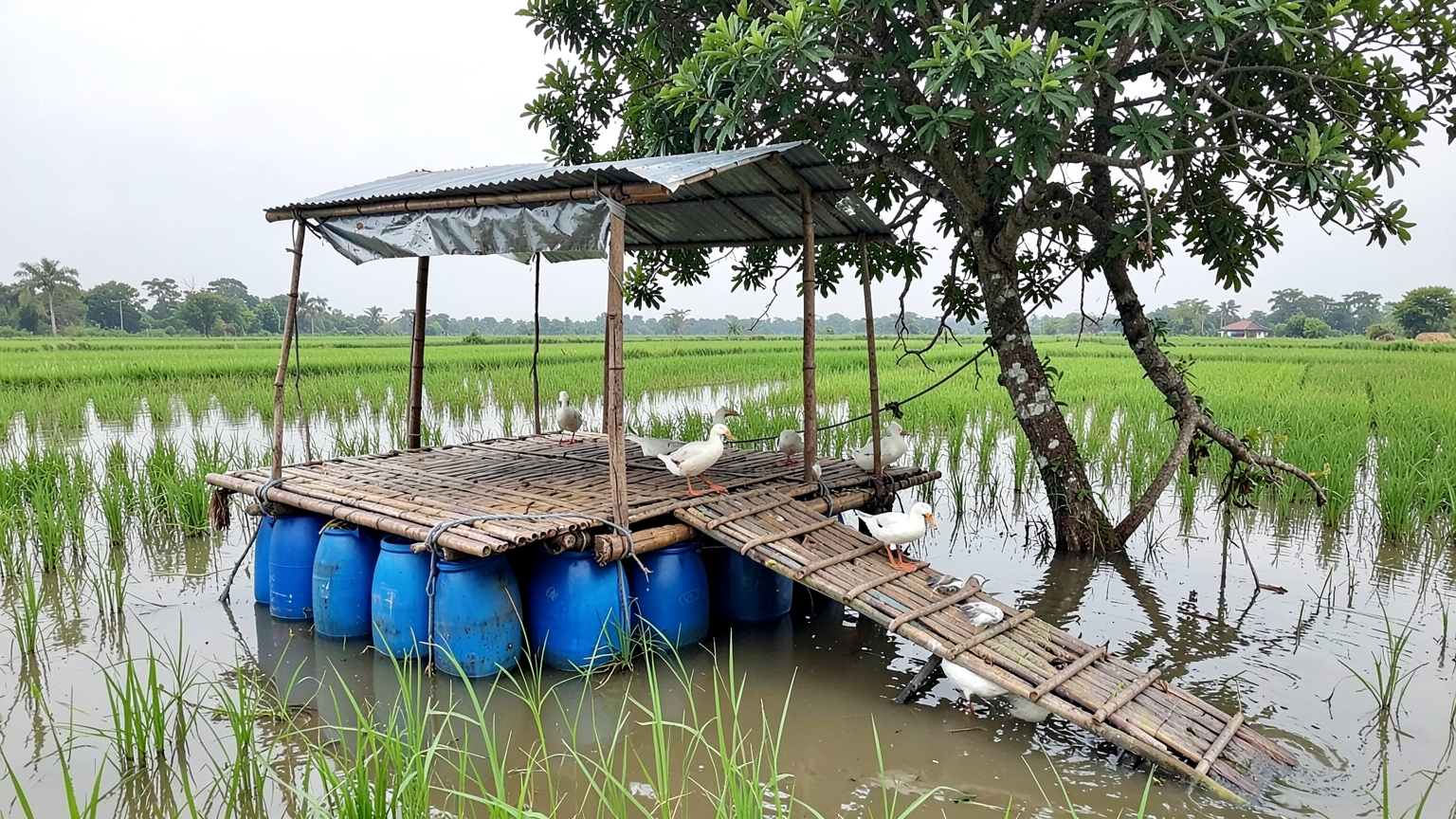
Tie the platform to a strong post or tree with a rope long enough to let it rise with the highest flood. A short rope can pull the platform under when the water comes up. Check the rope every day, because rubbing wears it through.
Keep the Flock Healthy While the Water Is High
A dry coop is only part of the job. Flood water carries mud, waste and dead animals, so keep your birds away from it as much as you can.
- Give clean drinking water every day. Do not let chickens drink flood water.
- Store feed up high in sealed buckets or bags with a lid. Throw away feed that smells mouldy.
- Add fresh dry rice husk or straw to nest boxes, and remove wet bedding.
- Collect eggs often, and do not use eggs that sat in flood water.
- Look at your birds each morning. Separate any bird that is weak, sits alone or has a runny nose or eyes.
- If several birds get sick or die quickly, ask your local animal health worker or the district agriculture office for help. Bury or burn dead birds away from water.
After the water goes down, check every post, brace and rope. Replace soft or cracked bamboo, clean the space under the coop, and let the ground dry before birds walk on it again. A well-built raised coop can protect your flock for many years, and it costs mostly your own time and materials you already have.