Foot Rot in Cattle: Prevent It in Mud and Floodwater
Cattle and buffalo standing in mud for weeks? Learn how dry standing areas, hoof cleaning and footbaths keep feet healthy in the rains.
Published
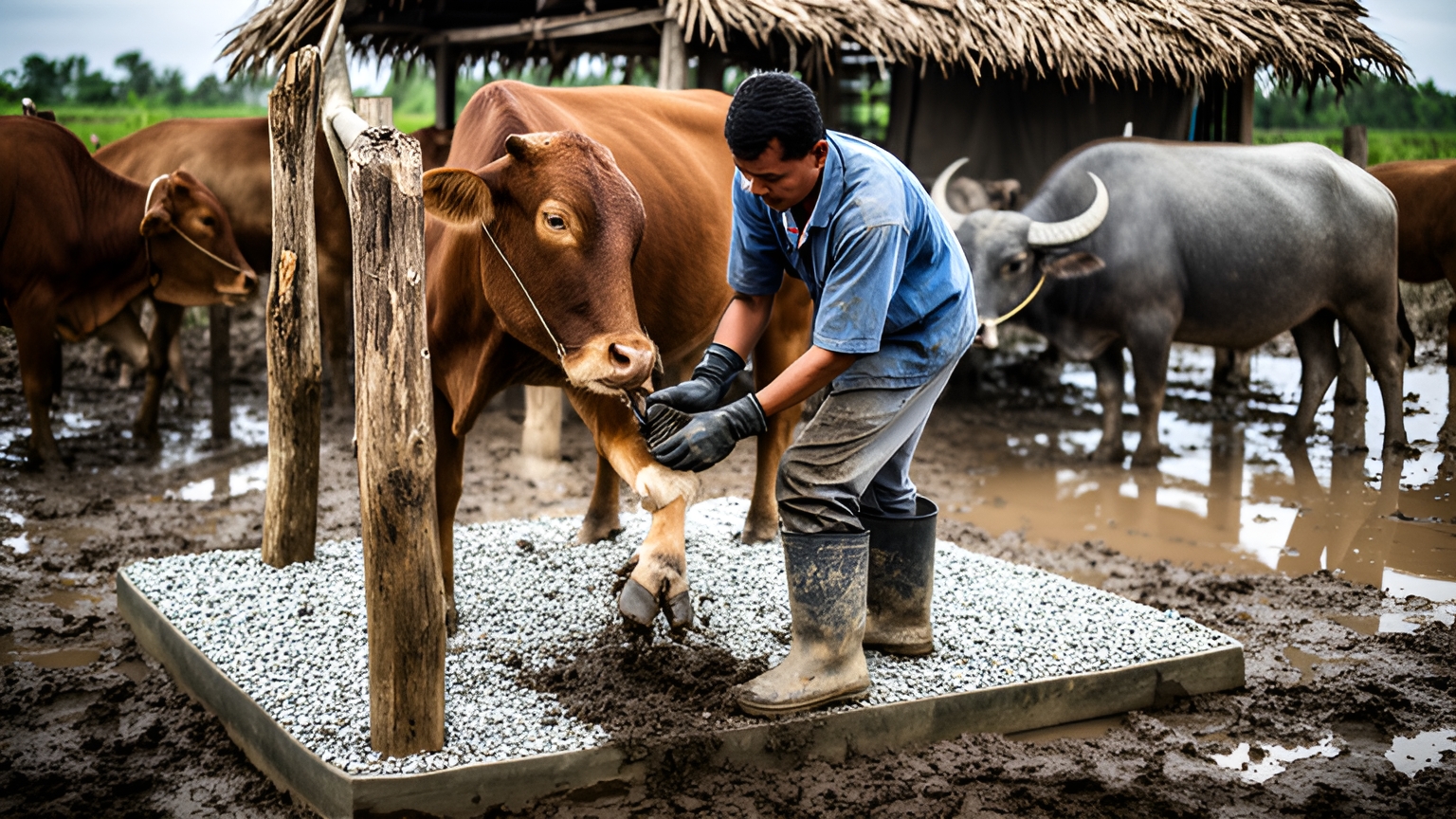
Foot rot in cattle is common when animals stand in mud and floodwater for days or weeks. Wet, soft skin between the claws cracks easily. Germs from dung and mud then get in and cause swelling, pain and limping. In many parts of Southeast Asia, this is the time of heavy rain and flooding in low areas, so cattle and buffalo are most at risk right now. This guide shows you how to give your animals a dry place to stand, how to clean and check their hooves, how to use a simple footbath, and when to call a vet. Conditions differ by country and farm, so check local animal health rules and ask a vet or livestock extension officer before using any medicine or chemical.
Why Mud and Floodwater Cause Foot Rot in Cattle
A hoof that stays wet all day becomes soft, like your fingers after a long bath. Small stones, sticks and sharp rice stubble can then cut the skin between the two claws. The mud is full of dung and germs that live well in wet, warm places. Once they enter a cut, the foot can swell and smell bad within a few days.
Buffalo are used to wet ground, but they also get foot problems when they have no dry place to rest. Cattle are more sensitive. Animals kept in a small, muddy pen near the house during floods are often at higher risk than animals that graze on higher ground.
The good news is that most cases can be prevented with simple work: dry ground, clean feet and early checks.
Signs to Check Every Day
Watch your animals walk each morning and evening. Look for:
- Limping, or holding one foot off the ground
- Swelling above the hoof or between the claws
- Cracked or split skin between the claws
- A strong, rotten smell from the foot
- Grey or yellow matter in the cracks
- An animal lying down more than usual, eating less, or giving less milk
If you see one of these signs, separate the animal into a dry pen if you can. Early action is much easier than treating a badly swollen foot later.
Step 1: Build a Dry Standing Area
The most important step is giving animals a place to get out of the water and mud for several hours each day, especially at night. You do not need a concrete barn. Choose the highest ground near your house or field. If there is none, build up a raised pad.
- Mark out an area big enough for all your animals to lie down without crowding. Allow roughly 3 to 4 square metres per adult cow or buffalo, more if you can.
- Dig a shallow drain around the edge so rainwater flows away, not into the pad.
- Fill the area with layers: large stones or broken bricks at the bottom, then gravel, then a top layer of coarse sand or crushed rock. Raise it at least 20 to 30 centimetres above the surrounding ground.
- Make the top slope gently to one side so water does not pool.
- A simple roof of zinc sheets or thatch on posts helps keep the pad dry, but roof work must be done only in dry, calm weather with a secured ladder and a second person nearby.
Wear work gloves and sturdy rubber boots when carrying stones and gravel, and lift with your legs, not your back. Costs vary a lot by country. Gravel and sand for a small pad may cost from about 20 to over 100 US dollars, depending on how much you need and how far it is delivered. Old bricks and stones from your own land can lower the cost.
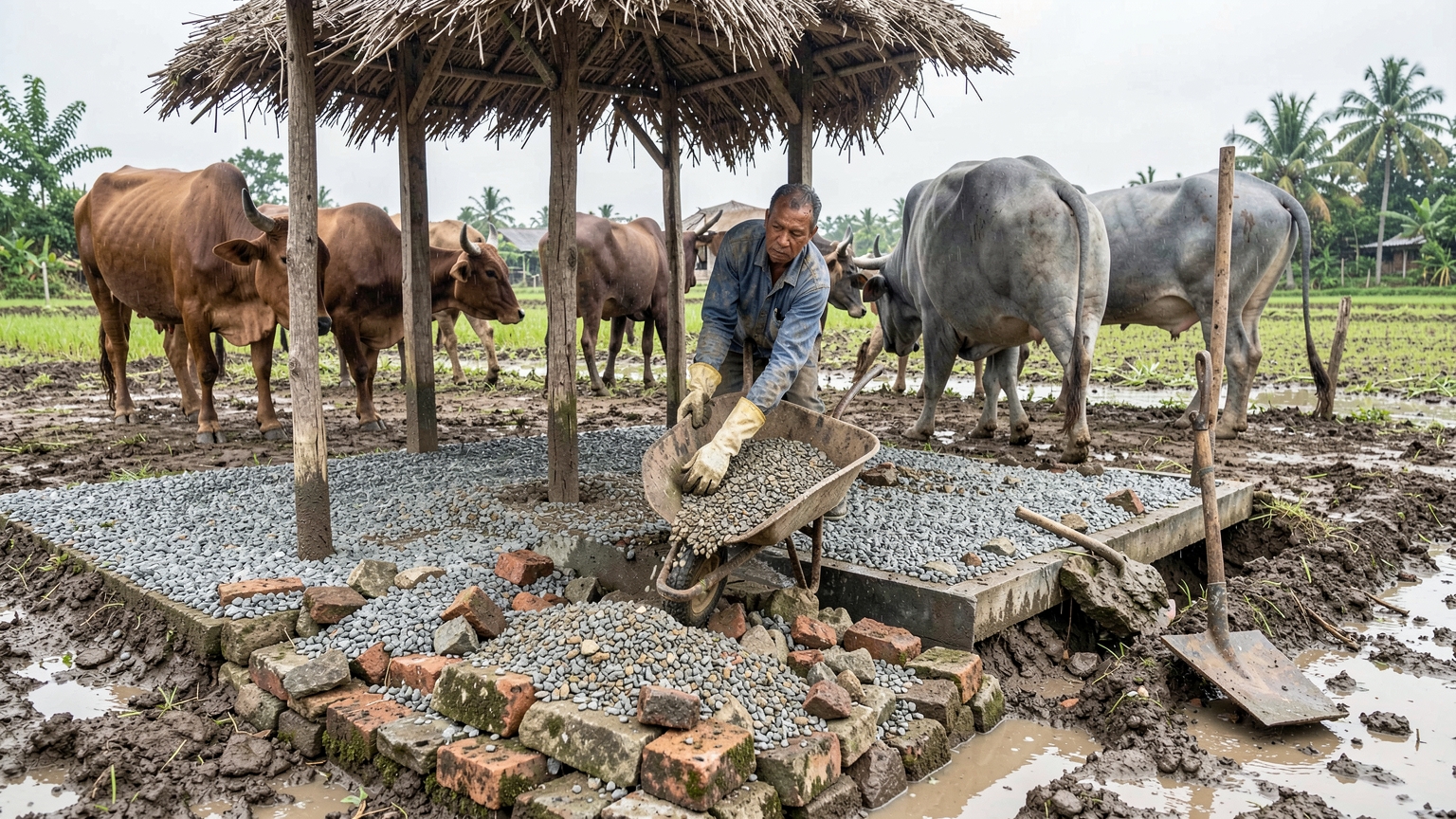
Clean dung off the pad every day with a shovel and add fresh dry material when it gets soft. A dry pad covered in wet dung is not dry anymore.
Step 2: Clean and Check Hooves
Check each animal's feet at least once a week during floods, and any time an animal limps. Work with a calm animal and a helper. Tie the animal securely with a halter to a strong post, or use a simple crush or holding frame if you have one. Never kneel directly behind a cow or buffalo, and keep your head clear of the legs.
- Wear gloves, sturdy boots and eye protection, because mud and dung can splash.
- Wash the foot with clean water and a stiff brush to remove mud and dung.
- Lift the foot slowly. For a front foot, stand beside the shoulder. For a back foot, stand beside the hip and lift with care. Many farmers tie a soft rope around the leg to help hold it.
- Look between the claws for stones, sticks, cracks, swelling or bad smell.
- Gently remove stones or sticks with a blunt hoof pick or a smooth stick.
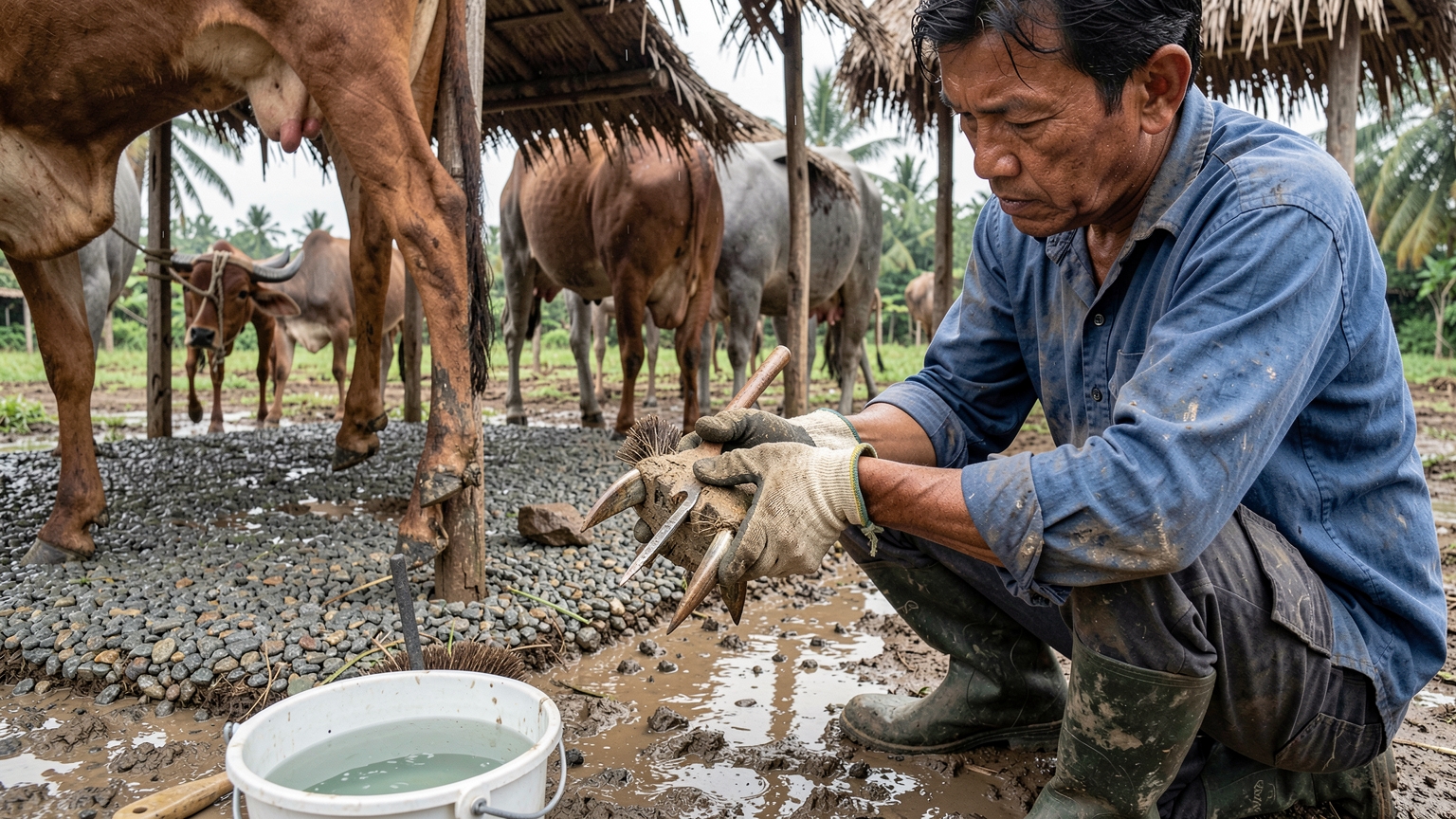
If the hoof has grown very long or uneven, or you see deep holes, do not cut it yourself unless you have been trained. Hoof trimming done badly can lame an animal. Ask a vet, an experienced hoof trimmer or a local livestock worker for help.
Wash your gloves and tools after each animal so you do not spread germs from one foot to the next.
Step 3: Set Up a Simple Footbath
A footbath is a shallow tray of liquid that animals walk through. It helps clean and harden the skin of the feet. Place it where animals already walk, such as the gate to the dry pad, so they pass through it each day.
- Build a shallow box from wood planks, bricks with a cement lining, or use a strong plastic tray. It should be long enough that each foot goes in at least once, roughly 2 to 3 metres long, and about 10 to 15 centimetres deep.
- Put a clean water bath in front of it first, so animals wash off most mud before the treatment bath. This makes the treatment last longer.
- Ask your vet or extension officer which product to use and at what strength. In many places farmers use copper sulfate or zinc sulfate dissolved in water. Follow the product label or your vet's advice exactly. Do not guess the amount.
- Avoid formalin unless a vet tells you to use it and shows you how. It gives off strong fumes that harm people and animals.
When mixing, wear rubber gloves, eye protection and a mask, and stand where the wind carries dust away from you. Mix in a bucket first, then pour slowly into the bath. Keep children, dogs and chickens away. A bag of footbath chemical may cost from a few US dollars to around 15 US dollars or more, depending on the product and country.
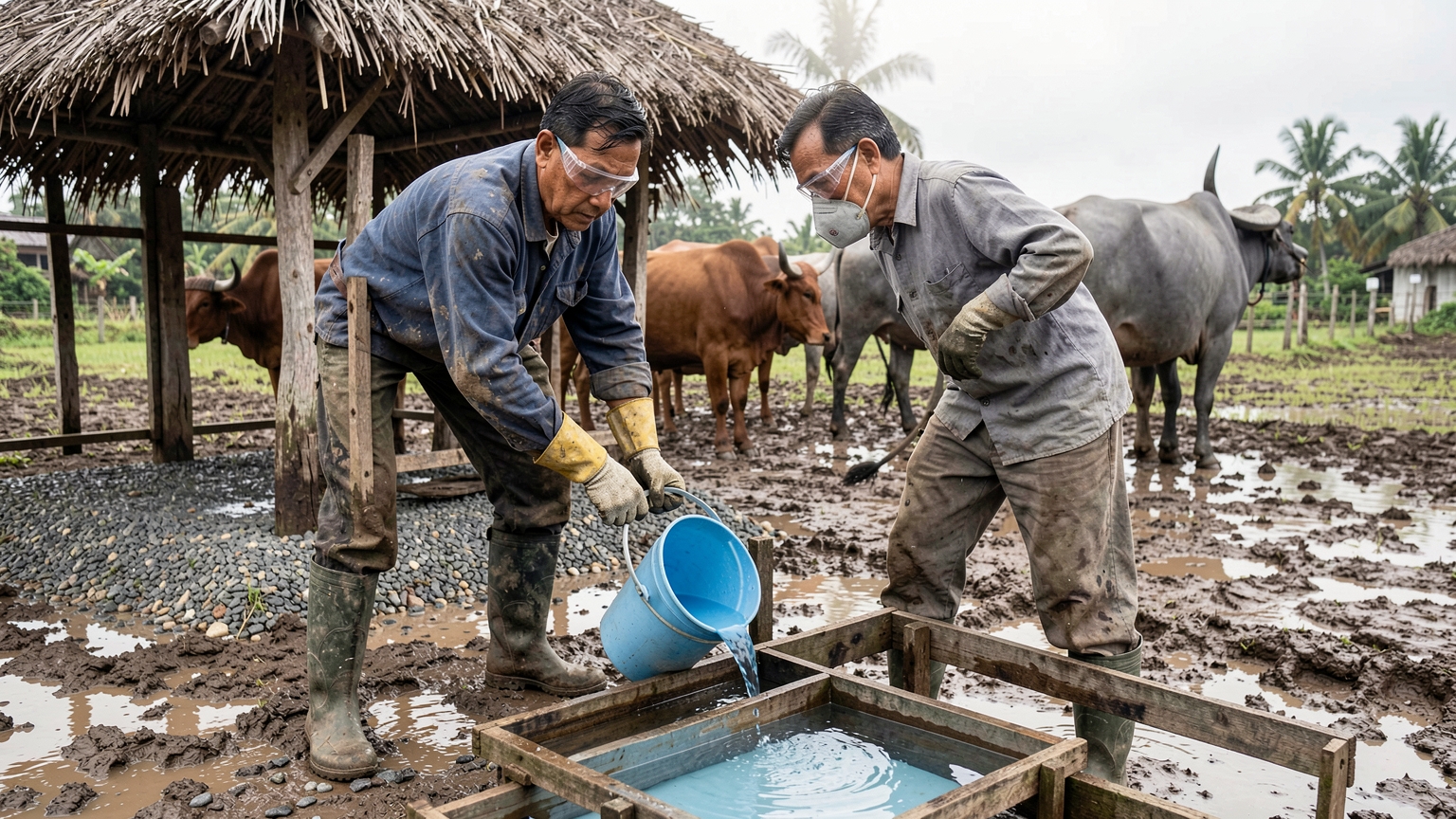
Guide animals through slowly, one at a time, so each foot touches the liquid. Do not rush or hit them. A calm walk works better and is safer for you.
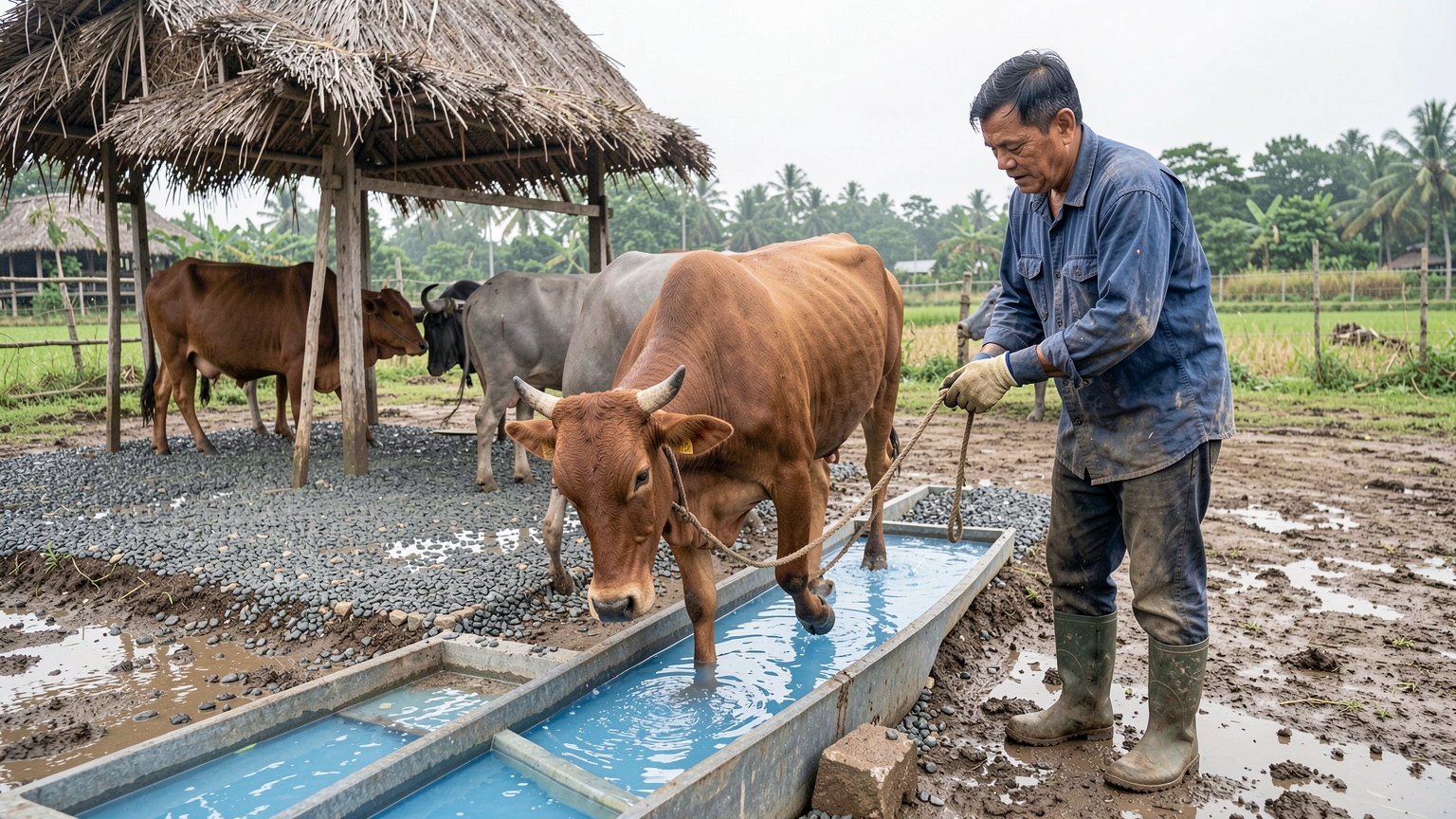
Change the liquid when it becomes thick with mud and dung, often after one or two days of use, or as the label says. Copper and zinc products can harm fish, soil and drinking water. Never empty an old footbath into a fish pond, rice field, canal or near a well. Ask your local officer how to dispose of it safely, and do not use the bath while floodwater can wash it away.
Step 4: Treat Early Cases and Know When to Call a Vet
If an animal starts limping, act the same day.
- Move it to the dry pad or a dry pen with clean bedding such as rice straw.
- Clean the foot with water and a brush, wearing gloves.
- Check for stones or cuts and remove anything stuck.
- Keep it out of mud and water as much as you can until the foot heals.
Foot rot often needs medicine from a vet, such as antibiotics given by injection or spray. Only use medicines your vet or local animal health worker recommends, and follow their advice on dose and on how long to wait before selling milk or meat. Rules on these medicines differ between countries.
Call a vet quickly if:
- The foot is very swollen or the swelling moves up the leg
- The animal will not stand, stops eating or has a fever
- Several animals start limping at the same time
- The animal is not better after two or three days of care
Some other diseases, including serious ones like foot-and-mouth disease, can also cause limping and sores on the feet. If you see blisters on the feet or mouth, or drooling, report it to your local animal health office at once, as many countries require this.
Foot problems will not disappear completely while floods last, and no method works for every farm. But a dry place to stand, clean feet, a well-kept footbath and early help from a vet will keep most cattle and buffalo walking well through the rains.