Pig Pen Drainage: 7 Ways to Keep Pigs Dry in Heavy Rain
Wet pens bring skin problems and stressed pigs. Raise floors, slope drainage and keep bedding and feed dry with simple farm materials.
Published
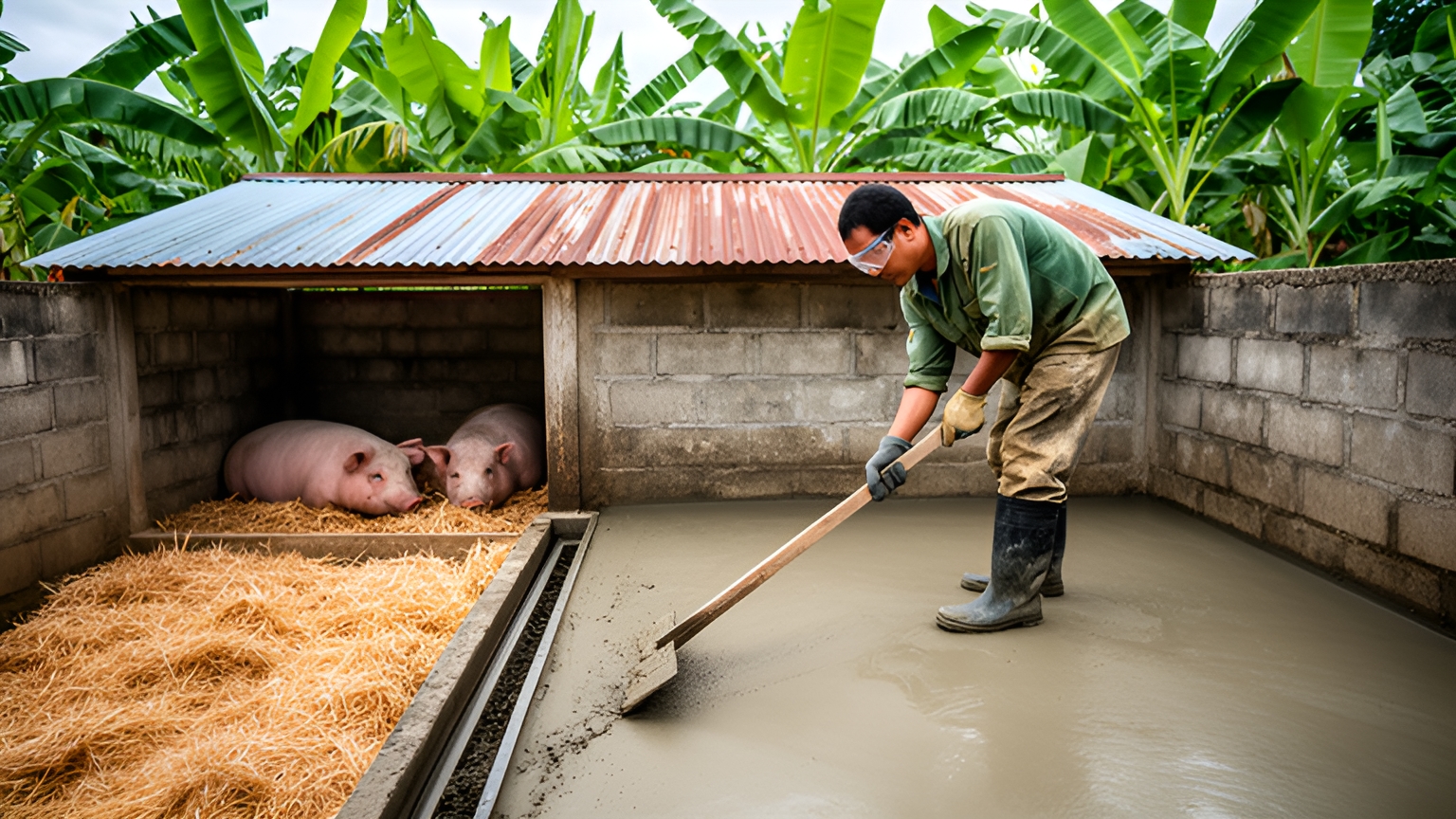
In many places the rain is heavy right now, and low ground can flood after only one night of storms. Pigs kept on wet floors in warm, humid air often get sore feet, skin problems and stress, and they eat less. Good pig pen drainage is the most useful fix. It works best together with a raised floor, dry bedding and dry feed. This guide shows seven practical ways to do it with common materials such as concrete, hollow blocks, gravel, bamboo and rice husk.
Conditions differ from place to place. Soil, flood levels, building rules and animal health rules are not the same in Cambodia, Thailand, Vietnam, Laos, the Philippines, Malaysia or Indonesia. Prices also change a lot. Check local rules and talk to an experienced local farmer, builder or livestock extension officer before bigger changes.
Check your pen before you start
Walk around the pen during or just after a heavy rain. This is the best time to see where water really goes. Wear rubber boots and gloves, because pen floors are slippery and dirty.
- Look for puddles inside the pen and note where they collect.
- Check if rain blows in from one side or drips from the roof edge onto the floor.
- See if water from outside runs into the pen from higher ground.
- Find where the wastewater goes now. It must not flow toward a well, a pond used for drinking water or a neighbour's land.
- Watch the pigs. Pigs that crowd into one corner, lie in wet spots or breathe fast in humid air are telling you something is wrong.
Move pigs to a dry, safe space before you work on the floor. A temporary pen of bamboo and boards on higher ground is often enough for a few days.
Pig pen drainage: 7 ways to keep pigs dry
Way 1: Raise the floor
The pen floor should sit higher than the ground around it, and above the usual flood line in your area. Ask older neighbours how high water rose in past years. In many low areas, raising the floor 20 to 50 cm is common, but your site may need more or less.
Build a low wall of hollow blocks or stones around the pen area. Fill it with layers of soil, sand and gravel, about 10 cm at a time. Wet each layer lightly and pack it hard with a hand tamper. Packed layers sink less later. Wear gloves and sturdy boots, and lift heavy blocks with your legs, not your back. Get help for anything heavy.
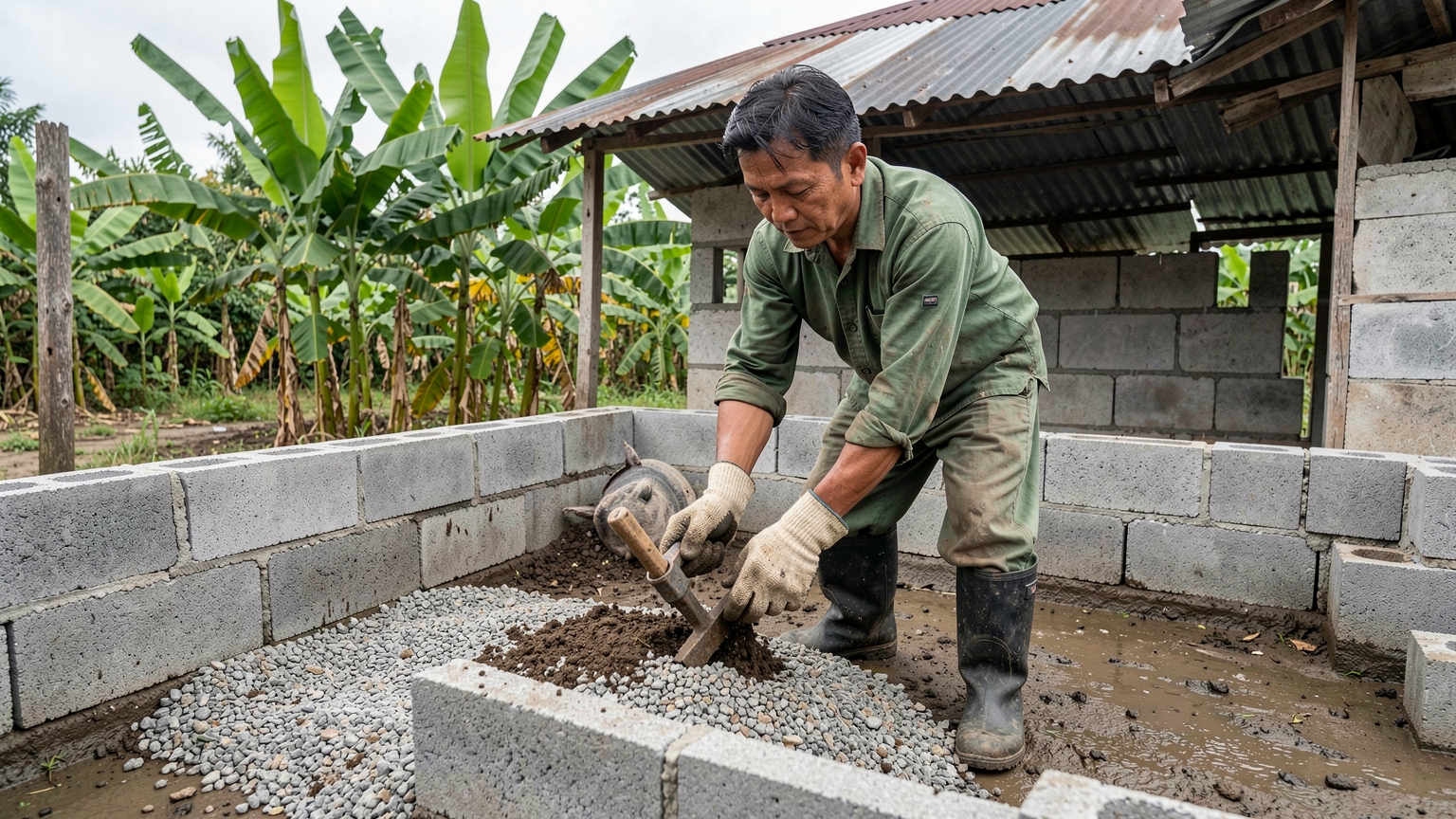
In very flood-prone places, some farmers use raised slatted floors made of hardwood or concrete slats on posts. These need careful design so they carry the weight of the pigs safely. For raised structures, ask a local builder who has done this before.
Way 2: Slope the floor toward a drain
A flat floor holds water. Pour a concrete floor that slopes gently to one side, where a shallow drain channel runs along the wall. A fall of about 2 to 3 cm for every metre is a common guide. Too steep and pigs may slip; too flat and water stays.
Mix concrete on a clean board or in a tray. Wear rubber gloves, long sleeves, boots and eye protection, because wet cement can burn skin and eyes. Wear a dust mask when you open and pour cement bags. Use a long straight board to check the slope, then finish with a wooden float for a slightly rough surface. A rough surface helps pigs grip. Keep the new concrete covered and damp for several days so it cures well. A bag of cement often costs roughly 4 to 10 US dollars, but this varies by country.
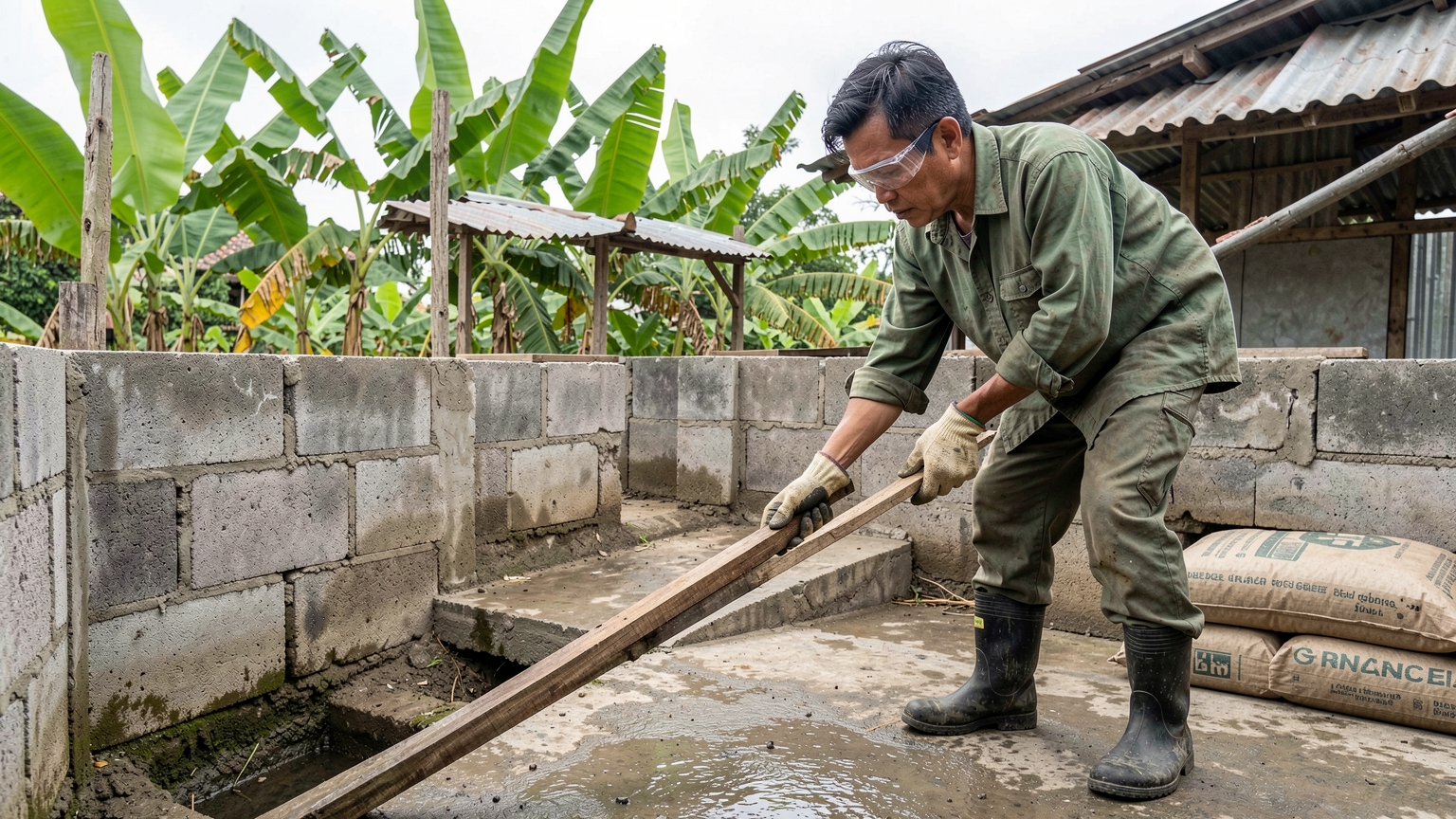
Keep pigs off new concrete until it is hard, usually at least a week. Ask a local builder how long is safe in your weather.
Way 3: Lead water away outside the pen
The channel inside the pen must empty somewhere safe. Dig a shallow ditch from the pen outlet to a soak pit, a covered settling pit or a biogas digester if you have one. Line the ditch with stones or concrete so it does not wash out. Also dig a small ditch on the uphill side of the pen to stop outside rainwater from flowing in.
Keep pig wastewater well away from wells and drinking water. Many guides suggest 15 to 30 metres or more, but local rules differ, so check with your local office. Do not dig deep pits near walls or in loose soil without advice, and never climb into a deep pit alone.
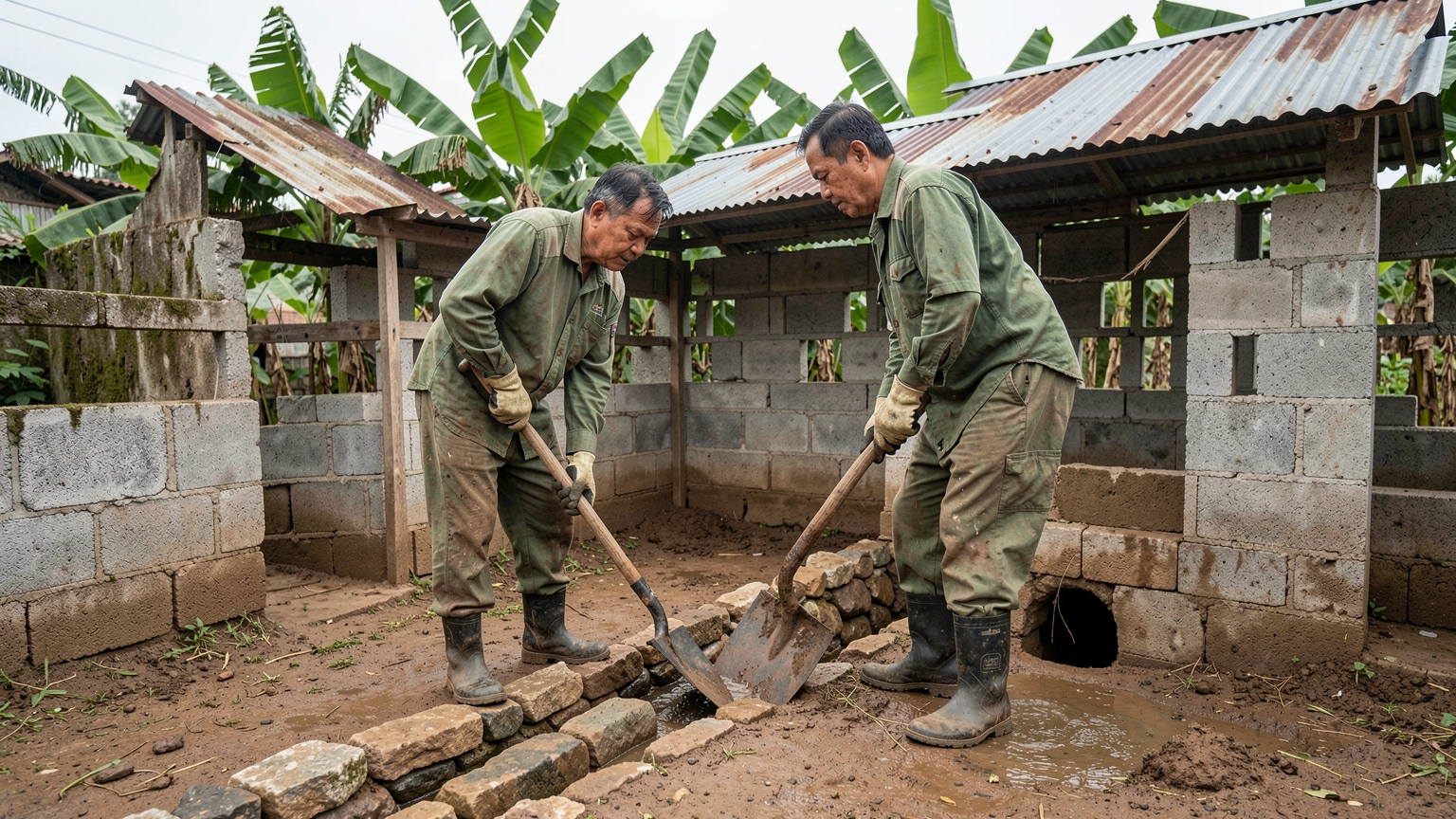
Clear leaves and manure from the channel and ditch often during storms, or the water will back up into the pen.
Way 4: Stop rain at the roof and walls
Extend the roof so it hangs at least 50 cm past the pen walls. Add a simple gutter of metal or split bamboo to carry roof water away from the floor. On the windy side, hang a rice sack curtain or a tarpaulin that you can roll up when the rain stops, so air can still flow.
Do roof work only in dry, calm weather, never in rain or strong wind. Tie the ladder at the top or have a second person hold it, and keep someone nearby the whole time.
Way 5: Use dry bedding in a dry corner
Give pigs one dry, raised resting area. Rice husk, dry straw, sawdust or coconut husk work well. Spread a layer 5 to 10 cm deep in the highest corner, away from the drain. Remove wet or dirty patches every day and add fresh, dry bedding. Store bedding under cover, off the ground, on a pallet or bamboo rack.
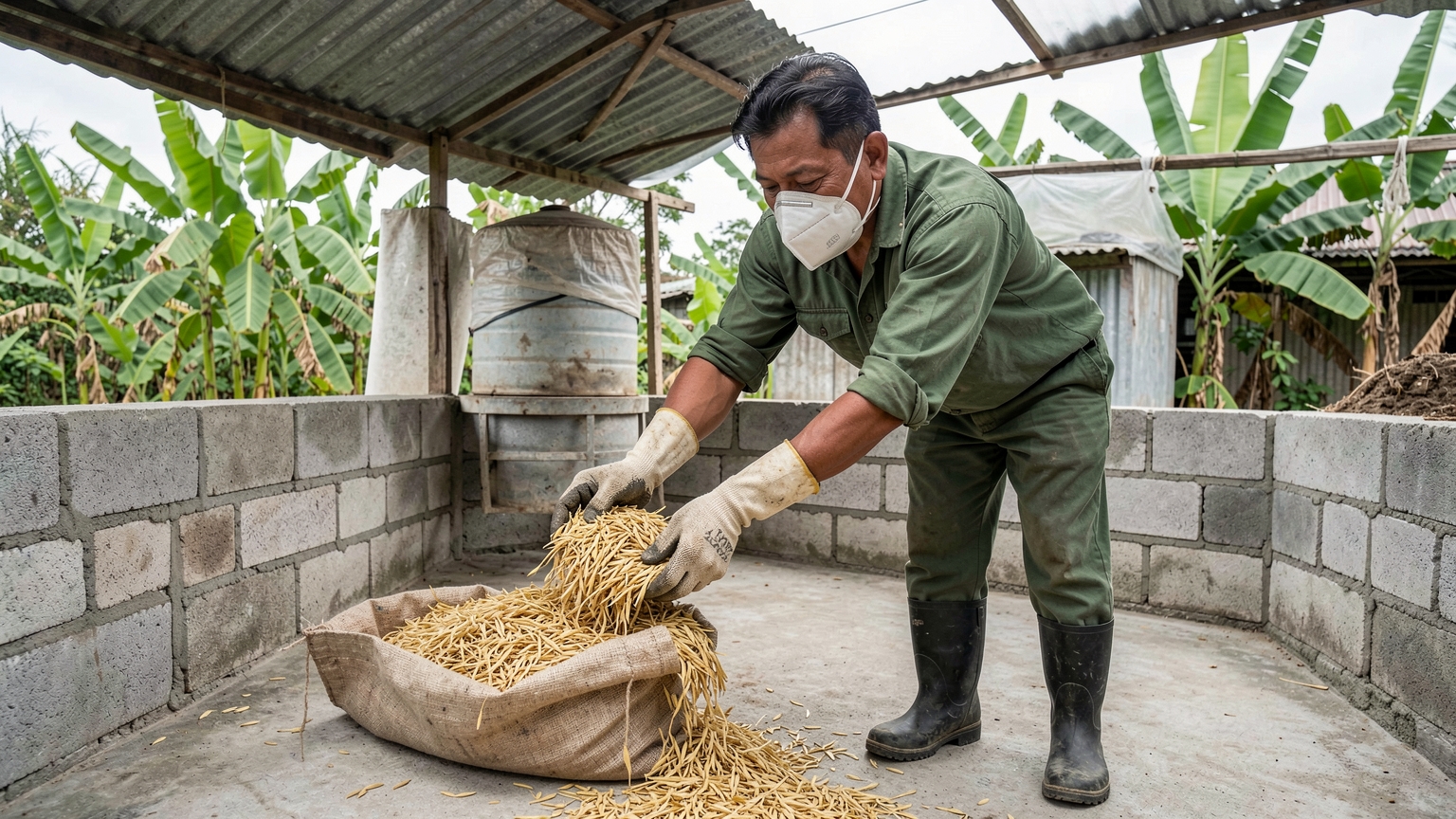
Wear gloves and a dust mask when you handle dusty bedding, and wash your hands after pen work.
Way 6: Keep feed dry
Wet feed goes mouldy fast in humid weather, and mouldy feed can make pigs sick. Store feed in sealed plastic drums or metal bins with lids, raised off the floor on blocks. Keep them in a dry room, not inside the pen. Give only as much feed as pigs will eat in one meal, and place the trough at the highest, driest part of the pen. Clean troughs daily. Throw away any feed that smells sour, clumps or shows mould.
Way 7: Keep air moving and clean often
Heat-and-damp stress comes from warm, still, humid air. Leave open space between the top of the wall and the roof so warm, wet air can escape. Do not close all sides with plastic. Clean manure out daily so the floor dries faster and smells less. Give clean drinking water at all times; pigs still need plenty of water in humid weather.
Watch for skin problems and stress
Check your pigs every day during heavy rain. Look at feet, legs, belly and ears.
- Red, cracked or swollen feet, or limping.
- Patches of rough, scaly or itchy skin, or pigs rubbing hard against walls.
- Pigs breathing fast, lying apart, or not eating.
- Coughing or runny noses.
Dry floors and clean bedding help prevent many of these problems, but they do not cure them. If you see sick pigs, separate them and call a veterinarian or livestock officer. Follow local animal health rules, as some diseases must be reported.
Safety and when to get help
Wear gloves, rubber boots and eye protection for concrete work, and a mask for cement and dust. Stop work in lightning or heavy storms. Turn off power before working near any lights or pumps in the pen, and use a qualified electrician for any wiring. For raised floors on posts, deep pits, or building near a well, ask an experienced builder. Small steps done well, a sloped floor, a clear drain and a dry bed, will make a big difference for your pigs in this weather.