Chilli Plants in Heavy Rain: Stop Flower and Fruit Drop
Chillies dropping flowers or rotting after downpours? Fix drainage, staking and pruning so your plants keep fruiting through the rains.
Published
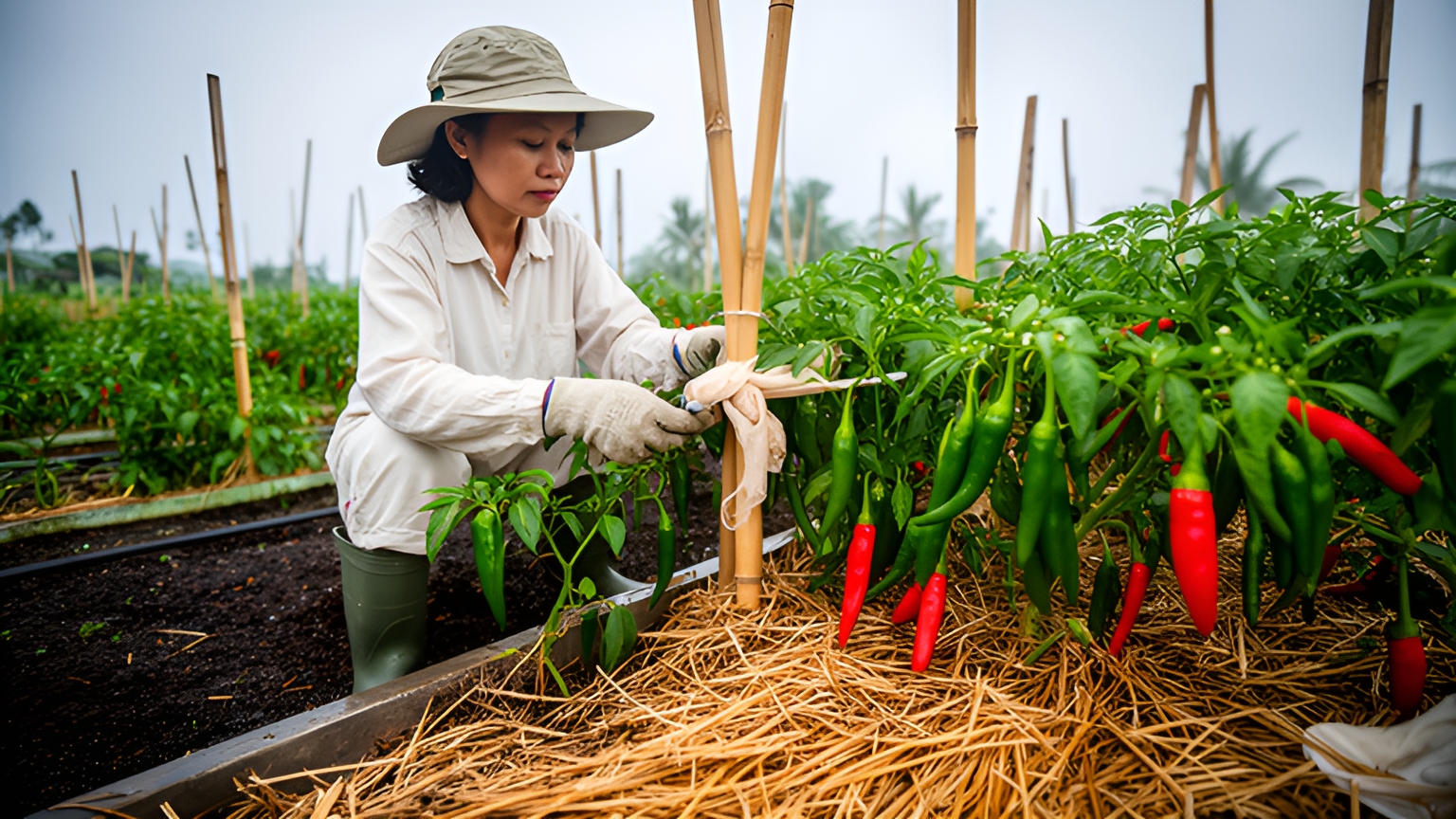
Heavy rain is hard on chillies. Waterlogged roots, wet flowers and splashing mud make plants drop flowers, shed small fruit and grow soft, rotting pods. You can reduce most of these problems with simple work: better drainage, firm stakes, removing lower leaves and picking at the right time. This guide shows how to keep chilli plants in heavy rain healthy and fruiting, using tools and materials most families already have. Conditions differ by country and even by village, so adapt the ideas to your own soil, rainfall and local chilli varieties.
Why chillies drop flowers and fruit in the rain
It helps to know the cause before you start. In many parts of Southeast Asia, the heaviest rain and flooding come at this time of year, and chillies react in a few common ways.
- Roots without air. When soil stays full of water for many hours, roots cannot breathe. Leaves turn yellow and the plant drops flowers to save energy.
- Poor pollination. Rain washes pollen away and keeps flowers wet, so many flowers fall without setting fruit.
- Low light. Long cloudy days mean less sun, so the plant cannot feed every flower and fruit.
- Disease. Fungal and bacterial diseases spread fast in wet weather. Anthracnose, for example, causes dark, sunken spots that turn into rot on the fruit. Mud splashing from the soil carries disease onto lower leaves.
- Broken stems. Wind and heavy, wet branches can bend or snap stems, and the fruit on them is lost.
- Too much nitrogen. Strong fertiliser high in nitrogen gives lots of soft leaves but fewer flowers, and soft growth catches disease more easily.
Some flower drop is normal, even in good weather. The aim is to reduce it, not to stop it completely.
How to protect chilli plants in heavy rain, step by step
Work through these steps in order. Most can be done in one or two mornings for a small home garden.
Step 1: Get water away from the roots
Walk around your garden after a big downpour. If water stays standing around the plants for more than a few hours, drainage is the first job. Dig a shallow channel, about 20 to 30 cm deep, between rows or along the low side of the bed, and lead it to lower ground. Do not send water onto a neighbour's land, a path or a house foundation. Then pull soil up around each plant to make a low mound or raised bed, about 20 to 30 cm high, so the root area sits above the wet ground.
For chillies in pots, check that the drainage holes are open and not blocked by roots or mud. Lift pots onto bricks or wood blocks so water can run out freely. Move pots to a higher spot if your garden often floods.
Wear gardening gloves and rubber boots with good grip, because wet clay is slippery. Use the hoe slowly and keep your feet away from the blade. Stop work and go inside if there is thunder or lightning.
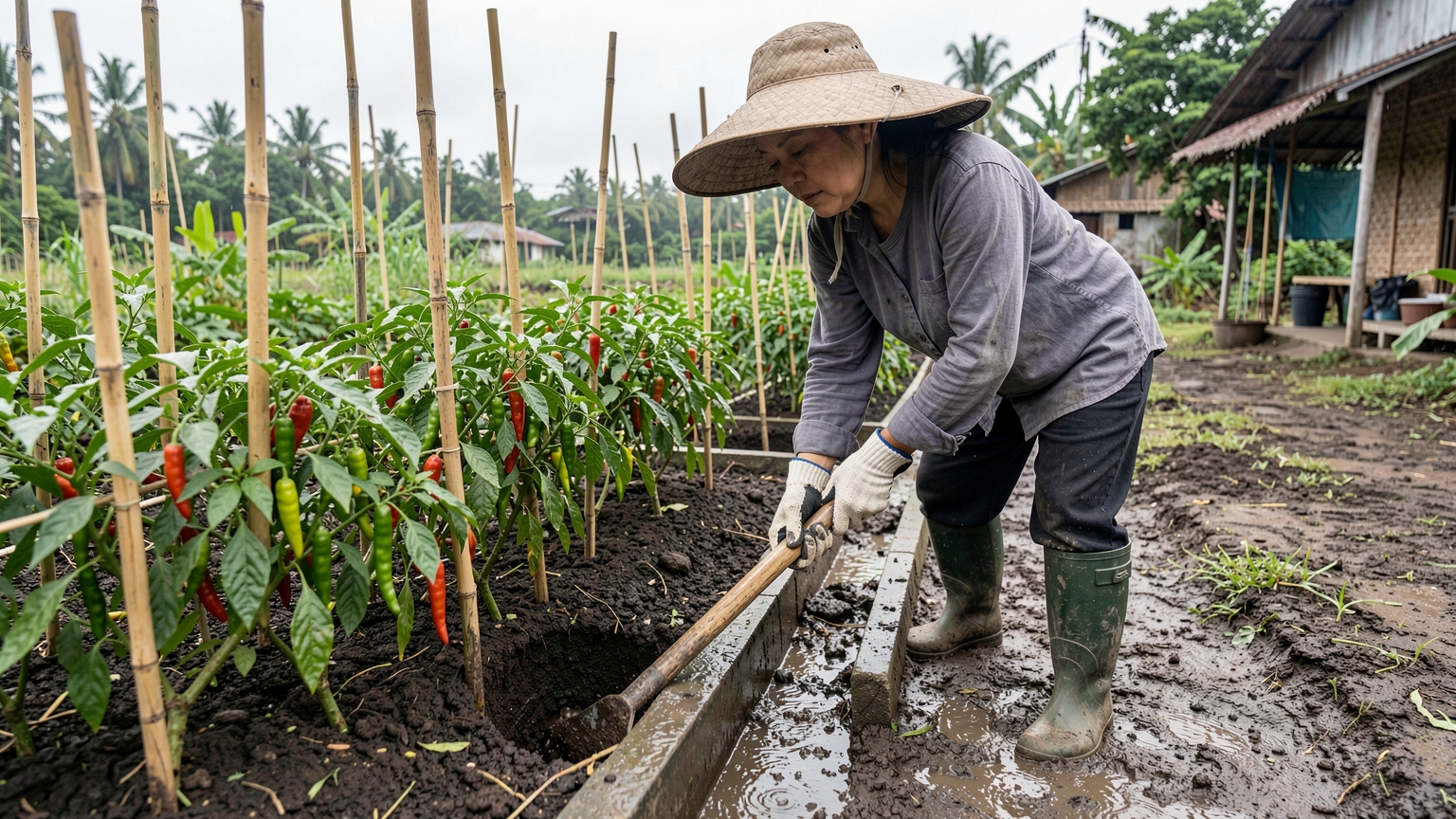
After shaping the beds, add a thin layer of rice straw or dry grass on top of the soil. This stops mud from splashing onto leaves and fruit. Keep the mulch a few centimetres away from the stem, and keep it thin, because a thick layer can hold too much water in very wet weather.
Step 2: Stake and tie each plant
Push a bamboo stake, about 1 to 1.2 m long, around 30 cm into the soil. Place it 5 to 10 cm from the stem so you do not damage the main roots. Tie the main stem to the stake with soft strips of old cloth or banana fibre in a loose figure-eight loop. This holds the plant firm without cutting into the stem. For a long row, you can set strong stakes at each end and run string along both sides of the plants to hold them up together.
Wear gloves when handling cut bamboo, as splinters are common. If you cut stakes with a machete, wear eye protection and cut away from your body. Cover sharp stake tops with an old plastic bottle cap or cloth so you do not hurt your eyes when you bend down.
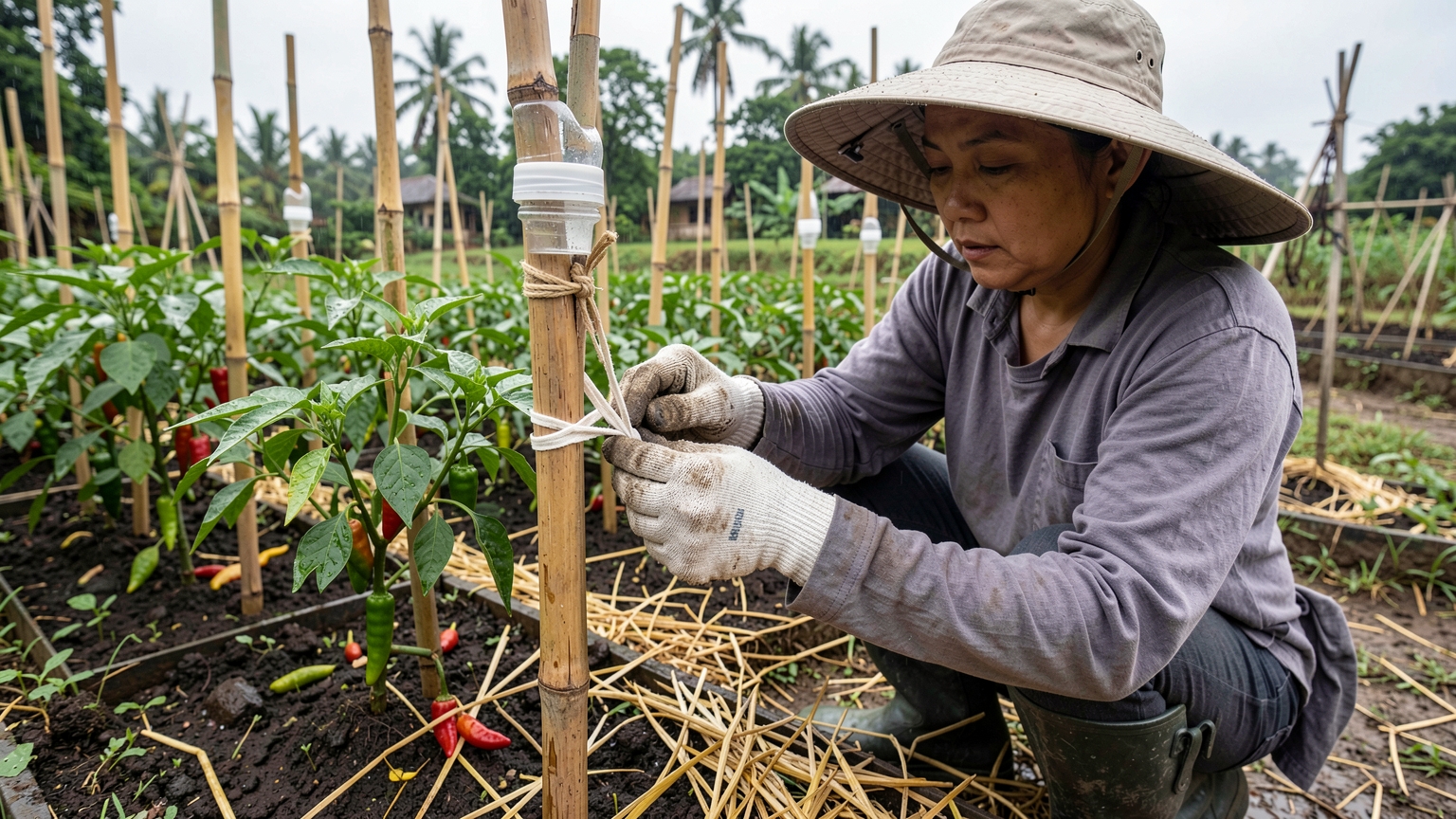
Check the ties every week. Loosen them as the stem grows thicker, and add a second tie higher up when the plant gets taller or heavy with fruit.
Step 3: Prune lower leaves and open up the plant
Remove all leaves that touch the soil, and clear the lowest 15 to 20 cm of the stem. Also remove leaves that are yellow or spotted, and thin out a few crowded inner shoots so air can move through the plant. Do not remove more than about a quarter of the leaves at one time, because the plant still needs them to make food.
Use clean scissors or garden secateurs. If you see disease, wipe the blades with alcohol or soapy water between plants. Prune on a dry morning so the cuts can dry before the next rain. Wear gloves, as chilli sap can sting skin, and never touch your eyes while working. Wash your hands with soap afterwards.
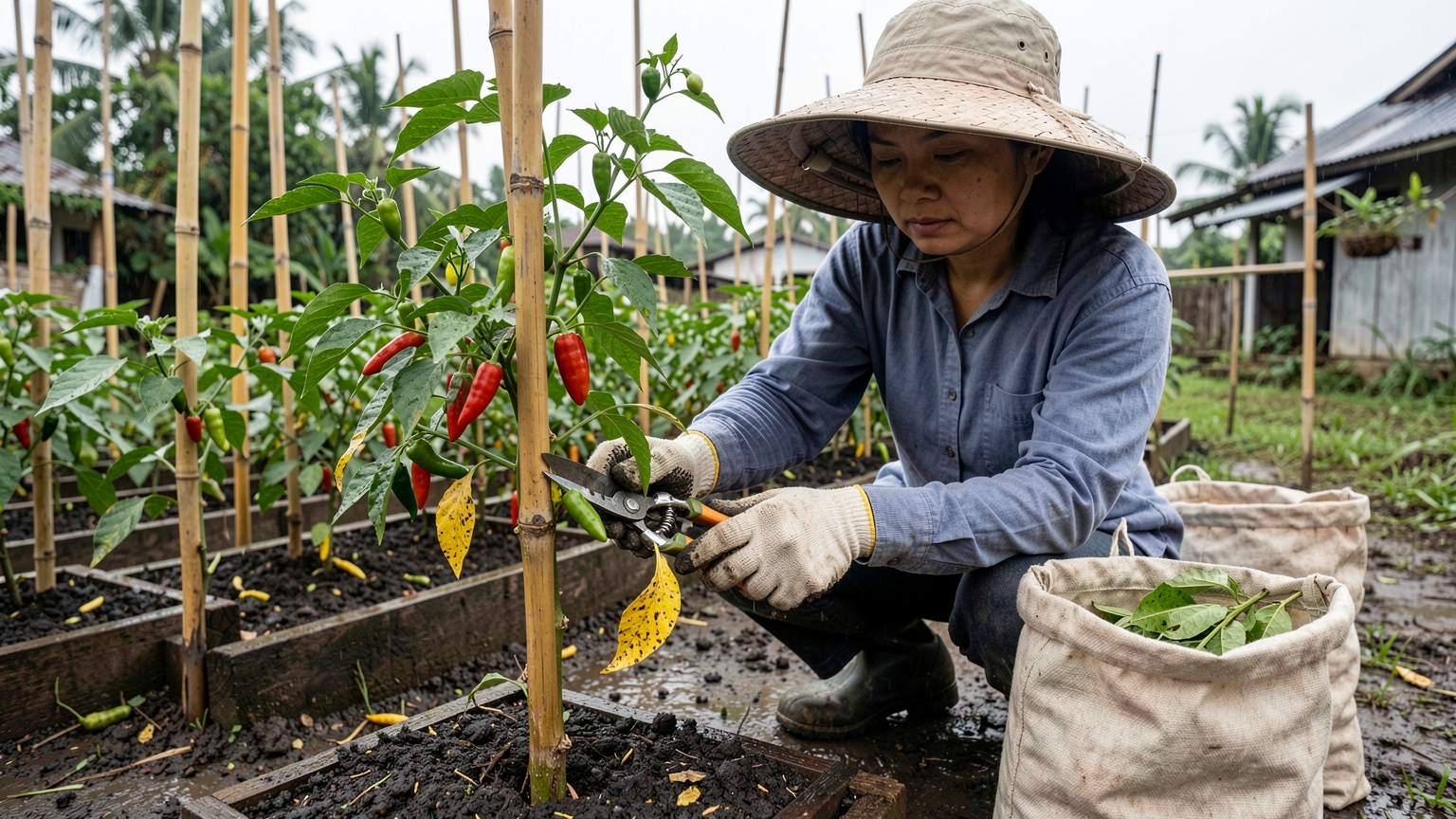
Put diseased leaves in a bag and remove them from the garden. Do not leave them on the ground or put them in a normal compost heap, because disease can survive there. If you plant new chillies now, give each plant 45 to 60 cm of space so leaves dry faster after rain.
Step 4: Feed lightly and carefully
Rain washes nutrients out of the soil, but heavy feeding is not the answer. Add a small handful of well-rotted compost or old manure around each plant every few weeks. Avoid strong high-nitrogen fertiliser. If you use a mixed fertiliser, choose one with more potassium, follow the label and use less rather than more. Wear gloves when handling any fertiliser, and a mask if it is dusty.
Harvesting tips for wet weather
Picking well is one of the best ways to save your crop. Ripe fruit left on a wet plant rots faster and can spread disease to other pods.
- Pick often, every two or three days, during a dry break in the rain.
- Harvest fruit when it is full size and firm. Green chillies are fine to use. If rot is spreading, pick fruit as soon as it starts to change colour rather than waiting for full red.
- Cut each fruit with scissors and leave a short piece of stem. Pulling by hand can tear branches.
- Remove any soft, spotted or rotting fruit at the same time, and take it out of the garden.
- Wear gloves for hot varieties, and keep your hands away from your face.
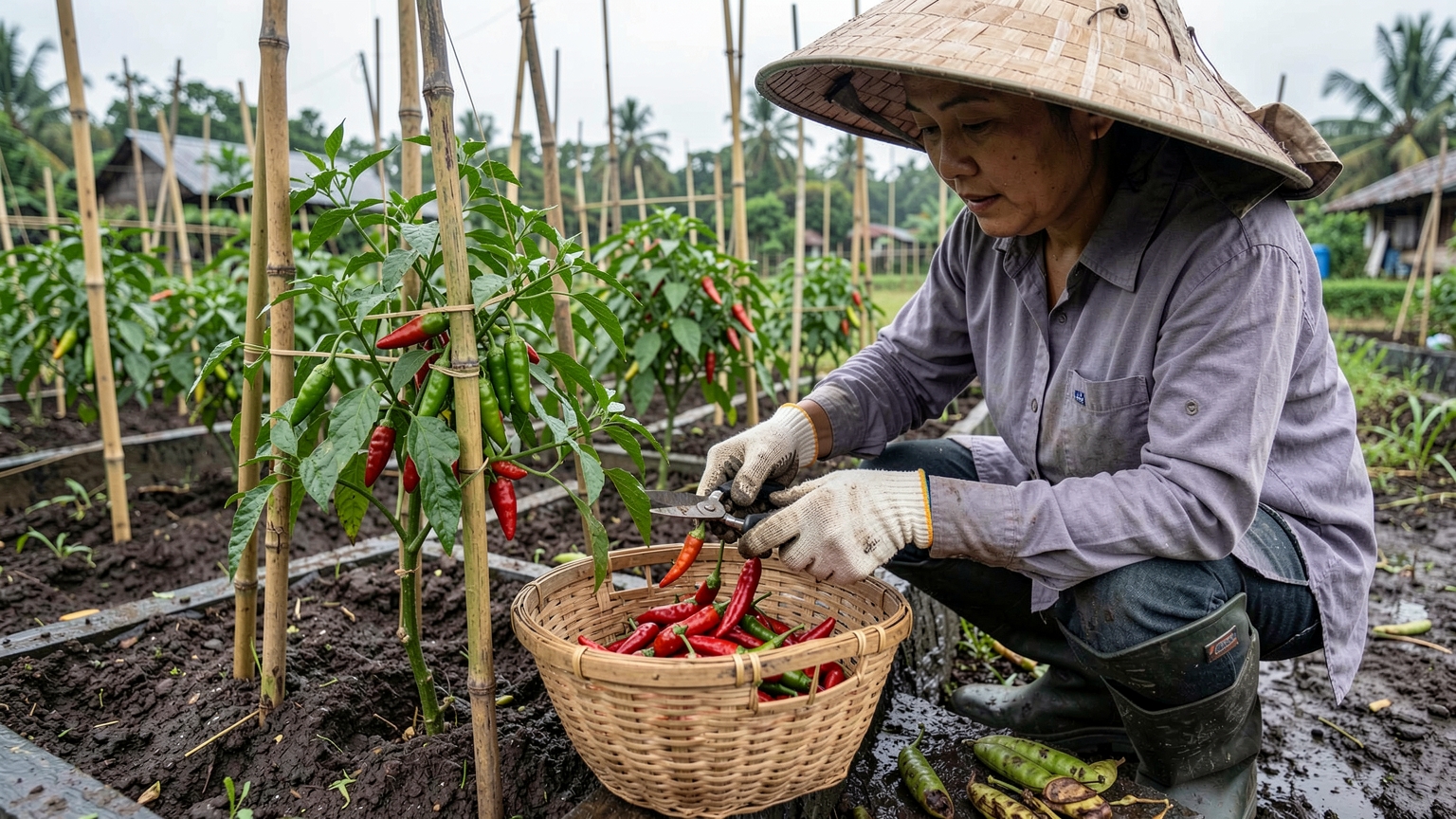
At home, spread the chillies in a single layer on a tray or flat basket in a dry, airy place and let the surface dry. Do not store wet chillies in closed plastic bags, because they will go mouldy quickly. Sort them, and use or dry any damaged fruit first.
Watch for disease and pests
Check plants twice a week. Look for sunken dark spots on fruit, small dark spots on leaves, and plants that wilt even when the soil is wet. Wilting in wet soil often means root rot. If one plant is badly diseased, remove the whole plant so the problem does not spread.
Slugs and snails are common in wet weather and eat young leaves and fruit. Pick them off by hand in the evening, wearing gloves.
Copper-based sprays are used against some fungal and bacterial diseases in many places. Rules on garden chemicals differ by country, so check what is allowed where you live. If you use any spray, follow the label exactly, wear gloves, a mask and eye protection, and never spray in rain or just before rain, as it will wash off.
For a small bed, a simple rain cover can help. Bend bamboo or plastic pipe into low hoops and stretch clear plastic over the top, leaving the sides open for air. Tie it down well so wind cannot lift it. A small cover like this, with stakes and string, often costs from a few US dollars to around 20 US dollars, but prices vary a lot by country. For anything larger or taller, ask an experienced local builder.
Know when to ask for local help
Not every idea here will fit your garden. Soil, rainfall, flooding and chilli varieties differ between Cambodia, Thailand, Vietnam, Laos, the Philippines, Malaysia and Indonesia, and even between nearby villages. Local farmers often know which varieties handle wet weather best. If your plants keep dying, or disease spreads across the whole garden, talk to an agricultural extension officer or an experienced local grower before you spend money on sprays or new plants. Small, steady care through the rains gives your chillies the best chance to keep flowering and fruiting.