Fruit Tree Root Rot: How to Save Trees in Waterlogged Soil
Mango, durian, citrus or jackfruit standing in water for days? Learn drainage, mulch and pruning steps to stop root rot early.
Published
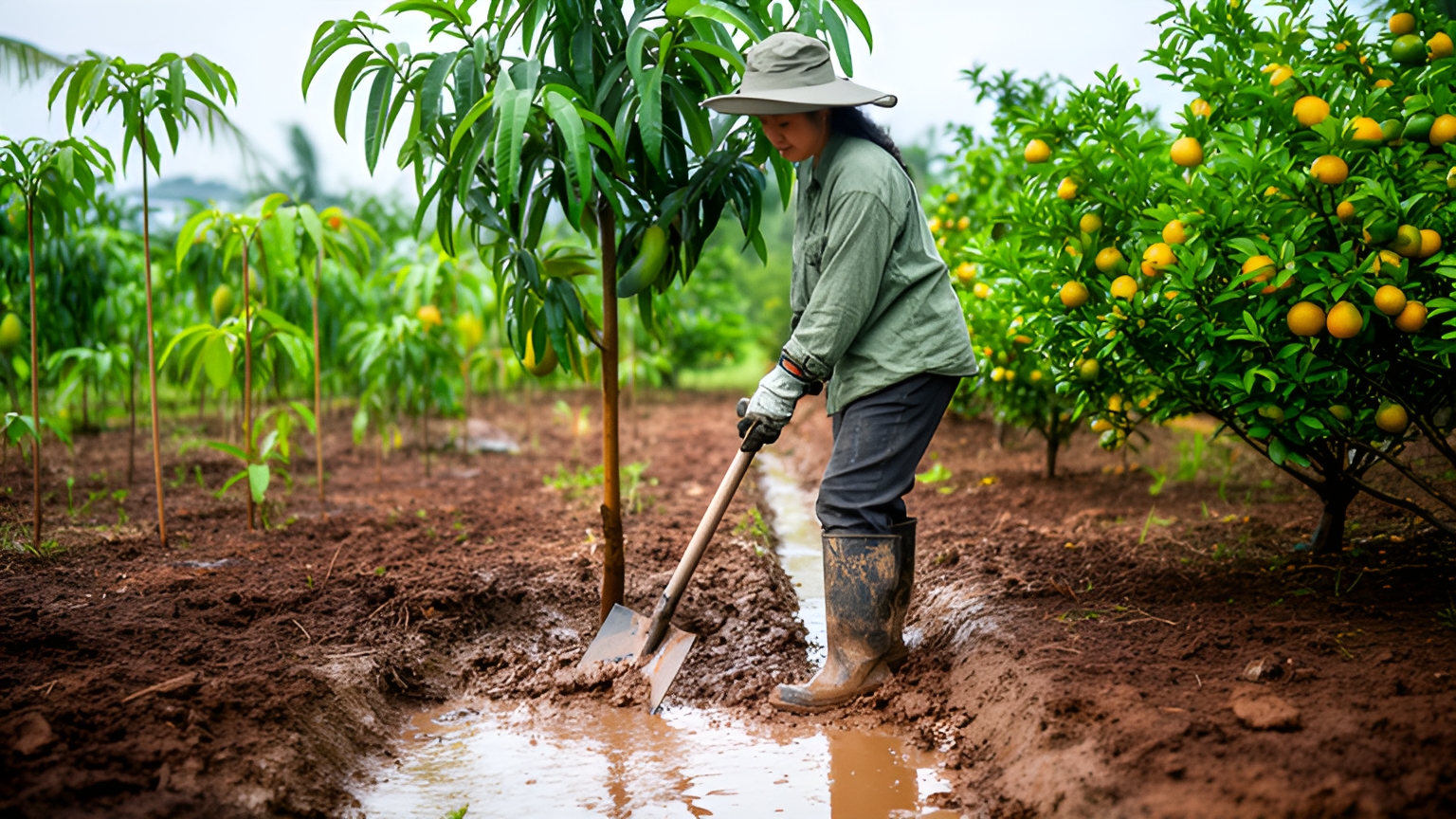
When mango, durian, citrus or jackfruit trees stand in water for more than two or three days, their roots start to suffocate. Roots need air as well as water. In soaked soil they cannot breathe, and water moulds such as Phytophthora can attack them. This is fruit tree root rot, and right now, in the heaviest rains of the year in many parts of Southeast Asia, it is a real risk. The good news is that fast action can save many trees. This guide shows you how to spot the signs, move the water away, protect the trunk and help the tree recover.
Conditions differ from place to place. Your soil, rainfall, local tree diseases and rules about drains and water flow may not match this guide. Before big digging work, talk to an experienced local farmer or your agricultural extension officer.
Early warning signs of fruit tree root rot
Check your trees every day or two while the ground is flooded or soggy. Walk carefully, or lay a wooden plank to stand on, so you do not press the wet soil down around the roots. Look for these signs:
- Leaves turn pale yellow, droop or curl, even though the soil is wet.
- Leaves drop suddenly, often starting at the top or on one side of the tree.
- Dark, wet patches or cracks on the lower trunk, sometimes with sticky brown or reddish sap. Durian and citrus often show this.
- A sour or rotten smell from the soil near the trunk.
- Young fruit falling early, and new shoots dying back.
- Roots near the surface that are brown or black, soft and slimy, with the outer skin sliding off easily. Healthy roots are firm and white or light brown inside.
One sign alone may have another cause, such as pests or lack of nutrients. Several signs together, after days of standing water, usually point to root problems. Durian is often the most sensitive, citrus and jackfruit are also at risk, and mature mango trees are often tougher, but young trees of any kind suffer fastest.
Step 1: Dig a drainage trench to move the water
The first job is to get the water off the roots. Find the lowest point near the tree and see where water could safely flow: a ditch, a lower part of your land, or an existing drain. Do not send water onto a neighbour's land, a road or a house foundation. In some places there are local rules about where you can drain water, so check first.
Wear rubber boots or sturdy shoes with good grip and work gloves. Before digging, make sure there are no buried water pipes or electric cables. If you are not sure, ask before you dig.
Mark a line from just outside the tree's drip line (the edge of its leafy canopy) to your outlet. Do not dig close to the trunk, because you will cut the main roots. Dig a shallow trench, about 20 to 40 cm deep and about a spade wide, sloping gently downhill so water keeps moving. Wet soil is heavy, so lift small amounts and rest often. Keep the trench shallow. Wet trench walls can collapse, so never stand inside a deep trench.
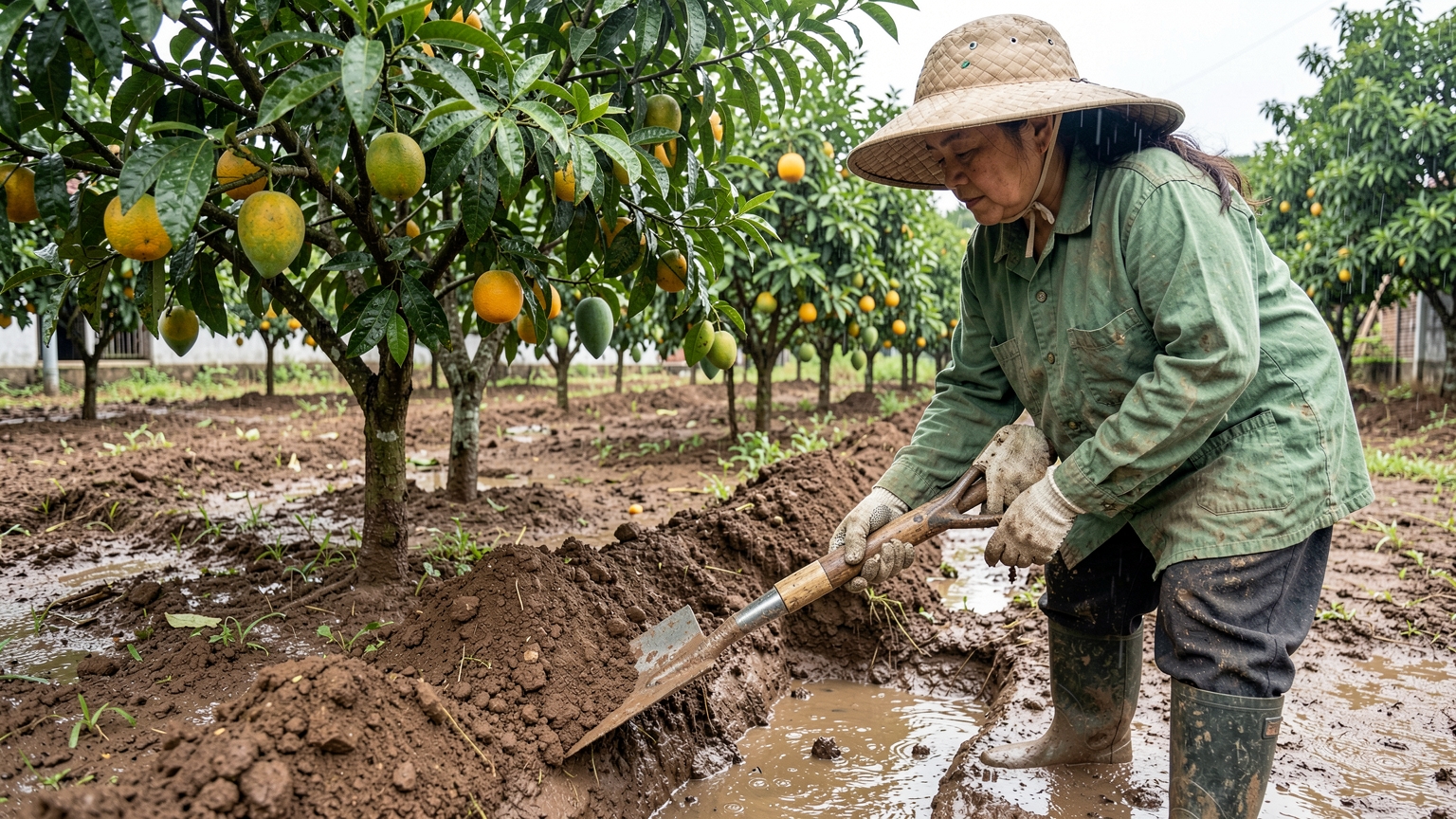
If the whole garden is low and flooded, one trench may not be enough. A few trenches joined together, or a raised soil mound for new trees later, may be needed. For large areas or land near buildings, ask an experienced local builder or farmer for advice.
Step 2: Pull mulch and soil back from the trunk
Mulch is good for trees most of the year, but thick wet mulch piled against the trunk keeps the bark soaked. This is where collar rot often begins. Wearing gloves, pull all mulch, grass, leaves and extra soil back so there is a clear ring of bare ground about 30 to 50 cm wide around the trunk.
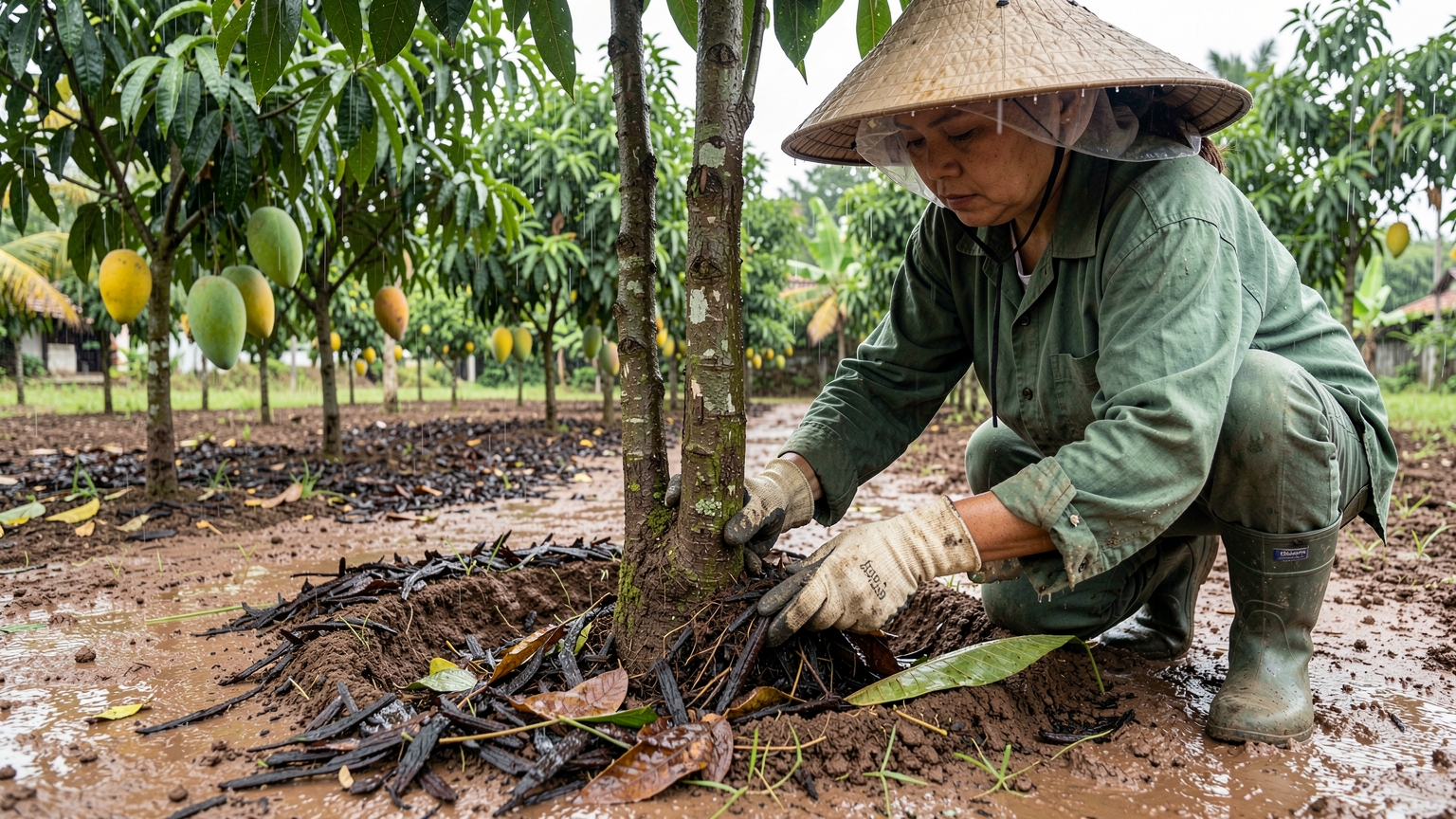
You can leave a thin layer of mulch further out under the canopy to protect the soil from heavy rain, but keep it away from the trunk. If soil was piled up around the base when the tree was planted, gently scrape it back so the point where the trunk meets the roots can dry in the air. Use your hands or a small trowel so you do not damage the bark.
Step 3: Check the roots and trunk base
Once water has drained a little, check the roots near the surface. Gently scrape soil away in one or two small spots under the canopy, not right next to the trunk. Look at the colour and feel of the roots.
If you find small roots that are black, soft and smelly, cut them back to firm, healthy tissue with clean, sharp pruning shears. Wipe the blades with rubbing alcohol or a mild bleach solution between cuts so you do not spread disease from tree to tree. Do not dig up large roots or try to remove a big section of the root system. That causes more harm than good.
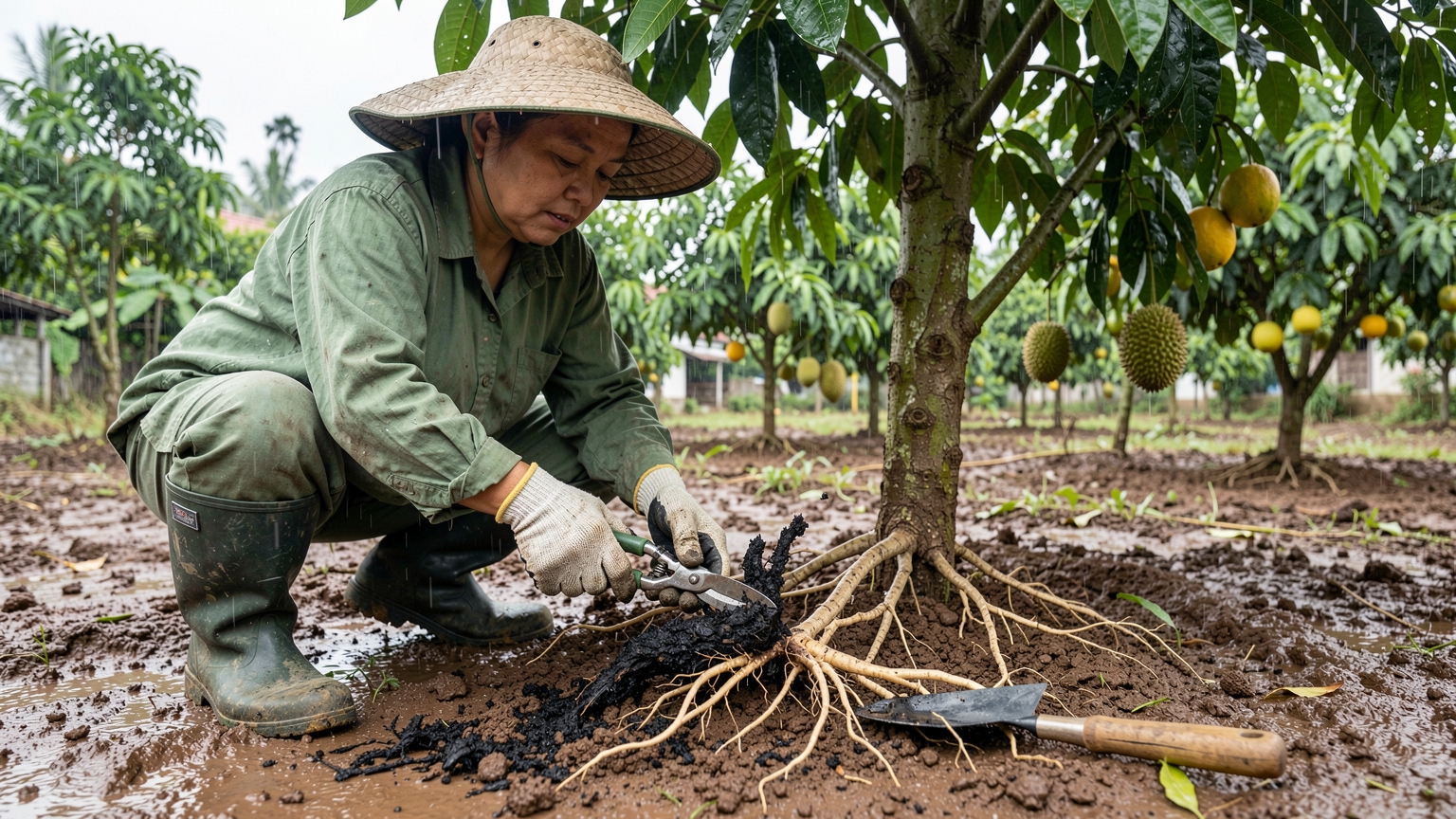
For dark wet patches on the trunk, an extension officer may suggest a fungicide made for root and collar rot, such as a phosphite or copper product. Prices vary a lot by country, often roughly 5 to 25 US dollars for a small bottle. If you use one, follow the label exactly. Wear chemical-resistant gloves, eye protection and a mask, keep children and animals away, and store it locked up. Do not mix chemicals or guess at the dose. These products can help slow the disease, but they do not cure a tree that is already badly damaged.
Step 4: Lighten the canopy and care for the tree
A tree with damaged roots cannot feed a large crown of leaves and fruit. Light pruning helps it balance. Remove dead, dying or broken branches, and thin a few crowded branches so air moves through the canopy and the leaves dry faster after rain. On a stressed tree, remove some young fruit too, so the tree can put energy into recovery. Do not take off more than about a quarter of the live leaves.
Wear gloves, safety glasses and sturdy shoes. Work from the ground with hand pruners, a pole pruner or a pruning saw whenever you can. Only use a ladder in dry, calm weather, on firm ground, with the ladder secured and a second person holding it. Never climb a wet tree or work up high in rain or wind. For large limbs or tall trees, call a professional tree worker.
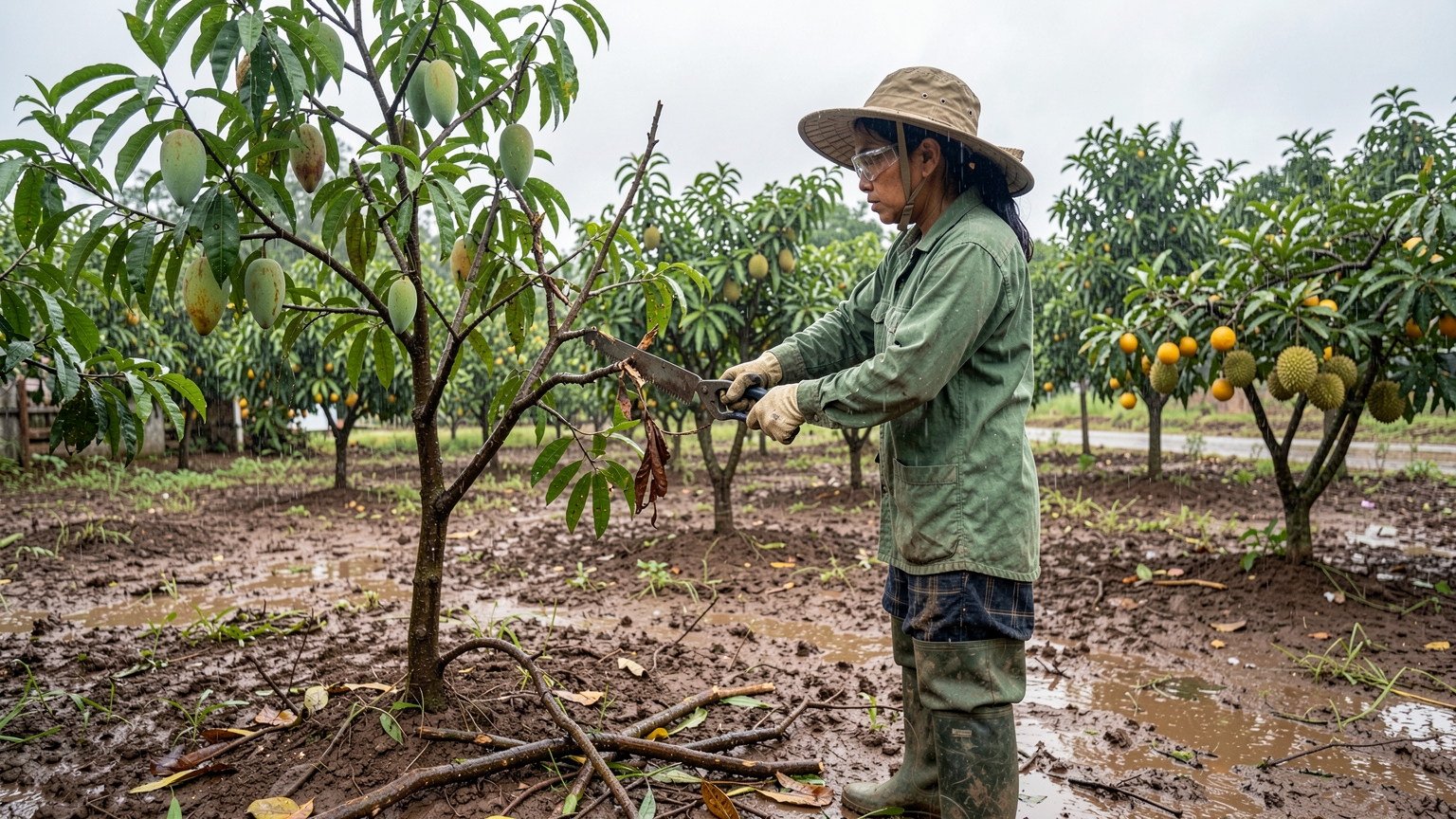
After pruning, give the tree time. Do not add strong fertiliser while the soil is still soaked, because weak roots cannot use it and it may burn them. Keep the trench clear of leaves and mud so it keeps working through the rest of the rains. Avoid walking or parking anything under the canopy while the soil is soft.
When to accept loss or get help
Some trees will recover in a few weeks, putting out new shoots and green leaves. Others may decline slowly. If most of the canopy has died, the bark is rotting all around the trunk, or the tree starts to lean as roots fail, it may not be saved. A leaning tree near a house, path or power line is a safety danger. Keep people away and call a professional to remove it.
If several trees in your garden or village show the same signs, contact your local agricultural extension office. They can tell you which diseases are common in your area, which products are allowed, and which rootstocks or planting methods suit wet ground. Every farm and garden is different, and local advice is the most reliable guide.