Fungal Diseases on Vegetables: 7 Fixes for Heavy Rain
Leaf spot, mildew and damping off spreading after days of rain? Stop them with pruning, spacing and simple homemade sprays.
Published
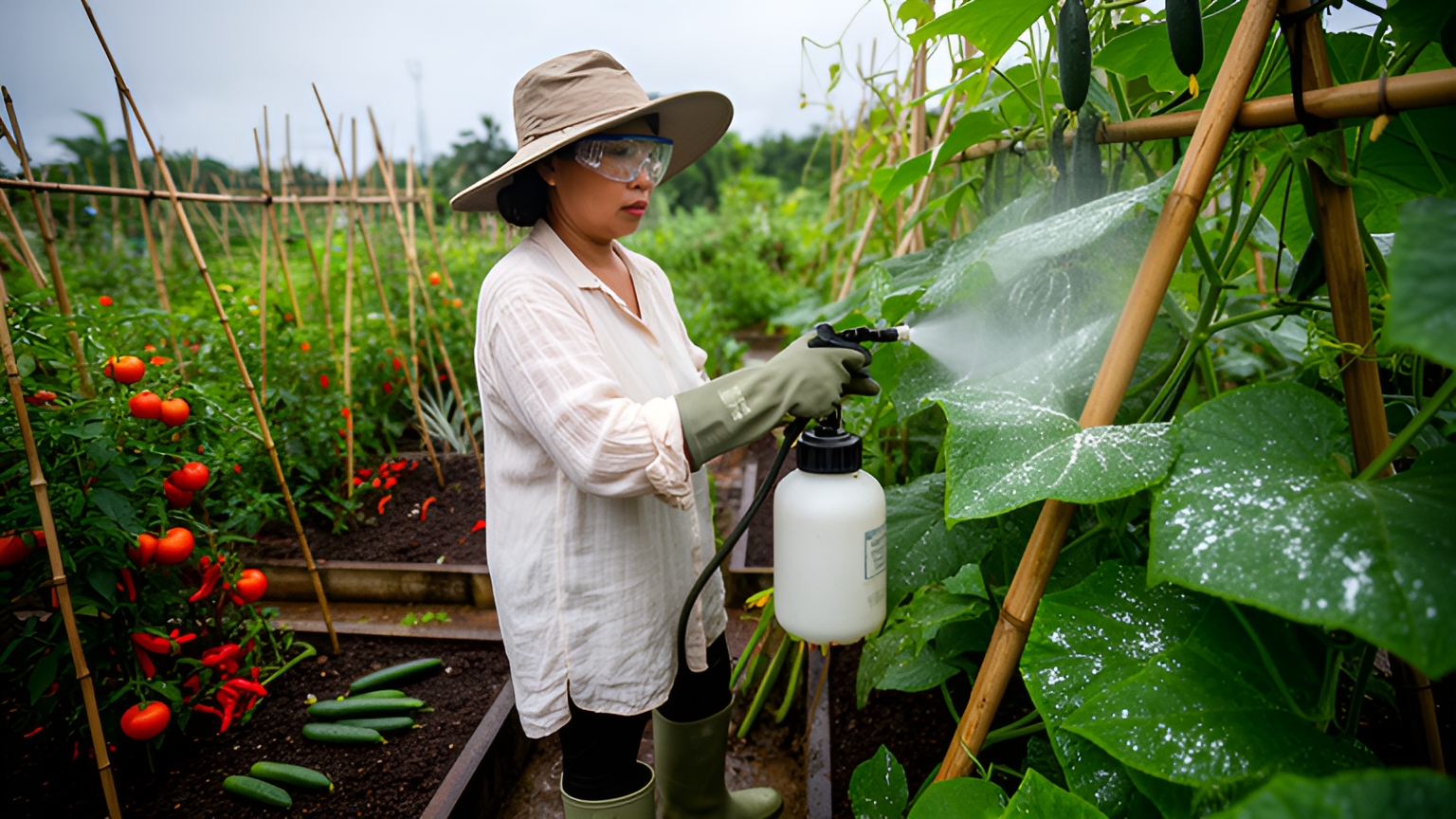
After many days of rain, many home gardens show the same problems. There are brown spots on tomato leaves, white powder on cucumber and pumpkin leaves, and young seedlings fall over at the soil line. These are fungal diseases on vegetables. They spread fast when leaves stay wet and the air does not move. You cannot stop the rain, but you can make your plants dry faster and give the fungus fewer chances. The seven fixes below use simple tools and common materials. Start with the first fix today and work through the list in order.
Know the common fungal diseases on vegetables
Before you treat anything, look closely at your plants. Knowing what you see helps you choose the right fix.
- Leaf spot: small brown, black or yellow spots on leaves. They often have a dark ring around them. Spots join together, and the leaf turns yellow and drops. It is common on tomato, chilli, eggplant (brinjal), long beans and leafy greens.
- Powdery mildew: a white or grey powder on the top of leaves, like flour. It is common on cucumber, bitter gourd, pumpkin, squash and okra.
- Downy mildew: yellow patches on top of the leaf and grey or purple fuzz underneath. It likes wet, humid weather even more than powdery mildew does.
- Damping off: seedlings that look healthy, then suddenly fall over. The stem near the soil becomes thin, dark and soft.
If the whole plant wilts quickly, or the roots are brown and rotten, the problem may be root rot or a bacterial disease. These need different care. If you are not sure, take a photo or a leaf to your local agriculture extension officer or an experienced farmer nearby. Diseases and the products allowed to treat them differ from country to country.
Fixes 1 to 3: Remove, prune and space
Fix 1: Remove sick leaves early
Wait for a break in the rain, when leaves are as dry as possible. Working on wet plants spreads spores from leaf to leaf on your hands and tools. Wear gardening gloves and long sleeves. Pick off every leaf with spots or powder. Start with the lowest leaves, because rain splashes soil and spores onto them first. Put the leaves straight into a bag or bucket. Do not drop them on the ground.
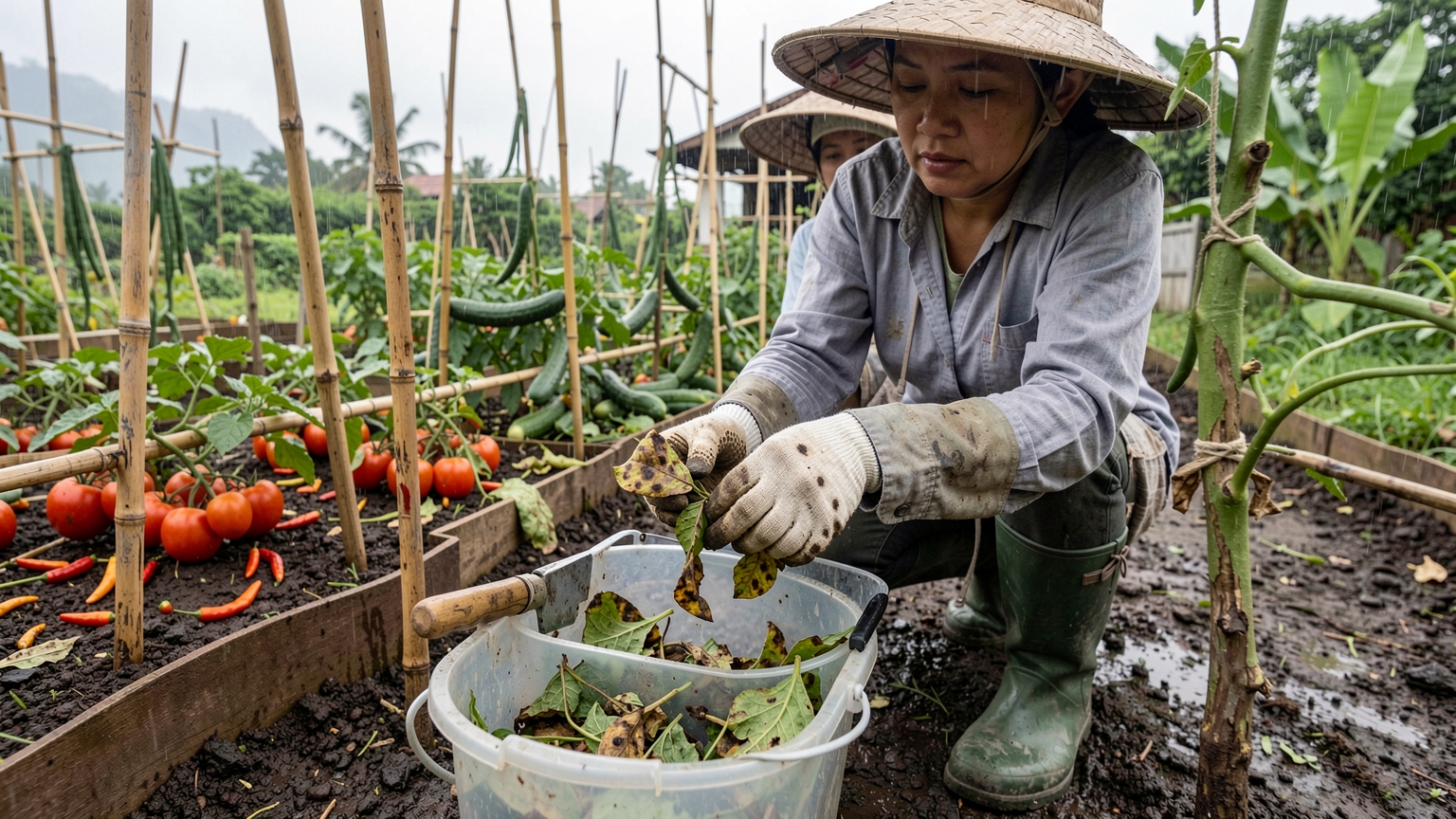
Do not put badly diseased leaves in your compost heap. A home compost heap often does not get hot enough to kill the fungus. Bag them and put them out with the rubbish, or bury them deep, away from the garden. Wash your gloves and wipe your scissors with soapy water when you finish.
Fix 2: Prune and stake for airflow
Fungus needs wet leaves. The faster leaves dry, the less disease you get. On tomatoes and chillies, cut off leaves that touch the soil and the lowest 20 to 30 cm of leaves on the stem. Remove some crowded inside branches so wind can pass through. Use clean, sharp scissors or pruning shears, and cut on a dry part of the day.
Tie tomatoes, eggplant and chillies to bamboo stakes with soft string or strips of cloth. Train cucumber, bitter gourd and long beans up a trellis. Leaves held off the ground dry faster and get less splashed soil.
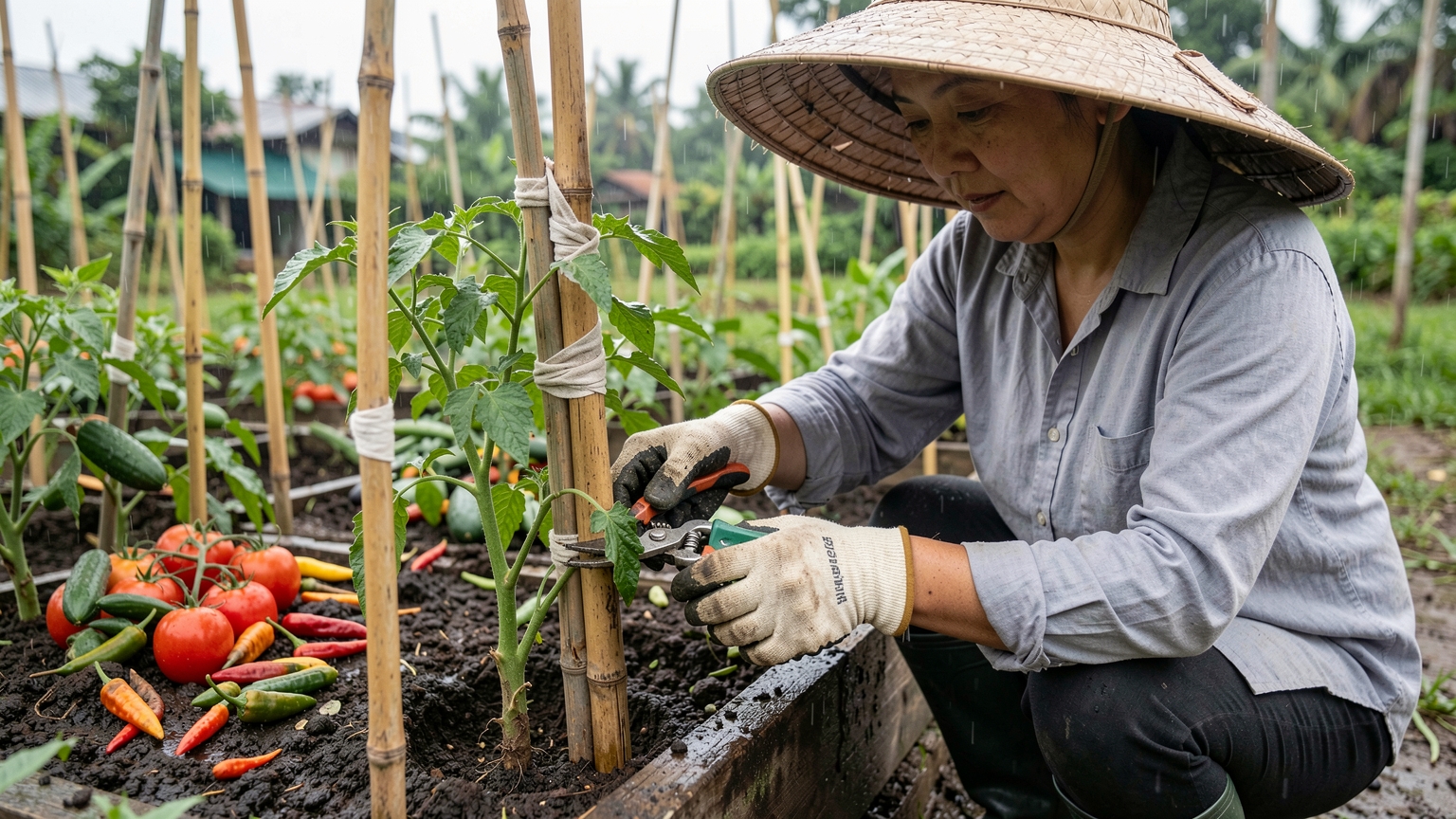
Do not remove more than about one third of the leaves at one time. The plant still needs leaves to grow and to shade its fruit.
Fix 3: Give plants more space
Crowded plants hold water like a sponge. If your beds are very full, thin them now. Pull out weak or very sick plants so the strong ones have room. Pull weeds between rows too, because weeds block air and hold moisture. When you replant or sow again, leave more space than you think you need. As a rough guide, leave 40 to 60 cm between tomato or eggplant plants, and more for spreading pumpkins and squash. Check seed packets or ask local growers, as varieties differ.
Fixes 4 and 5: Water and drainage
Fix 4: Water at the soil, in the morning
In this weather, many gardens need little or no extra water. Push a finger into the soil. If it is wet 3 to 5 cm down, do not water. When you do water, pour it at the base of the plant, not over the leaves. Water early in the morning so any wet leaves dry during the day. Never water in the evening, because leaves stay wet all night.
Fix 5: Fix drainage and cover the soil
Standing water around roots weakens plants and makes disease worse. Walk around your garden after heavy rain and see where water collects. Dig small channels with a hoe to lead water away to a lower area. Raise beds 15 to 30 cm with extra soil and compost, and edge them with bamboo, wood or old bricks if you have them. Wear sturdy shoes or rubber boots and gloves when digging.
Then spread a thin layer of mulch, such as rice straw, dry grass or dried leaves, on the soil around the plants. Mulch stops rain from splashing soil and spores up onto the lowest leaves. Keep the mulch a few centimetres away from the stems so they do not stay wet.
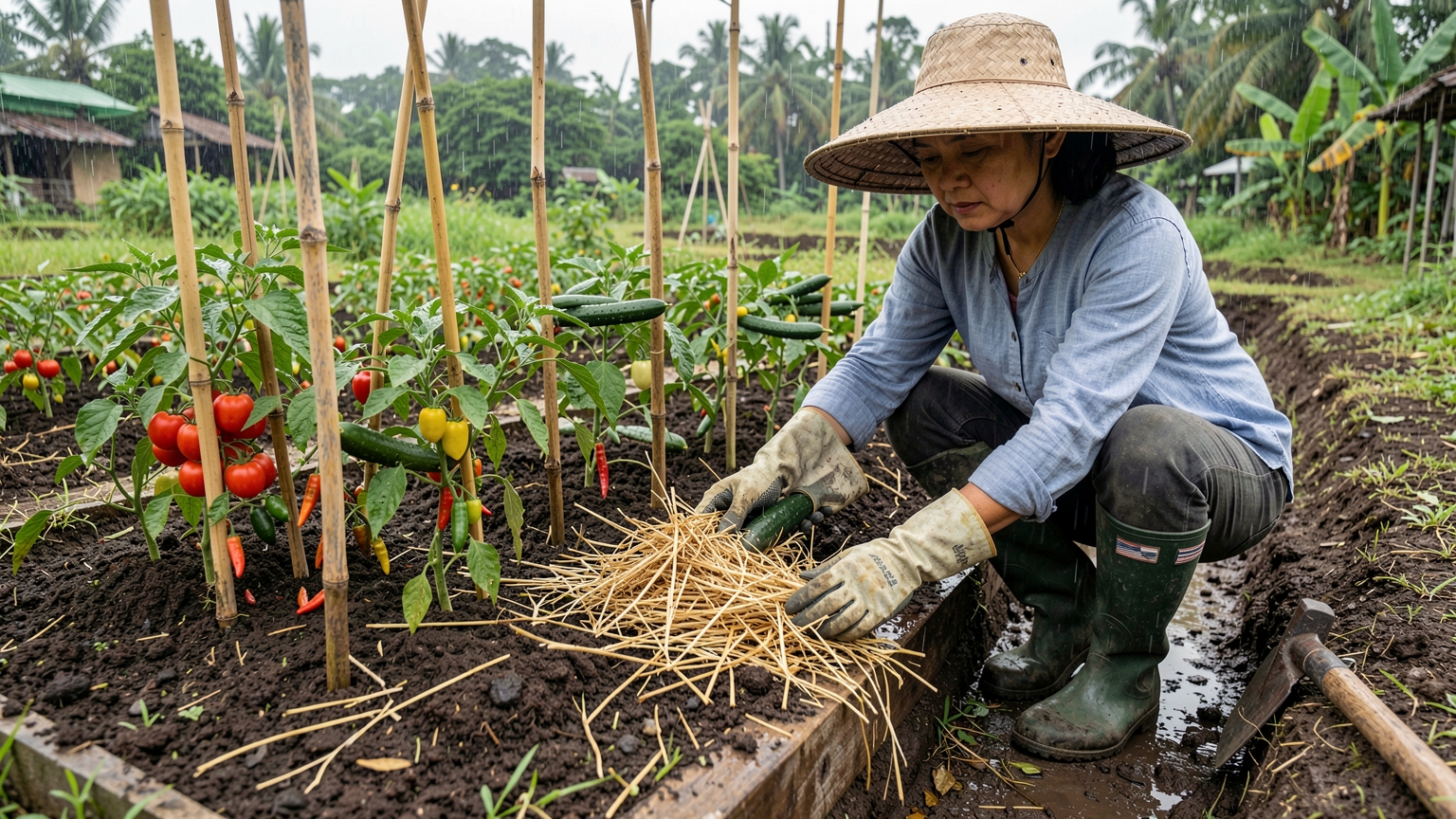
If your garden floods often or water flows from a neighbour's land, a bigger drainage plan may be needed. Talk to neighbours and local farmers before you change how water flows.
Fixes 6 and 7: Homemade spray and safer seedlings
Fix 6: Use a baking soda spray
A baking soda spray can help slow powdery mildew and some leaf spots. It works best to protect healthy leaves. It will not repair leaves that are already badly damaged, so do Fix 1 first.
- Mix about 1 level teaspoon (around 5 g) of baking soda in 1 litre of clean water.
- Add 2 or 3 drops of plain liquid dish soap. This helps the spray stick to the leaf.
- Shake well and pour into a clean hand sprayer.
Wear gloves and eye protection when mixing and spraying. Test the spray on a few leaves first and wait two days. If the leaves burn or curl, add more water. Using too much baking soda can harm leaves and soil, so do not make it stronger. Spray in the morning, on a day when no rain is coming for a few hours. Cover the top and the underside of the leaves. Repeat about once a week, and again after heavy rain washes it off.
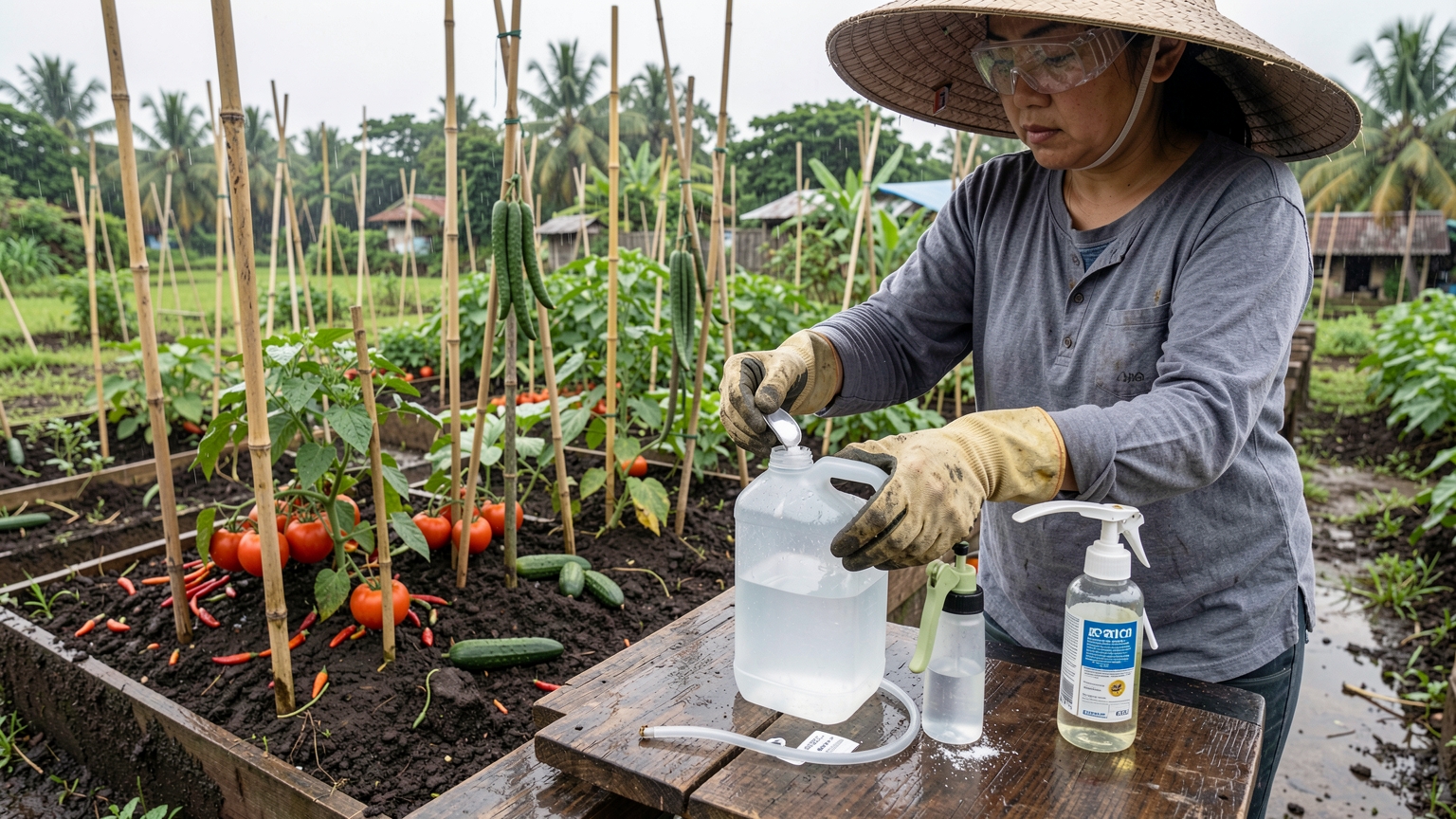
Baking soda is cheap in most places, often around 0.50 to 2 US dollars for a pack, but prices vary by country. Some gardeners also use a spray of 1 part fresh milk to 9 parts water for powdery mildew. If disease keeps spreading, ask an extension officer about fungicides approved in your country. Read the full label, follow it exactly, wear a mask, gloves and eye protection, and keep children and animals away.
Fix 7: Protect seedlings from damping off
Once a seedling falls over from damping off, it cannot be saved. Prevention is the only fix. Start seeds in trays or pots under a roof or clear plastic cover, away from direct rain, but with open sides for air. Use fresh seedling mix or soil mixed with well-rotted compost and sand, not soil from a sick bed. Sow seeds thinly so seedlings do not touch. Water lightly from the bottom by standing trays in a shallow tray of water for a few minutes, and let the top dry a little between waterings. Clean used trays with soapy water before reusing them. Throw away any tray where seedlings have collapsed, along with its soil.
Stay safe and keep checking
Walk through your garden every two or three days while the rain continues. Catching disease early is the best fix of all. Keep tools clean, wash your hands after handling sick plants, and do not work in the garden during storms or lightning. Watch for slippery paths and deep mud. Every place is different: soil, rainfall, common diseases and the products allowed for sale all change across Southeast Asia. Treat these fixes as a starting point, and ask an experienced local farmer or your extension officer for advice that fits your area.