Garden After Flooding: 7 Steps to Save Your Vegetables
Floodwater just drained from your vegetable beds? Follow these 7 steps to clear damage, dry the soil and save the plants that can still recover.
Published
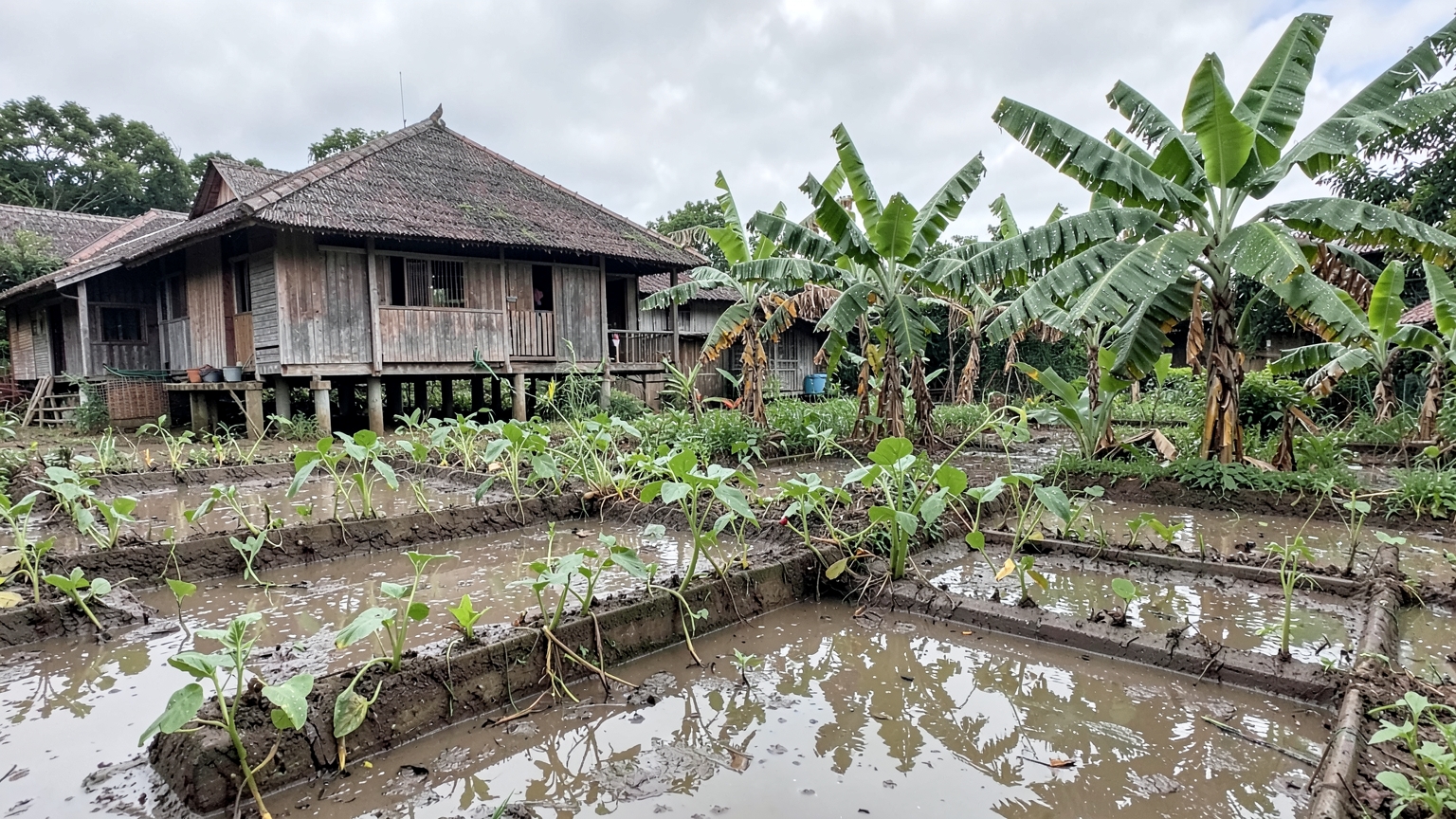
If floodwater has just left your vegetable beds, act in the next few days. Roots without air start to rot fast, and wet, dirty leaves invite disease. A garden after flooding can often be saved, but only part of it. These seven steps help you decide what to pull out, how to fix waterlogged soil, and which plants are worth keeping while the rains continue.
Stay Safe Before You Start
Floodwater in Cambodia often carries mud, animal waste, latrine overflow and farm chemicals. Treat it as dirty water.
- Wear rubber boots and gloves when you work in flooded beds.
- Keep small children out of the garden until the water is gone and the mud has settled.
- Wash your hands and feet with soap and clean water after work.
- Watch for snakes, scorpions and broken glass hidden in mud and piled debris.
- If water touched a pump, wires or an electric light near the garden, do not touch them. Turn off the power at the main switch and ask a trained electrician to check before you use them again.
If your well was under water, do not use it for drinking or for washing vegetables until it has been cleaned and tested. A local well technician or your commune office can advise you.
First Steps for a Garden After Flooding
Step 1: Drain the standing water
Walk around the garden and find where water is still sitting. Even a few centimetres of water on a bed for another two or three days can kill roots that survived the flood.
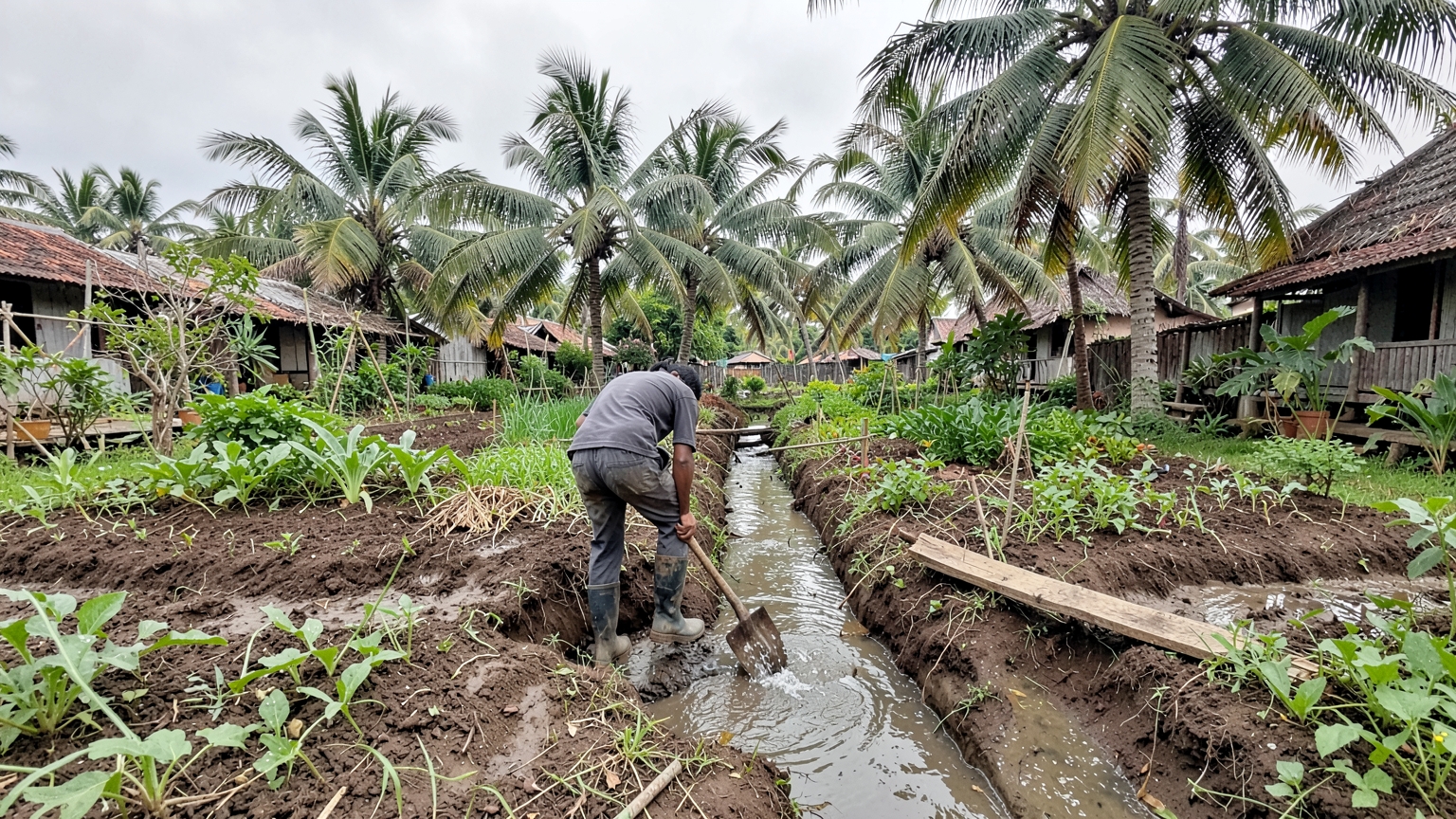
- Dig shallow channels with a hoe to lead water from beds to the lowest corner of your land, a ditch or a pond.
- Open any blocked drains between beds. Remove mud, leaves and plastic that the flood left behind.
- If one corner always floods, make a small soak-away pit there and fill it with broken brick and gravel.
Do not walk on the beds themselves. Wet soil packs down hard under your feet and pushes out the air that roots need. Use planks or old boards to stand on if you must reach the middle of a bed.
Step 2: Pull out dead and rotting plants
After two or three days without standing water, check every plant. Look at the stem near the soil and pull gently.
- Pull out plants with soft, black or brown stems at the base. This is stem rot and they will not recover.
- Pull out plants whose roots are brown, slimy or smell bad. Healthy roots are white or light coloured and firm.
- Remove plants that are flat in the mud with yellow, collapsed leaves all over.
Do not put rotten plants straight onto your compost heap if they look diseased. Bury them away from the garden or let them dry and burn them safely, following local rules. Healthy plant waste, like broken but clean leaves, can go to compost.
Step 3: Clean the plants that survived
Plants that are still standing may have a coat of mud on their leaves. Mud blocks sunlight and holds germs.
- Gently wash leaves with clean water from a watering can or a bucket. Do this in the morning so leaves can dry before night.
- Cut off leaves that are torn, yellow or covered in rot. Use a clean knife or scissors.
- Stand bent plants back up and tie them loosely to a bamboo stake.
A note on food safety: leafy vegetables and herbs that were under floodwater can carry germs that washing may not fully remove. Many farm advisers suggest throwing away leafy greens that the water touched, and only eating new leaves that grow after the flood. Fruits like eggplant or chilli that were above the water line are lower risk, but wash them well and cook them.
Fixing Waterlogged Soil
Step 4: Let air back into the soil
Waterlogged soil is heavy and sour. It has little air, and some useful soil life dies. Your job is to open it up without destroying its structure.
- Wait until the soil is moist but not sticky. Squeeze a handful. If water drips out or it forms a shiny ball, wait another day or two.
- When it crumbles a little, push a garden fork into the bed every 20 to 30 centimetres and rock it back and forth. This makes air holes without turning the soil over.
- Break up the hard crust of mud on top with a hand hoe. A thin crust stops air and water from going in.
- Do not dig deep or turn beds upside down now. That brings sticky clay to the top and makes the problem worse.
If a thick layer of fine silt was left on top, you can mix a little of it into the topsoil once it crumbles. Flood silt often holds some nutrients. If the silt smells of oil, chemicals or sewage, scrape it off and remove it instead.
Step 5: Feed the soil and raise the beds
Floods wash away nutrients, especially nitrogen. Plants often turn pale yellow after a flood for this reason.
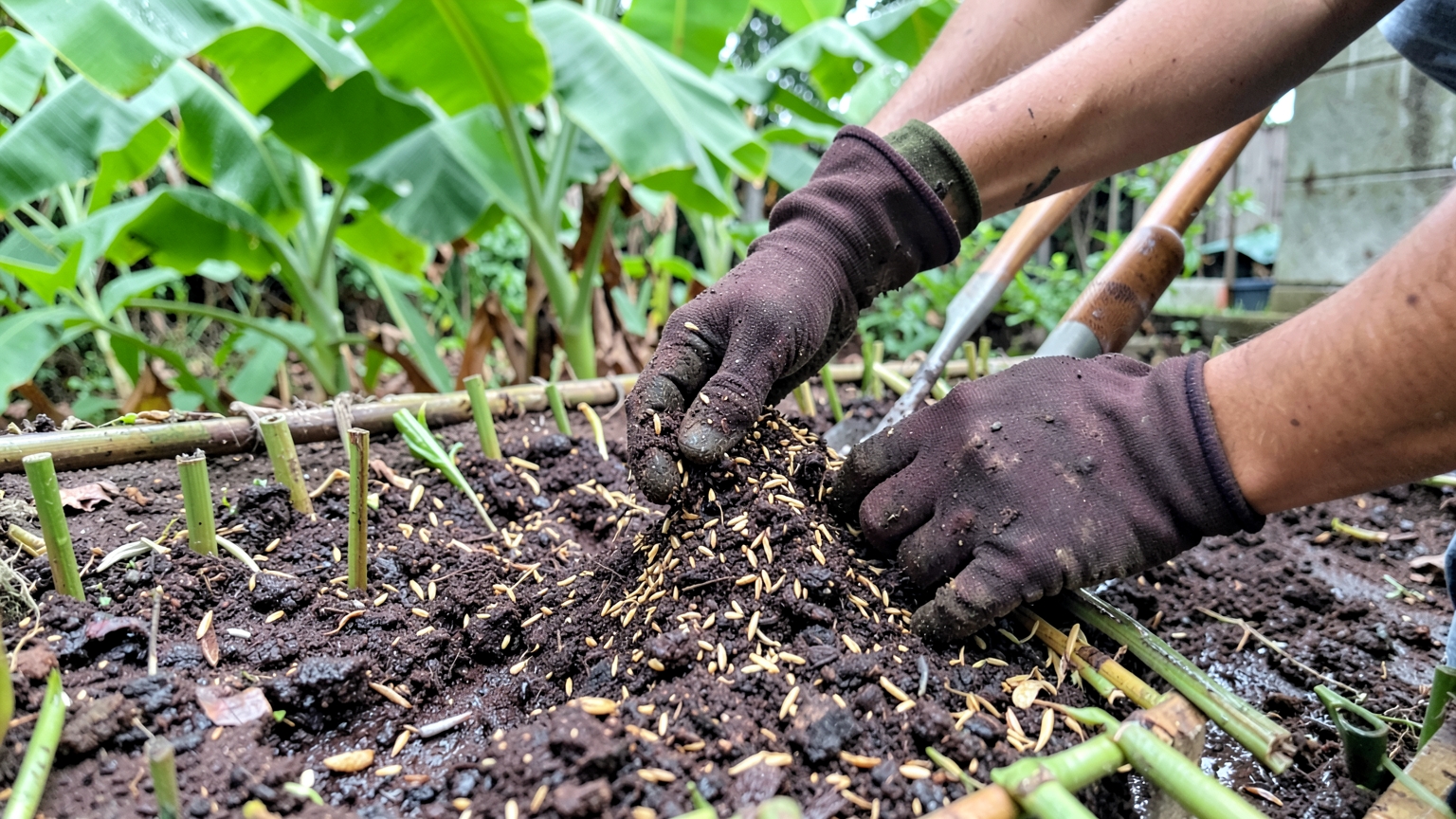
- Spread well-rotted compost or old cow manure on top of the beds, about 2 to 5 centimetres thick. Do not use fresh manure; it can burn roots and carry more germs.
- Mix in rice husk or rice husk charcoal (biochar). Both help heavy soil drain and hold air. Rice husk is cheap or free near most rice mills, though prices vary by area.
- Use the extra material to make beds higher. A bed raised 20 to 30 centimetres above the path drains much faster in heavy rain.
- Hold up bed edges with bamboo, old planks or bricks so the next storm does not wash them away.
If you use chemical fertiliser, use a small amount and follow the bag instructions. Weak roots are easily burned by strong fertiliser.
Which Plants Can Recover
Step 6: Decide what to keep and what to replace
Plants react to flooding in very different ways. How long the water stayed matters most. One day under water is very different from one week.
Plants that usually handle wet ground well:
- Kangkong (water spinach), which often grows back strongly from its stems.
- Taro (trav), which likes wet soil.
- Lemongrass (sleuk krey), which often survives and sends up new shoots.
- Banana, which can survive short floods if the base does not rot.
- Galangal and turmeric, if the roots stay firm.
Plants that may recover if the flood was short:
- Chilli and eggplant. Keep them if stems are firm and new leaves appear within a week or two.
- Sweet potato. The vines often live, but roots under the water may rot. Dig a few to check.
- Long beans. Older plants with strong stems sometimes survive.
Plants that often die after flooding:
- Tomato, cucumber, melon and pumpkin seedlings. Their roots rot quickly in wet soil.
- Young seedlings of almost any kind.
- Onion and garlic, which rot easily.
Give doubtful plants about one to two weeks. If you see new green growth at the tips, keep them. If they keep wilting even when the soil is wet, the roots are dead. Pull them out and use the space.
Step 7: Replant and Protect for the Rest of the Rains
The rains are not over yet, so choose crops that grow fast and like moisture. Plant them in your new raised beds.
- Kangkong, from cuttings or seed, is ready in a few weeks.
- Amaranth (pak khom) and Chinese mustard (spai) grow quickly.
- Morning glory, basil (chi neang vorng) and mint grow well in moist soil.
- Sow small amounts every week or two instead of all at once, in case another storm comes.
Protect the garden from new problems:
- Watch for fungal disease. White fuzz, dark spots or sudden wilting are warning signs. Remove sick leaves and keep space between plants for air.
- Look for snails and slugs at night after rain. Pick them off by hand.
- Cover bare soil with a thin layer of rice straw. It stops rain from pounding the surface and keeps mud off leaves.
- Grow some vegetables in pots, old buckets or bags on a raised bench. You can move them if water rises again.
If your garden floods every year, think about the land itself. Deeper drains or raising the whole area may need help from neighbours or a local contractor, especially if walls or house foundations are involved. For now, focus on the steps above. Drain, clear, clean, open the soil, feed it, keep the strong plants, and replant fast crops. Most home gardens can be growing again within a few weeks.