Leafy Greens for Heavy Rain: 4 Easy Picks to Grow Now
Soggy beds killing your vegetables? Kangkong, Malabar spinach, taro and sweet potato tops thrive in wet soil and keep your kitchen supplied.
Published
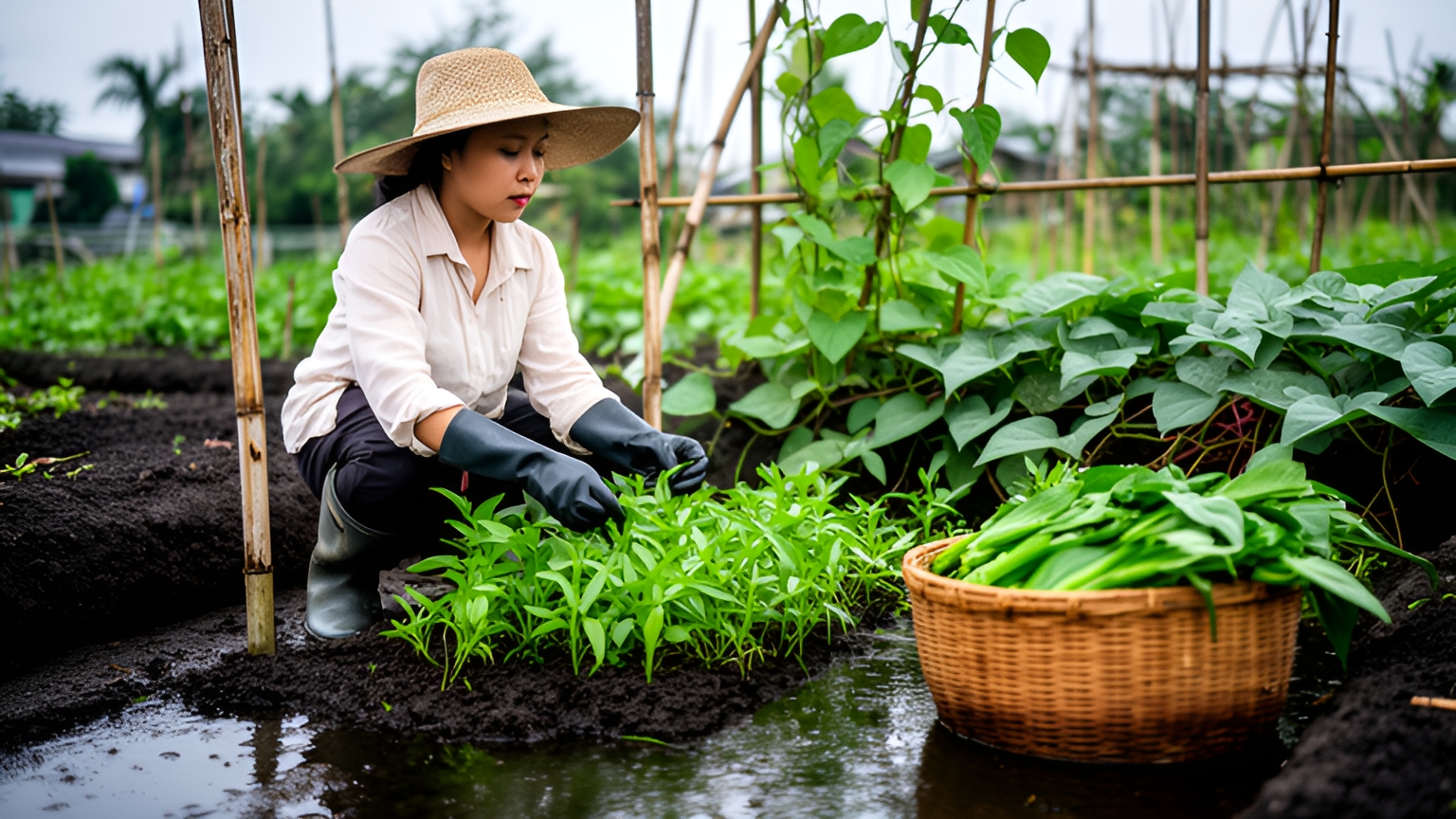
When heavy rain turns your garden into mud, lettuce, cabbage and many herbs rot or wash away. The good news is that some of the best leafy greens for heavy rain are plants that many families in Southeast Asia already know: kangkong (water spinach), Malabar spinach, taro leaves and sweet potato tops. They like warm, wet weather. They grow back after you cut them. Most can be started from cuttings that neighbours or local markets often have. This guide walks you through choosing a spot, planting, caring for and harvesting all four, even in soggy beds.
Conditions differ by country and place. Rain, soil, pests and local rules are not the same in Cambodia, Thailand, Vietnam, Laos, the Philippines, Malaysia or Indonesia. If you are unsure, ask an experienced local farmer or your agricultural extension officer what grows well near you.
Choosing leafy greens for heavy rain
Each of these four plants handles wet weather in its own way. Knowing this helps you put each one in the right place.
- Kangkong (pak bung, rau muong, kangkung, trakuon): grows in wet soil or shallow water. It is the best choice for the lowest, wettest corner.
- Malabar spinach (alugbati, mong toi, pak plang): a climbing vine with thick, shiny leaves. It likes rain but not standing water at the roots, so it needs a mound and a trellis.
- Taro (gabi, keladi, khoai mon): a big-leaved plant that tolerates very wet soil. The leaves and stems are eaten after long cooking.
- Sweet potato tops (camote tops, kamote, ubi keledek leaves): a fast vine that covers the ground and protects soil from heavy rain. It prefers soil that drains, so plant it on ridges.
A simple plan for a small family garden: kangkong in the lowest spot, taro at the edge of wet ground, and Malabar spinach and sweet potato on raised mounds.
Step 1: Prepare wet beds and drains
Start by watching where water collects after rain. Do this on a day without thunder or lightning. Do not work in moving floodwater, and stay well away from fallen power lines. If water near your house rises fast, leave the garden and keep safe.
Wear rubber boots, gardening gloves and long sleeves. Mud can hide broken glass, nails and thorns, and wet soil can carry germs into cuts.
- Dig a shallow drain, about one spade deep, along the low side of the garden so extra water can run away. Do not send water onto a neighbour's land or toward a house wall.
- For Malabar spinach and sweet potato, pile soil into mounds or ridges about 30 to 40 cm high. Mix in old compost or well-rotted manure if you have it.
- For kangkong, you can use the low wet patch as it is, or set a large old basin or tub with a layer of soil and 5 to 10 cm of clean water.
- For taro, choose the edge of the wet area where soil is soft but not under deep water all the time.
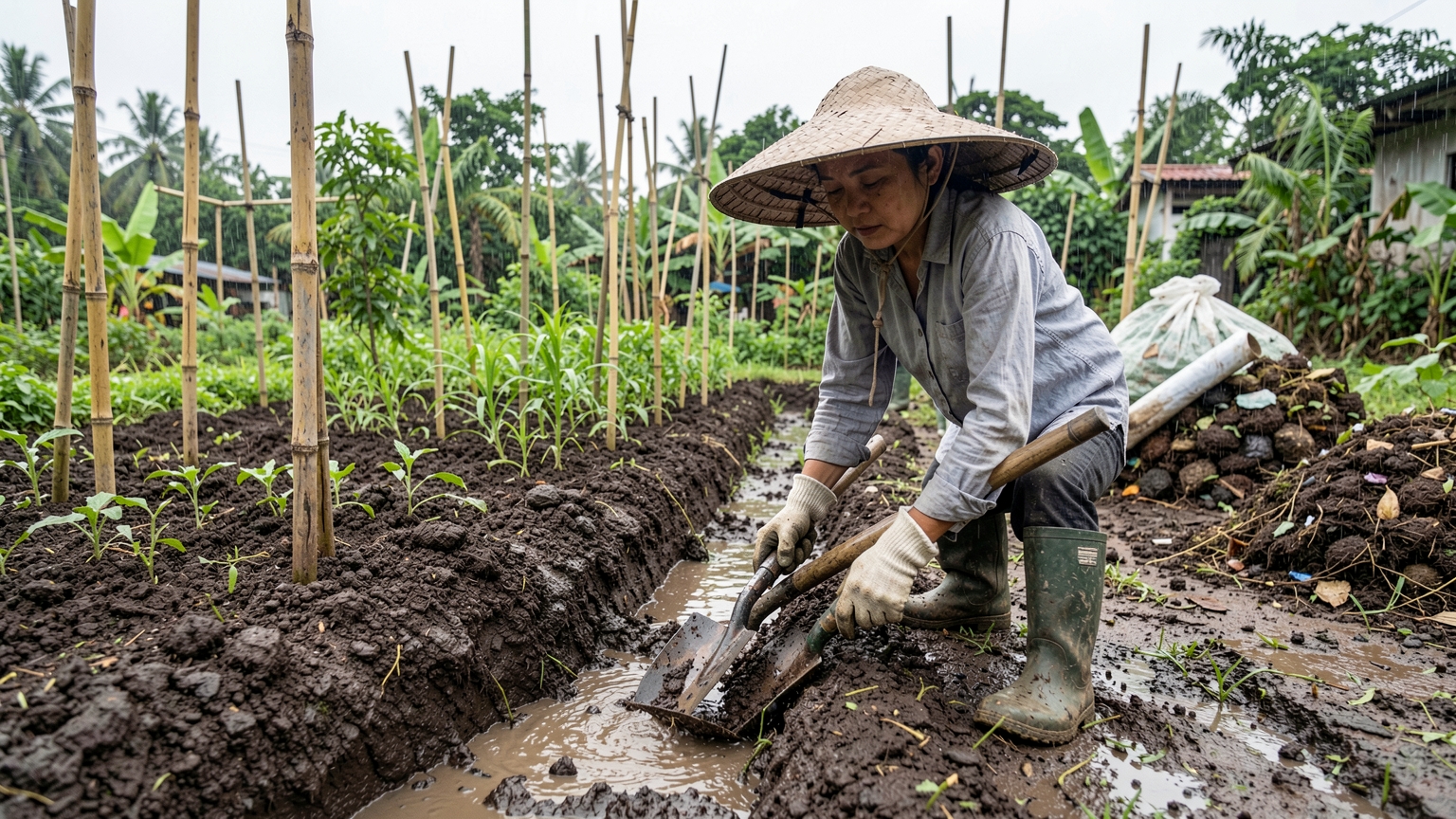
Lift heavy spadefuls of wet soil slowly, with bent knees. Wet soil is much heavier than dry soil. Take breaks and share the digging with family.
Step 2: Plant cuttings and corms
All four plants grow easily from pieces of older plants, which saves money. Cuttings are often free from neighbours. Seed packets, where you need them, often cost roughly 1 to 3 US dollars, but prices vary by country and shop.
- Kangkong: take stem cuttings about 20 to 30 cm long from a healthy plant. Push the lower part into the mud or wet soil, leaving a few leaves above. Space them about a hand-width apart. Roots form in a few days in warm weather.
- Sweet potato: cut vine tips about 25 to 30 cm long. Lay the lower half along the top of the ridge and cover it with soil, leaving the leafy tip out. Plant one every 30 cm or so.
- Malabar spinach: plant stem cuttings or seeds at the base of where your trellis will go, two or three per mound.
- Taro: plant a small corm or a side shoot with a bit of corm attached, about 10 cm deep and 50 to 60 cm apart. Wear gloves, because taro sap can make skin itch.
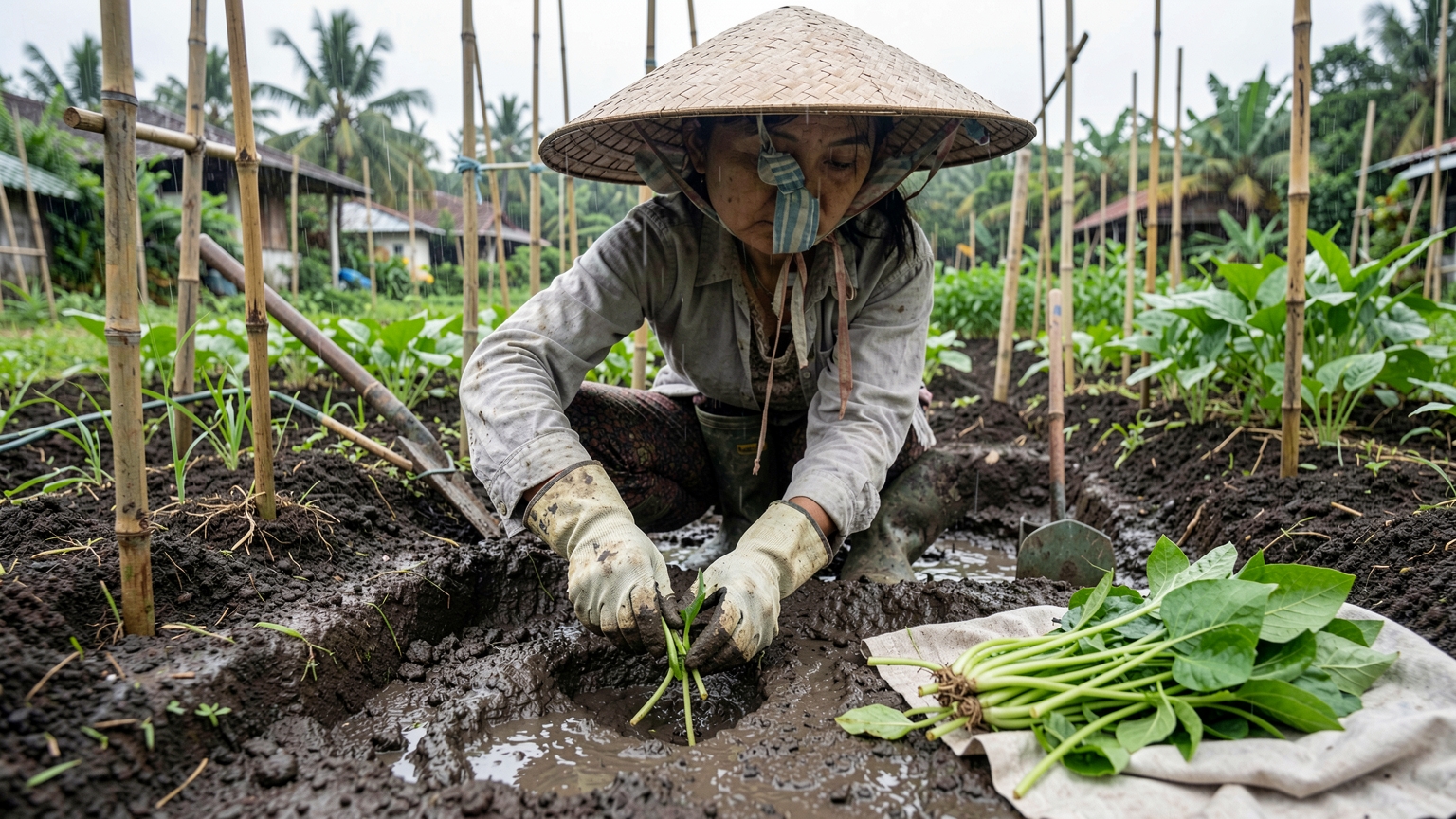
Plant in cloudy weather or late afternoon so new cuttings do not wilt. Only use clean water for kangkong. Do not grow it in ditches that carry drain water, waste water or farm chemicals, because the plant takes up what is in the water. In some places kangkong spreads quickly into waterways, so keep it inside your own beds or containers and check local rules.
Step 3: Build supports and keep plants healthy
Malabar spinach needs something to climb. A simple trellis keeps its leaves off the wet ground, so they stay clean and rot less.
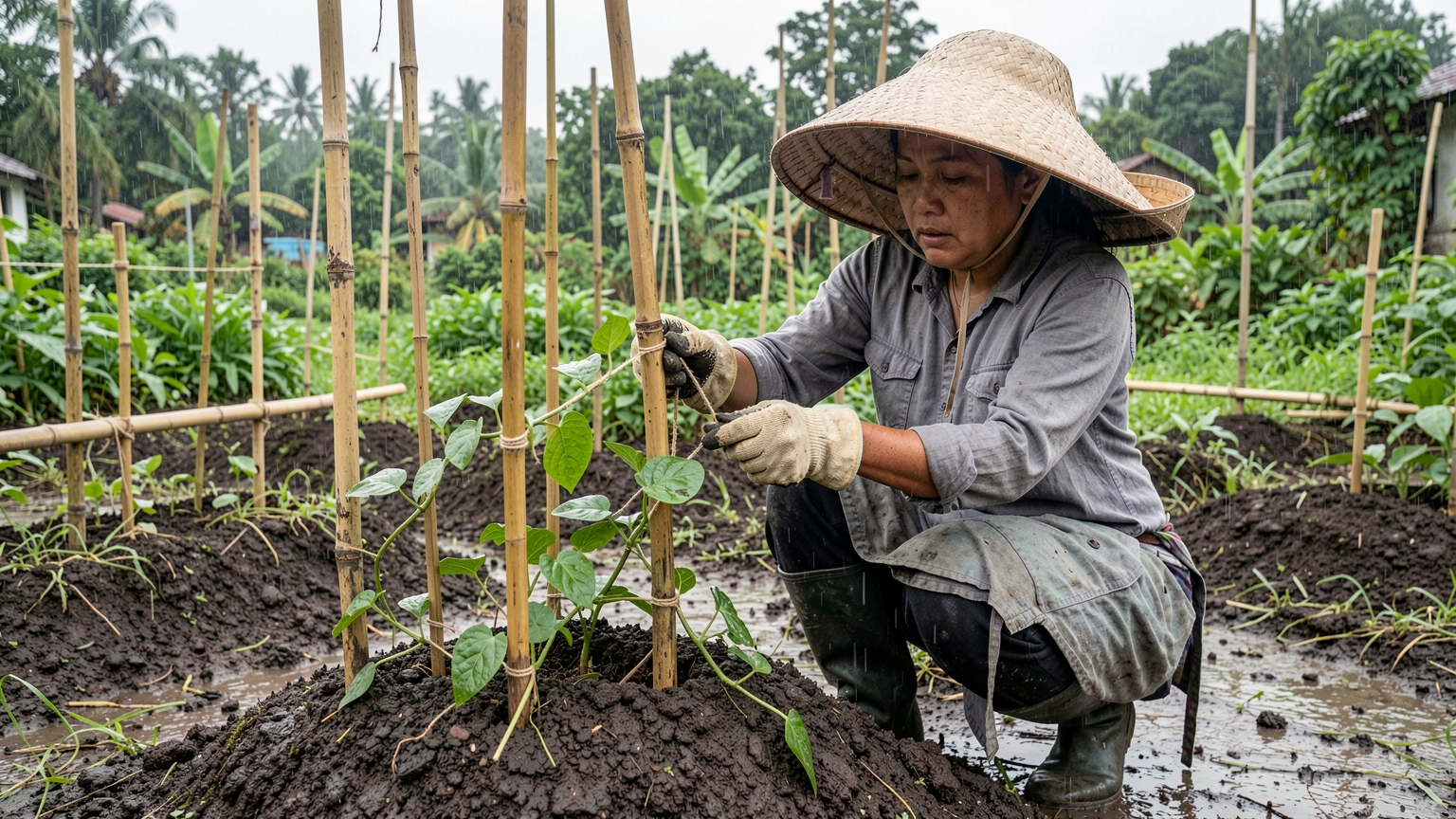
- Push three or four bamboo poles about 1.5 to 2 metres long firmly into the mound and tie them at the top, or set two posts and run string between them.
- Tie the knots at chest height or lower where you can, so you do not need to stand on anything. If you use a short step, place it on firm, level ground with someone nearby, and never climb in rain or wind.
- Guide the young vines onto the poles. They will twine up by themselves after that.
Heavy rain washes food out of the soil. Every few weeks, add a thin layer of compost or well-rotted manure around the plants, keeping it off the stems. Wear gloves and wash your hands after handling manure. If you use any bought fertiliser, follow the label and use less, not more.
Watch for pests that love wet weather. Golden apple snails and garden snails eat kangkong and taro leaves. Check plants in the early morning or evening and pick snails off by hand while wearing gloves. Remove their pink egg clusters from stems and walls. Slugs and caterpillars can also be hand-picked. Cut off leaves that are yellow, spotted or rotting and throw them away from the bed, not into the compost if they look diseased. Keep weeds down so air can move between plants.
Step 4: Harvest often and cook safely
These greens are ready quickly. In warm, wet weather, kangkong and sweet potato tops may be ready to cut in about three to five weeks, and Malabar spinach soon after it starts climbing. Growth varies with soil, sun and rain, so watch the plants rather than the calendar.
- Use a clean, sharp knife or garden scissors and wear gloves. Cut away from your body.
- Kangkong: cut stems a few centimetres above the water or soil. New shoots grow from the base.
- Sweet potato: pick the soft top 10 to 15 cm of each vine. Leave enough leaves so the plant keeps growing.
- Malabar spinach: pick young leaves and soft tips. Regular picking makes the vine branch.
- Taro: take only one or two outer leaves per plant at a time so the plant stays strong.
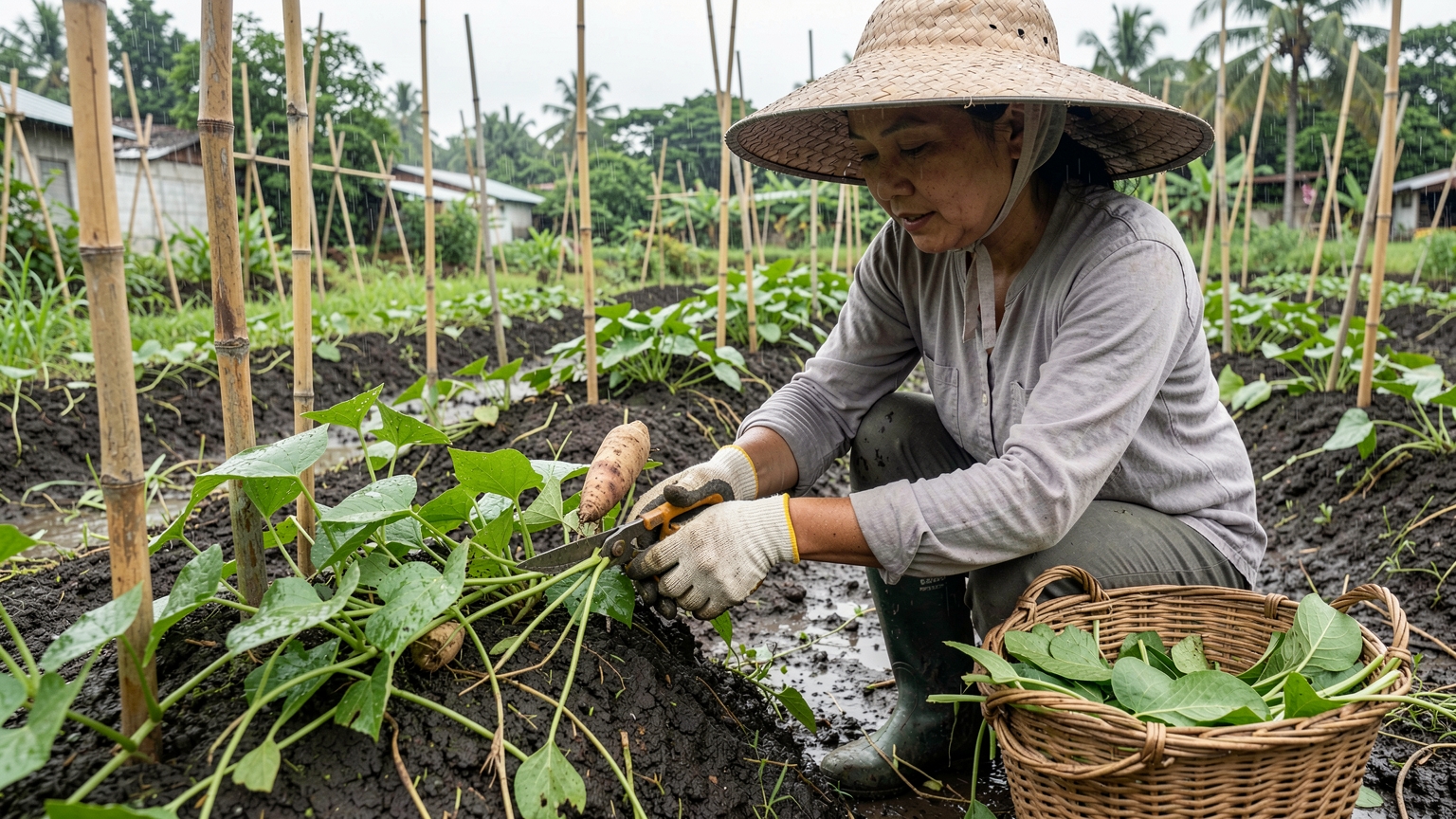
Wash all greens well in clean water, especially after floods, because floodwater can carry dirt and germs. If your garden was covered by floodwater from drains or sewage, it is safer not to eat the greens that were under water. Taro leaves and stems must never be eaten raw. They contain crystals that irritate the mouth and throat, so cook them thoroughly, as local recipes do, until soft. Kangkong, Malabar spinach and sweet potato tops are commonly cooked in stir-fries, soups and curries across the region.
With a little drainage, a few mounds and regular picking, these four plants can keep giving leaves through the wet weeks while other crops struggle. Start small, see which ones do best in your own soil, and ask local growers for tips that suit your area.