Rainy Season Vegetables: Raised Beds That Stop Rot
Daily rain rotting your vegetables? Learn how raised beds, simple plastic covers and drainage keep your garden harvesting all wet season.
Published
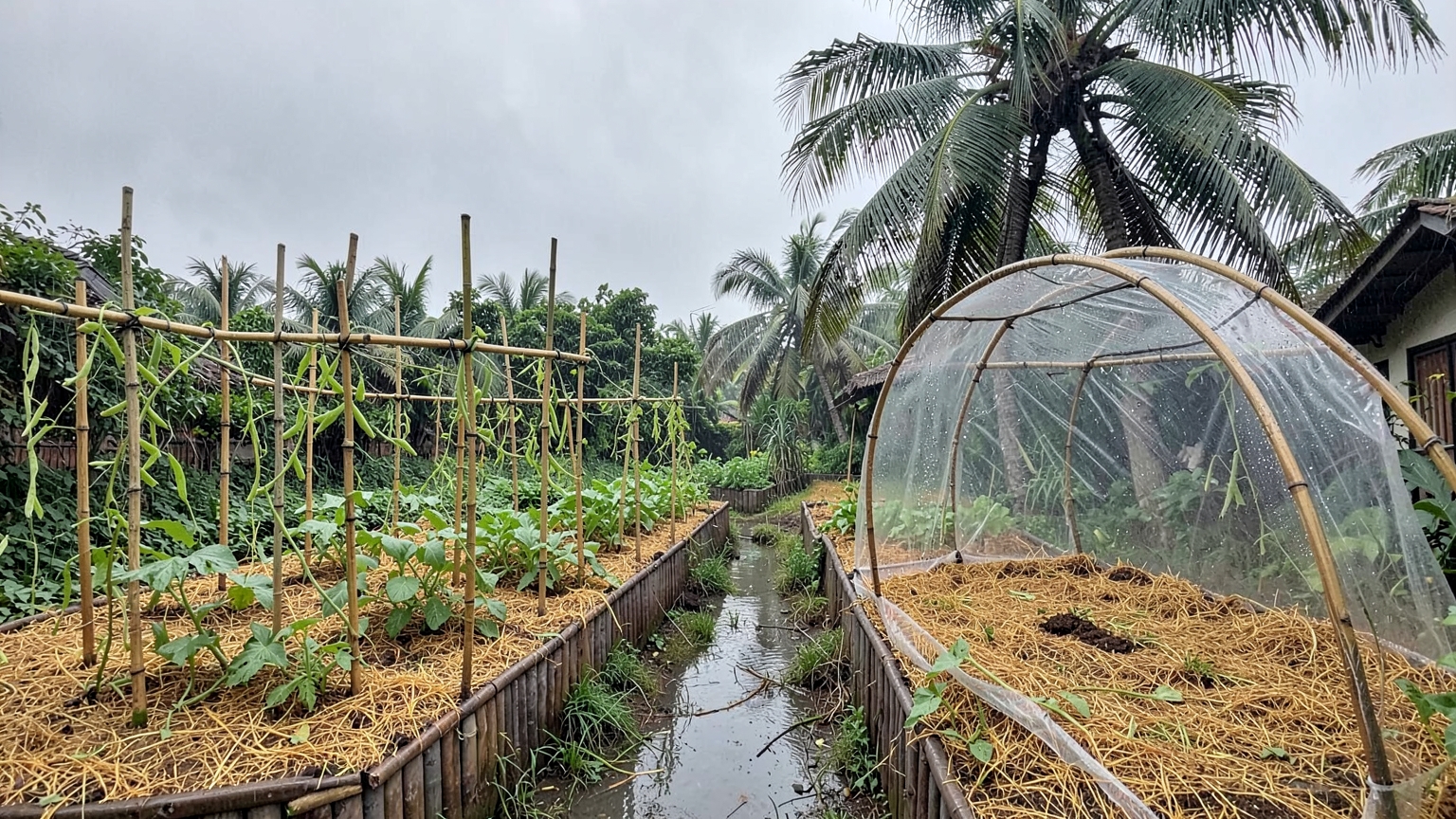
In the wet season the problem is rarely a lack of water. It is too much of it: roots sitting in soggy soil, leaves that never dry, seedlings knocked flat by a storm and good topsoil washed into the road. The good news is that growing vegetables through the rains is possible if you do three things: raise the soil, cover the most delicate crops, and give the water somewhere to go. This guide shows how to do all three with bamboo, plastic sheet, rice husk and compost that most families can find nearby.
Why vegetables rot when the rains come
Roots need air as well as water. When soil stays waterlogged for more than a day or two, the air spaces fill with water, roots start to die back and the plant yellows, wilts or rots at the base. At the same time, rain hitting bare soil splashes fungal spores and bacteria onto the lower leaves, and constant humidity lets leaf diseases spread fast. Heavy downpours also wash seeds and young seedlings out of flat beds and carry away the top layer of soil, which holds most of the nutrients.
So the aim is not to stop rain reaching your garden. The aim is to:
- keep the root zone moist but never sitting in water
- keep leaves as dry as possible and soil off the leaves
- move excess water away from the beds quickly but gently
Build raised beds that drain
A raised bed is simply a strip of loose, rich soil lifted above the surrounding ground. Many Cambodian farmers already make mounded rows. For the wet season, make them a little higher and give them firm edges.
Size and layout
- Width: about 1 to 1.2 metres, so you can reach the middle from both sides without stepping on the soil.
- Height: around 20 to 40 cm. Go higher on clay soil or in spots where water lies after rain.
- Paths: about 40 to 60 cm wide between beds. These paths become your drainage channels.
- Direction: run the beds so the paths slope gently toward a ditch or lower ground. Even a small slope helps water leave.
- Shape the top slightly rounded, so rain runs off rather than pooling on the surface.
Edges from local materials
Bamboo poles, old wooden planks, bricks, concrete blocks or broken roof tiles all work. Bamboo and untreated wood are cheap and easy, but they usually need replacing after one or two seasons because termites and rot get into them. Bricks and blocks last for years. Avoid wood that has been painted or soaked in unknown chemicals.
The soil mix
Do not fill beds with only heavy clay from the field. A common and forgiving mix is roughly:
- one part garden topsoil
- one part well-rotted compost or aged cow manure
- one part coarse material for drainage, such as charred rice husk, raw rice husk or coarse sand
Mix well and fill the bed a little above the edge, because it will settle after the first rains. If your ground is heavy clay, loosen the soil under the bed with a hoe or fork before you fill it, so water can drain downward too.
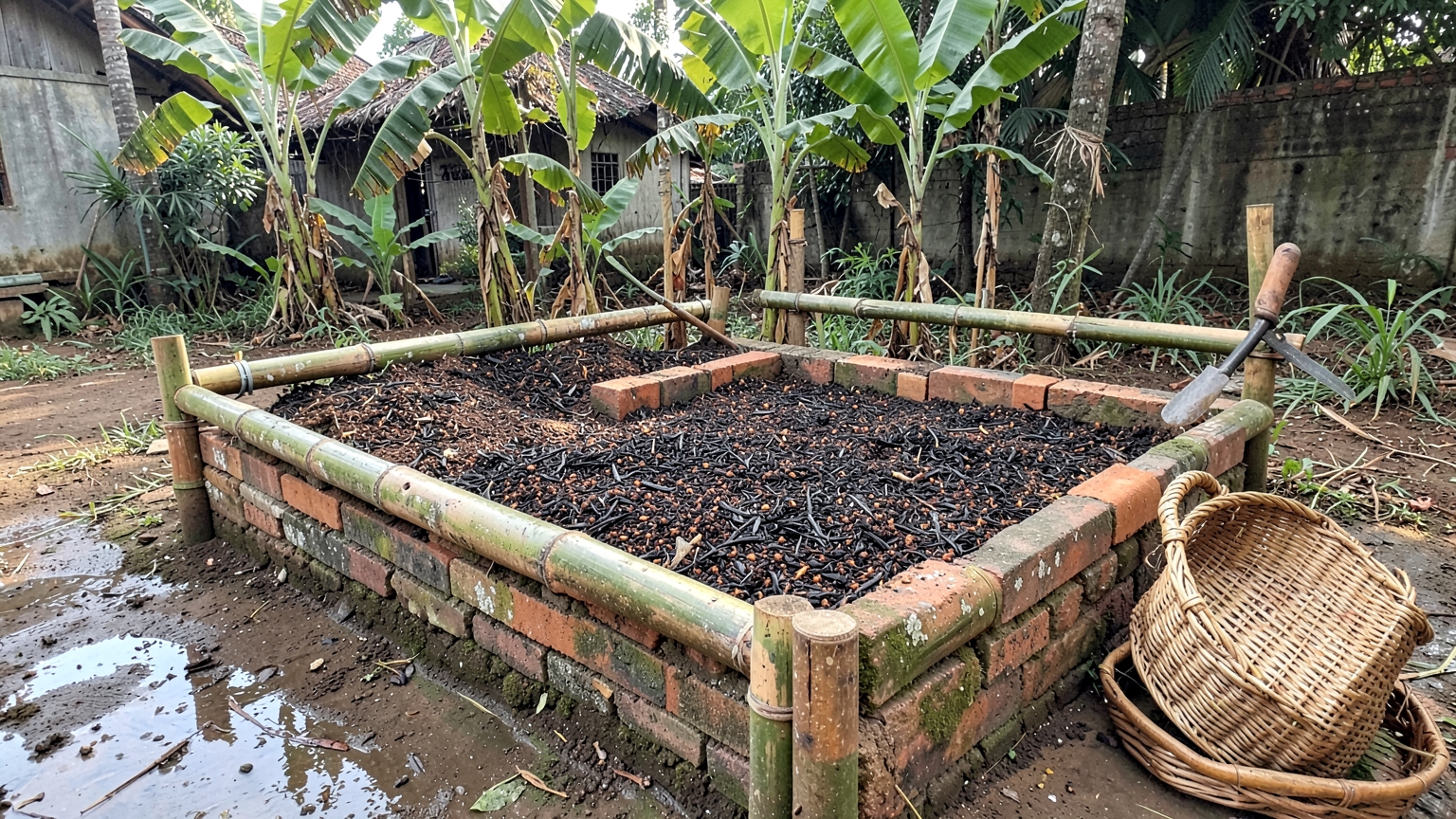
Build beds before the heaviest rains, ideally at the end of the dry season or in the first weeks of the wet season, while the soil is still workable. Digging soaked soil squeezes out the air and undoes the good you are trying to do.
Simple plastic rain covers
Raised beds protect the roots. Covers protect the leaves. You do not need a greenhouse. A simple rain shelter over one or two beds is enough for the crops that suffer most, such as lettuce, mustard greens, tomatoes and seedlings.
How to build a hoop cover
- Split bamboo into long, flexible strips and bend them into hoops over the bed, pushing each end 20 to 30 cm into the ground. Space the hoops about 1 metre apart.
- Tie a bamboo pole along the top of all the hoops to stiffen the frame.
- Make the top at least 1 metre above the soil, or higher for tomatoes, so leaves do not touch the plastic and hot air can escape.
- Stretch clear plastic sheet over the top. If you can find it, UV-stabilised greenhouse film lasts much longer than ordinary plastic, which often turns brittle and tears within one season of strong sun.
- Leave the sides and ends open, or cover only the upper half of each side. A cover is a roof, not a closed box.
Air, heat and storms
Closing a cover on all sides traps humid air and can make leaf disease worse, and on a sunny afternoon the inside can get very hot. Keep air moving. Before monsoon storms, check the ties and anchors: fix the plastic to the frame with strips of old inner tube rubber or strong string, and weigh the edges down with bamboo poles or sandbags. If very strong wind is expected, it is often safer to roll the plastic up and tie it than to let it billow like a sail and rip the frame out of the ground.
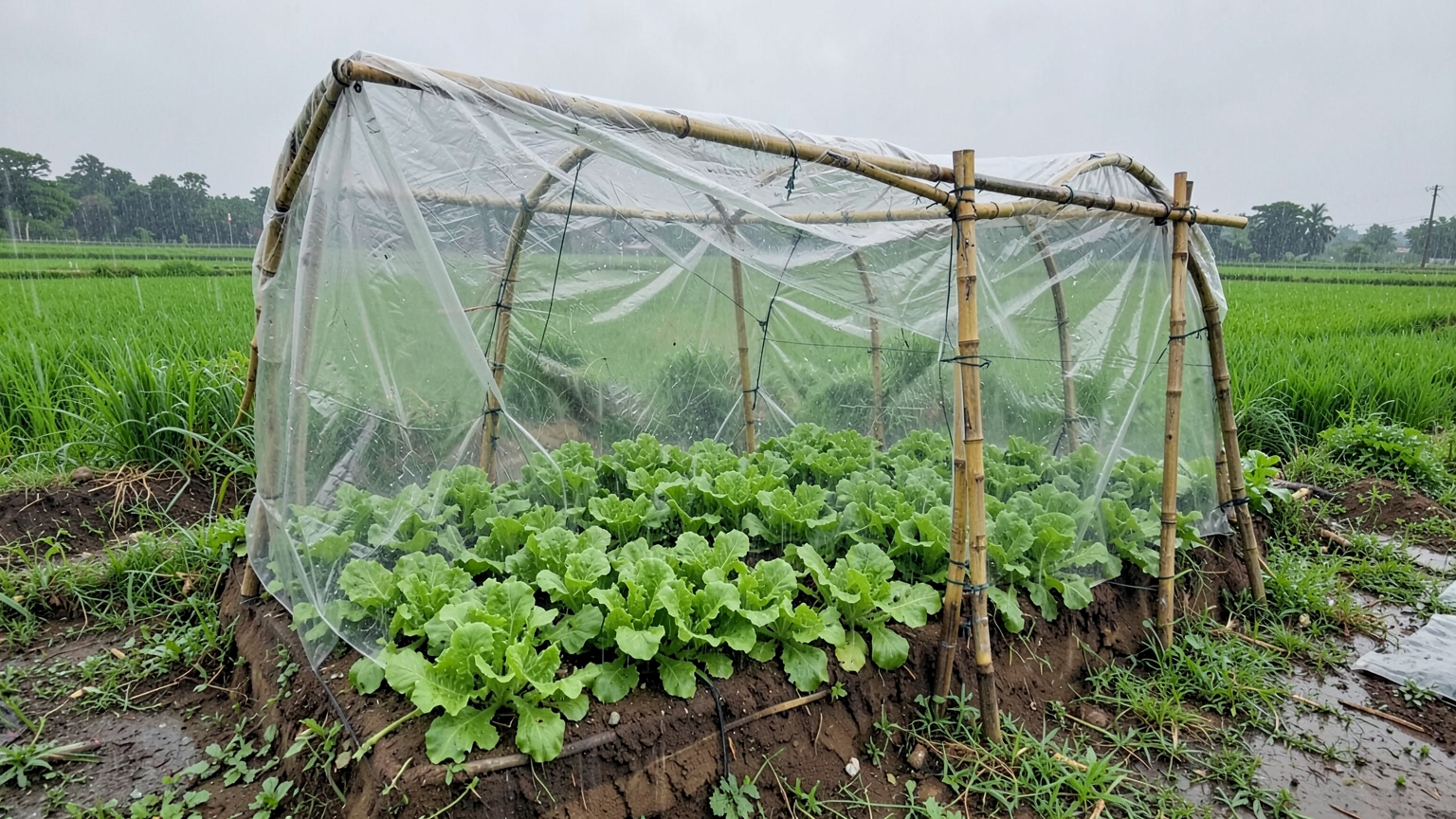
If you plan a large, tall structure or a permanent shade house with a steel frame, ask an experienced builder to check the design and make sure it can stand up to strong wind.
Give the water somewhere to go
Even the best bed will rot if the whole garden turns into a pond. Walk your garden during heavy rain and watch where water comes in and where it collects. That tells you where to dig.
- Dig a shallow ditch, about 30 to 50 cm deep, along the high side of the garden to catch water running in from outside.
- Connect the paths between beds to a ditch on the low side that leads to a pond, field or natural drain.
- Line ditch corners and steep sections with grass, stones or broken tiles so the water does not cut them deeper.
- Do not send your runoff onto a neighbour's land or house. If water has to cross a boundary, talk to your neighbours first.
- Clear leaves and mud from the ditches after each big storm.
If your land floods for days or weeks most years, raised beds alone may not be enough. Grow seedlings and herbs in pots, buckets or sacks on raised tables or platforms, and keep in-ground planting to the highest parts of the plot. For bigger earthworks, such as raising the level of a whole yard, get advice from someone experienced with land and water in your area.
Choosing and caring for wet-season crops
Some vegetables enjoy the heat and moisture of the rains and do well in raised beds even without covers. Others need protection.
Usually easier in the rains
- Water spinach (kangkong), which copes well with wet ground
- Amaranth and other fast-growing leafy greens
- Long beans, cucumbers, luffa and bottle gourd grown on a trellis, so the fruit stays off the soil
- Okra, lemongrass and taro on the wetter edges of the garden
Better under a cover
- Lettuce, bok choy and mustard greens
- Tomatoes and chillies, which are prone to leaf and fruit disease during long wet spells
- All young seedlings for their first few weeks
Daily and weekly care
- Mulch the soil with rice straw or dry grass. It stops soil splashing onto leaves and shields the bed surface from hard rain.
- Space plants wider than in the dry season so air can move between them.
- Trellis climbing crops and remove the lowest leaves that touch the ground.
- Pick off yellow or spotted leaves, and take badly diseased plants out of the garden rather than putting them on the compost heap.
- Check for snails and slugs in the evening or early morning and pick them off by hand.
- Water only when the top few centimetres of soil are dry. In rainy weeks you may not need to water at all.
- Add a thin layer of compost every few weeks, because heavy rain washes nutrients out of the soil.
Results depend on your soil, your site and how heavy the rains are in a given year. Start with one or two beds and one cover, watch how they behave through a few storms, then expand what works. A garden built to handle water will keep giving you greens long after flat beds have turned to mud.