Raised Garden Beds: Keep Vegetable Roots Above Floodwater
Heavy rain drowning your vegetables? Build low-cost raised beds from bamboo, bricks or blocks that lift roots above standing water.
Published
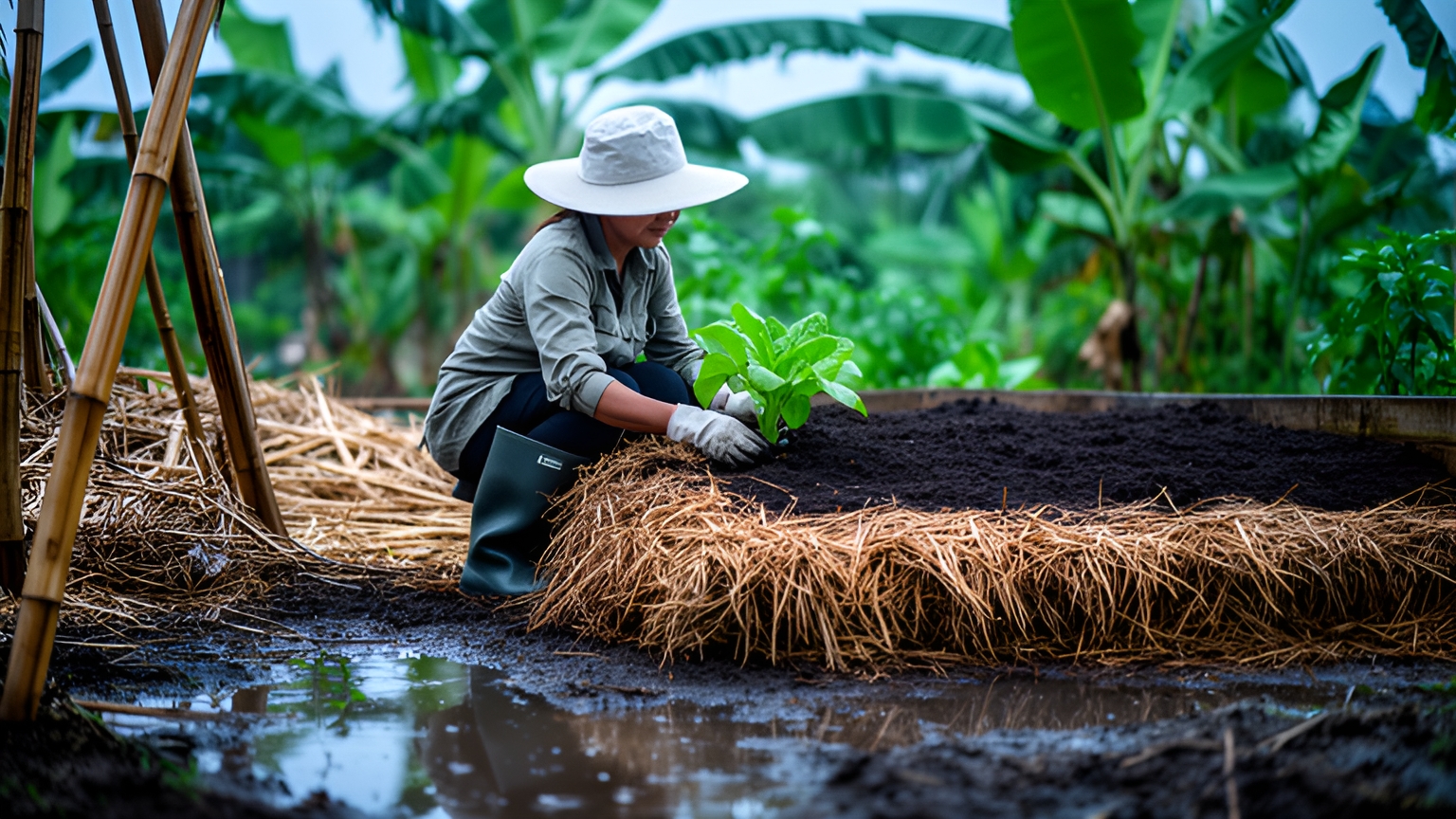
When heavy rain sits on your garden for days, vegetable roots run out of air and start to rot. Leaves turn yellow, plants wilt even though the soil is wet, and seedlings simply die. Raised garden beds solve much of this problem. They lift the soil above the puddles, so extra water drains away and roots can breathe. You can build them in a weekend from bamboo, bricks, old planks or concrete blocks, and many families already have some of these materials at home.
This guide walks you through the work step by step. Conditions differ by country and by place. Soil, rainfall, flood depth and the price of materials all change from one village to the next. If your land floods deeply every year, ask an experienced local farmer or agricultural extension officer what has worked nearby before you build.
Why Raised Garden Beds Work in Heavy Rain
Roots need both water and air. In flat, low ground, rain fills every space in the soil and pushes the air out. A raised bed keeps the top layer of soil higher than the water around it. Water drains down and out through the sides and the bottom, and the root zone stays moist but not soaked.
Raised beds also help in other ways during heavy rain:
- The loose soil mix dries faster after a storm, so you can plant and weed sooner.
- A firm frame stops rain from washing your good soil and compost away.
- Paths between beds keep your feet off the growing soil, so it does not pack down into mud.
Raised beds do not stop deep floods. If water often rises above knee height in your area, a bed will still go under. In that case, think about a higher spot, large containers on a raised stand, or planting only quick crops between floods.
Choosing Your Materials
Use what is cheap and easy to find where you live. Each material has good and weak points.
- Bamboo: light, cheap or free in many parts of Southeast Asia. Thick, mature poles last longer. Untreated bamboo touching wet soil may rot in one to two years, so plan to replace it.
- Bricks: strong and long-lasting. Broken or second-hand bricks work well. Stack them without cement for a low bed, or ask a mason for higher walls.
- Old planks: hardwood offcuts are good. Avoid wood that has been chemically treated, painted with old paint, or soaked in tar or oil, because these can leach into the soil you grow food in.
- Concrete blocks: very strong and quick to stack. Hollow blocks can be filled with soil and planted with herbs.
Costs vary a lot by country and by what you already own. As a rough guide, a bed about 1 metre wide and 3 metres long may cost close to nothing with your own bamboo, and from around 15 to 60 US dollars with bought bricks or blocks. Check local prices before you start.
You will also need a hoe or spade, a hammer or wooden mallet, a saw or bush knife, strong wire or nylon cord, a measuring tape and a string line. Wear gardening gloves, sturdy shoes or rubber boots, and eye protection when cutting or splitting bamboo.
How to Build the Bed Step by Step
Work only in calm weather between showers. Stop and go inside if you hear thunder or see lightning. If the ground has been under floodwater, wear boots and gloves, because floodwater can carry dirt and germs. Wash your hands well after work.
Step 1: Pick the spot and mark it out
Choose the highest part of your garden that gets at least five to six hours of sun. Watch where water collects after a big rain and avoid the lowest corner. Make the bed no wider than about 1 to 1.2 metres, so you can reach the middle from both sides without stepping in. Length can be anything that fits.
Push a short stick into each corner and stretch a string line between them. Clear grass and weeds inside the lines. Do not dig deep. Just loosen the top of the soil with a hoe so water can drain down.
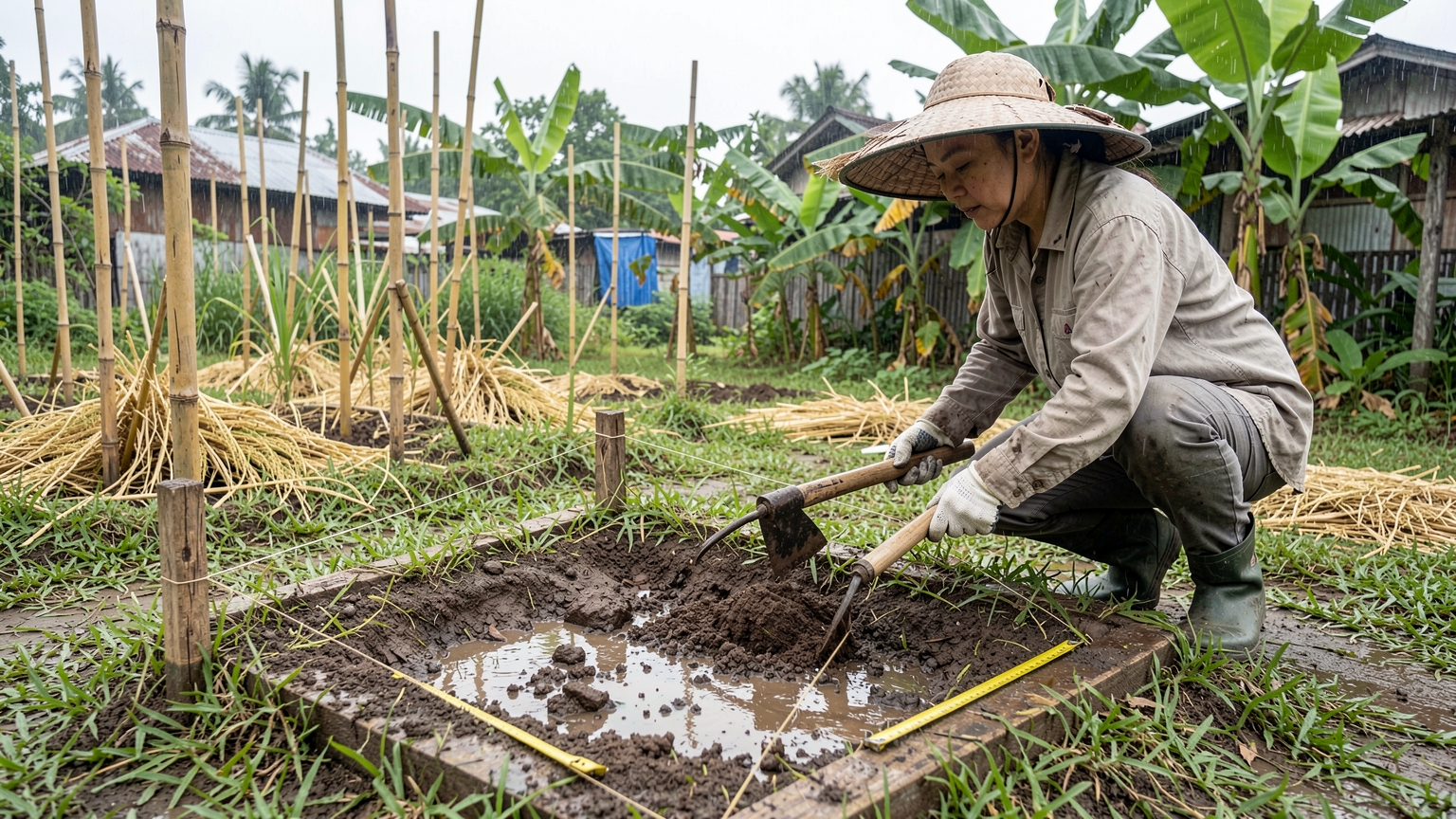
Leave paths about 40 to 60 centimetres wide between beds. These paths will carry rainwater away, so they should sit lower than the beds.
Step 2: Build the frame
Aim for a bed at least 30 centimetres tall. Where puddles often stand deeper, go to 40 or 45 centimetres. Higher frames hold more soil and need stronger sides.
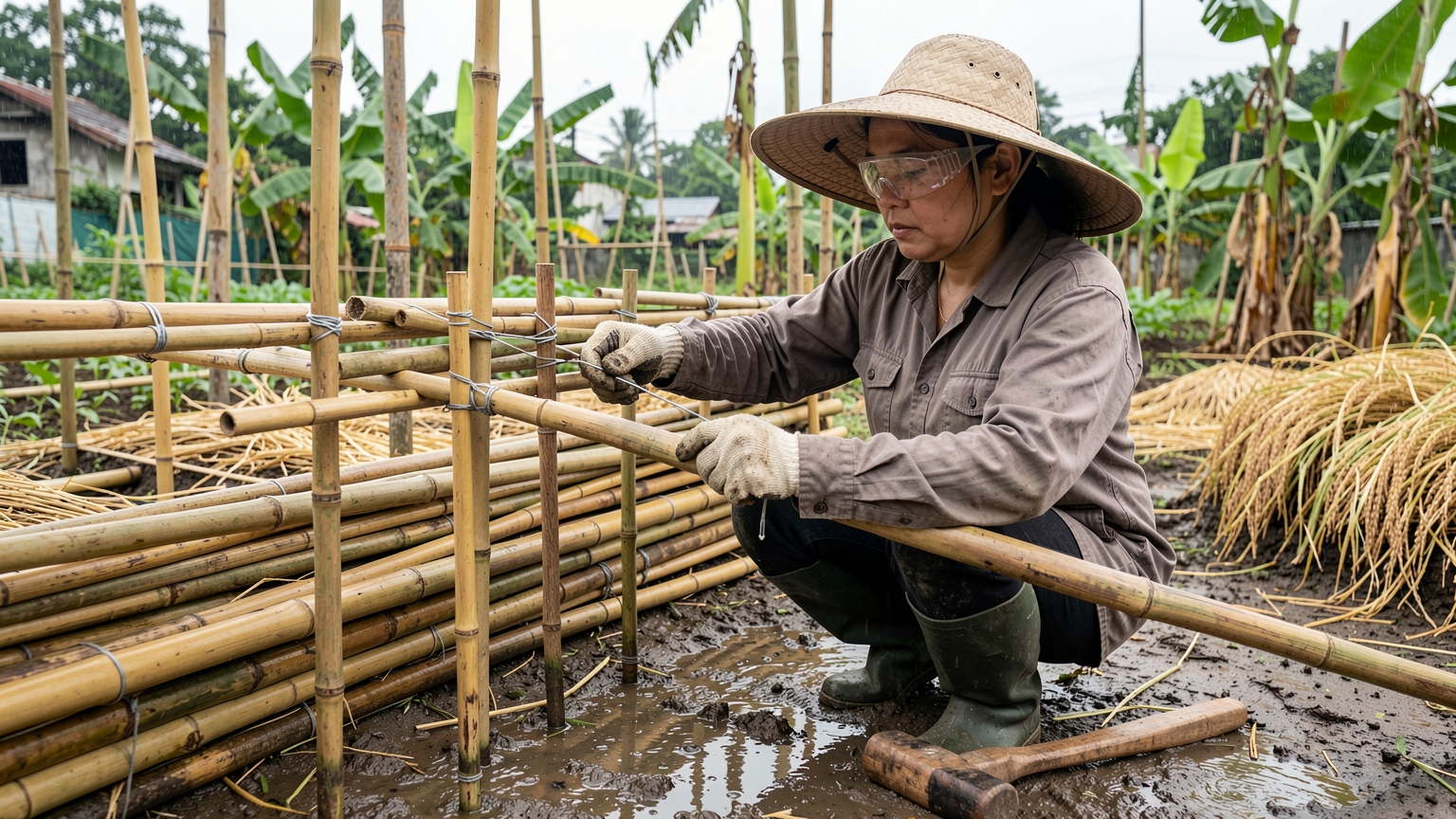
For bamboo, cut strong stakes about 70 centimetres long with a pointed end. Hammer them into the ground every 50 to 60 centimetres along the string line, on the inside and outside of where the wall will be. Lay whole bamboo poles flat between the stakes, one on top of another, and tie each joint tightly with wire. Wear gloves, because cut bamboo edges are very sharp, and keep eye protection on while cutting.
For bricks or blocks, set the first row on firm, level ground and stack the next rows so the joints do not line up. Bend your knees when lifting, and carry one block at a time. Dry-stacked walls above about two or three rows can lean when the soil is soaked, so keep block beds low, or ask a local mason to build them with mortar. For planks, screw or nail them to strong corner posts driven into the ground.
Step 3: Add the drainage layer
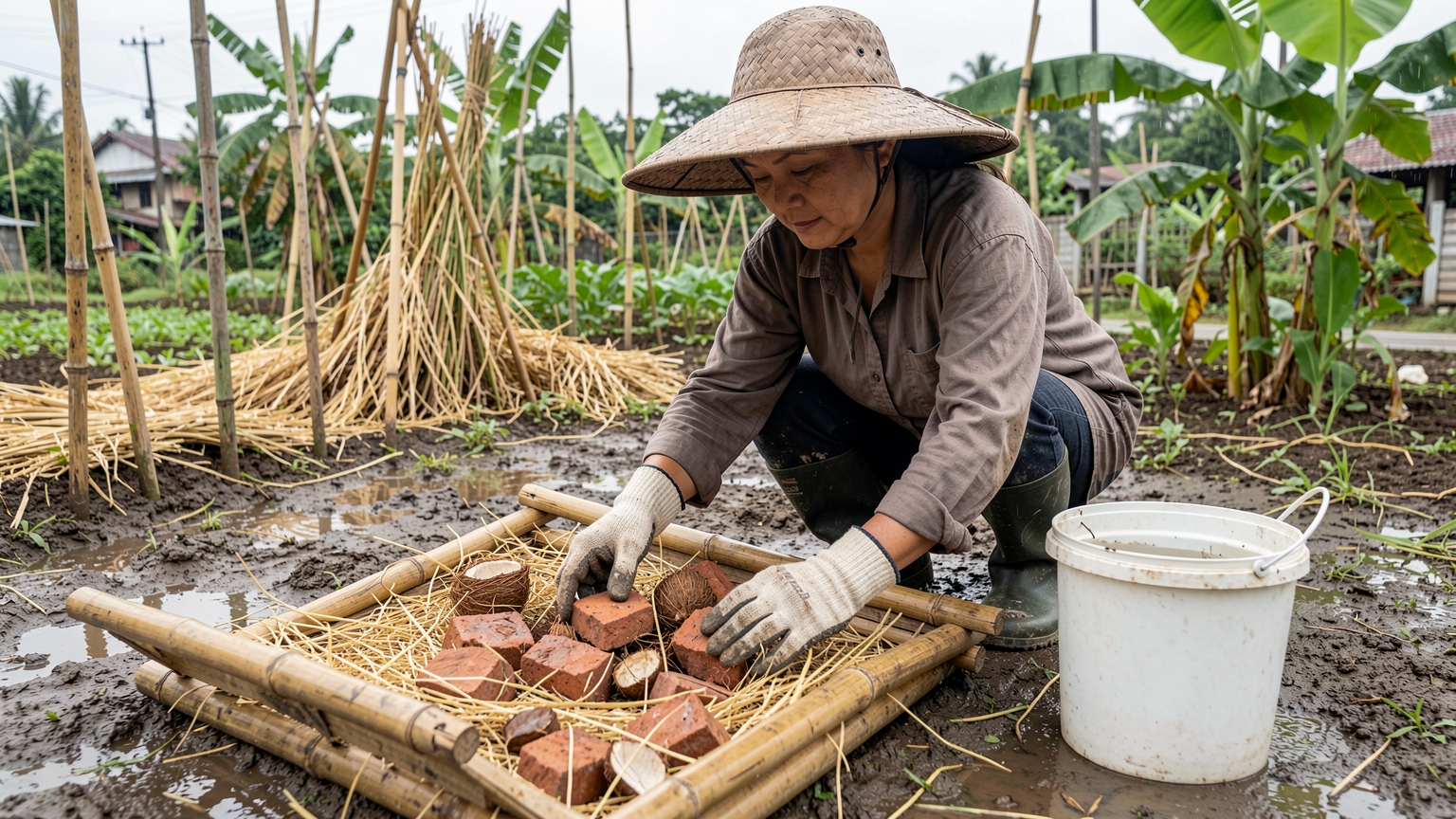
In low, heavy clay ground, a coarse layer at the bottom helps water leave the bed quickly. Spread 5 to 10 centimetres of broken bricks, coarse gravel, coconut husks or thick bamboo pieces across the bottom. On sandy or well-drained ground you can skip this and use more soil instead.
You can cover the drainage layer with a thin layer of rice straw or dry leaves. This stops the soil mix from washing down into the gaps.
Do not line the bottom with plastic. Plastic traps water inside the bed, which is the exact problem you are trying to fix.
Step 4: Fill with a light soil mix
The soil in a raised bed should be loose and crumbly, not heavy mud. A simple mix that many gardeners use is about:
- One part good topsoil from your garden
- One part compost or well-rotted animal manure
- One part coarse material such as rice husk, rice husk charcoal, coconut coir or coarse sand
Mix it on a tarp or in a wheelbarrow before filling. Wear a dust mask when handling dry manure, charcoal or compost, and gloves for all of it. Fill the bed to a few centimetres below the top, because the soil will settle after the first heavy rains. Never use fresh manure, which can burn young roots.
Next, plant your seedlings and cover the soil with 3 to 5 centimetres of rice straw or dry grass. This mulch breaks the force of falling rain, stops soil splashing onto leaves and keeps the surface from forming a hard crust.
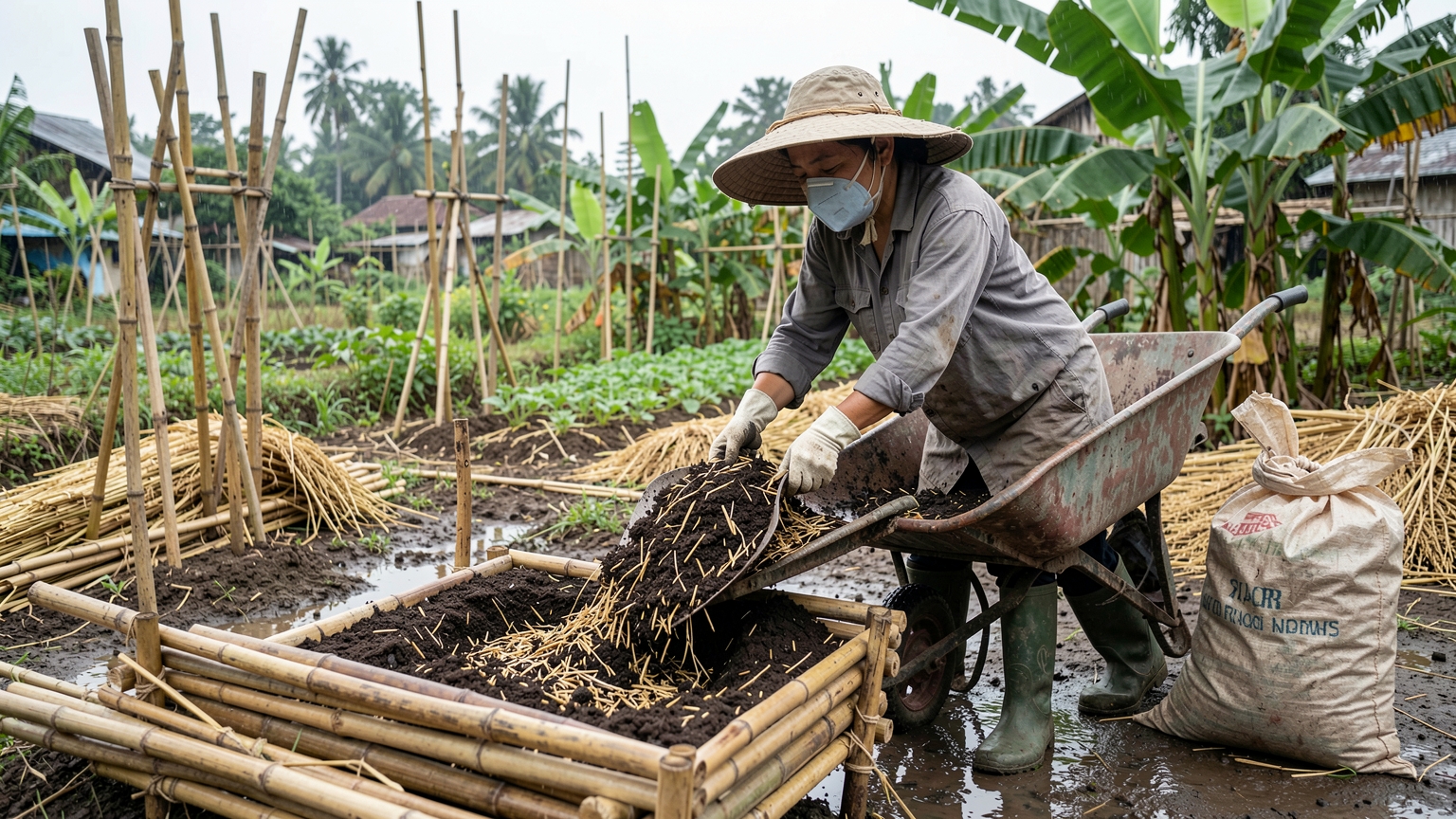
Water the seedlings in gently only if the soil is dry. In very wet weather, they may not need extra water at all.
Care During Heavy Rain
Check your beds after each big storm. Look for soil washing out through gaps, frames leaning, or water sitting on top. Fill gaps with more straw, and tie or prop up any loose poles.
- Keep the paths clear so water can flow away. A shallow ditch along the lowest side helps.
- Add more mulch when rain beats it thin.
- Pick off yellow or rotting leaves to help stop leaf diseases that like wet conditions.
- Choose crops that handle wet weather, such as water spinach (kangkong), Chinese kale, mustard greens, long beans, okra, lemongrass and taro at the edges.
If water has covered your leafy vegetables, wash them very well or cook them before eating. Floodwater can carry dirt and germs.
When to Ask for Help
Simple low beds are safe family projects. Get advice from an experienced local builder or extension officer if you want walls taller than about 60 centimetres, beds on a slope above a house, or beds next to walls, wells or septic tanks. Some areas also have rules about building near drains or waterways, so check with your village or local office first. Start with one bed, see how it handles the next big storm, and build more once you know what works on your land.