Stop Slugs and Snails Eating Seedlings in Heavy Rain
Rain brings slugs and snails out to strip your seedlings overnight. Use night picking, traps and ash barriers to protect your greens.
Published
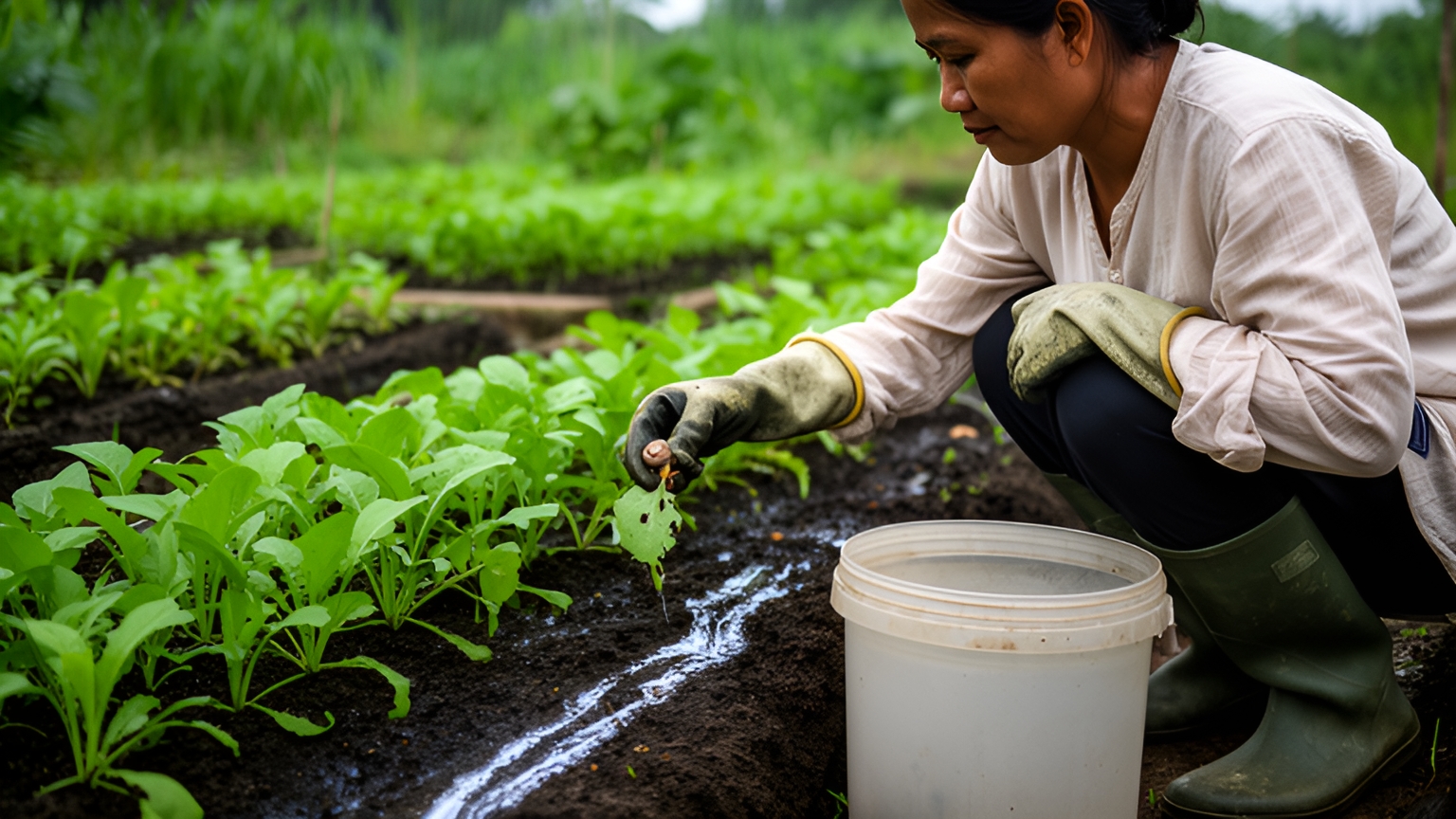
Heavy rain is the time when slugs and snails do the most damage in home gardens. One wet night can leave a bed of young mustard greens, pak choi, lettuce or morning glory (kangkong) with only stems left. This guide shows you how to stop slugs and snails eating seedlings using simple, low-cost methods: picking them by hand at night, beer or rice-water traps, crushed eggshell and ash barriers, and garden habits that work well with ducks. None of these methods is perfect alone. Used together, they can cut the damage a lot.
Why heavy rain brings slugs and snails out
Slugs and snails need moisture to move and feed. In dry weather they hide under stones, boards and thick leaves. When the rain is heavy and the soil stays wet for days, they come out in large numbers, mostly at night and early in the morning. Young seedlings are soft and close to the ground, so they are easy food.
You can tell slugs and snails are the problem if you see ragged holes in leaves, seedlings cut off at the base, and shiny, silvery trails on soil, pots and leaves. Caterpillars and crickets also eat leaves, so check at night with a torch to be sure.
In many parts of Southeast Asia, including Thailand, Vietnam, the Philippines, Malaysia and Indonesia, the large golden apple snail lives in wet fields and ditches and can move into low, flooded gardens. Garden slugs and small land snails are common almost everywhere. The steps below work for both, but pests, rules and conditions differ by country and place, so ask a local extension officer or an experienced farmer what works in your area.
How to stop slugs and snails eating seedlings: a step-by-step plan
Work through these steps in order. Start picking and trapping right away, then add barriers and better garden habits.
Step 1: Pick them by hand at night
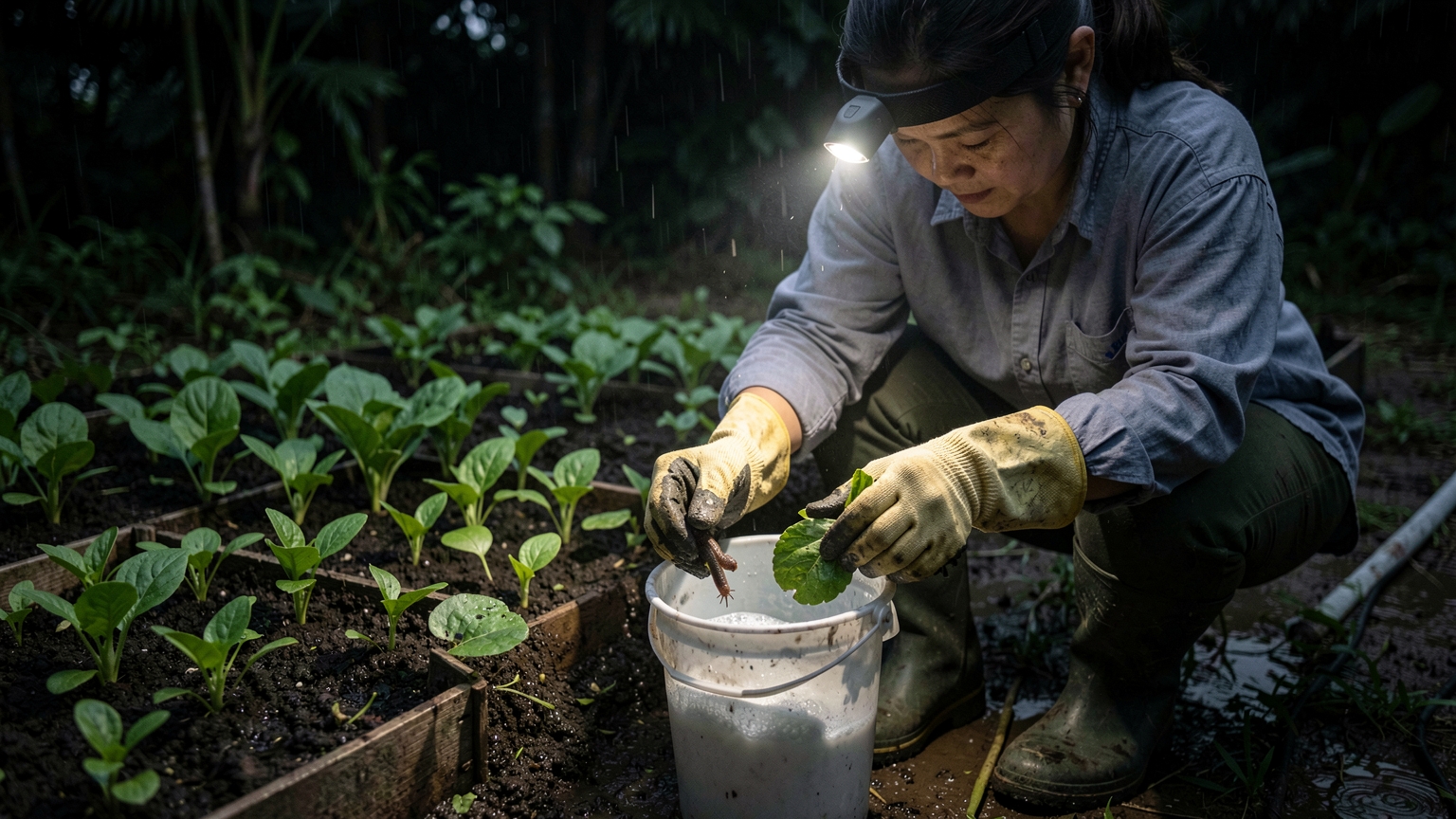
Hand-picking is the cheapest and most direct method. Go out one to three hours after dark, or very early before sunrise, when slugs and snails are feeding.
- Wear rubber or garden gloves. Slugs and snails can carry parasites that can make people sick, so never handle them with bare hands and never eat garden snails raw.
- Wear sturdy rubber boots. Snakes, centipedes and scorpions are also active on wet nights, so watch where you step and use a strong torch or headlamp.
- Carry a bucket with a lid and some salty or soapy water inside.
- Check the undersides of leaves, the base of seedlings, the edges of beds and under pots and boards.
- Drop each slug or snail into the bucket and close the lid.
Do this every night for one to two weeks while the rain is heavy. Numbers usually drop fast. When you finish, bury the dead snails in a deep hole away from your vegetables, or add them to a hot compost heap. Wash your gloves, then wash your hands well with soap.
If you find golden apple snails, also look for their bright pink egg clusters on stems, posts and walls near water. Scrape them into the bucket with a stick. Do not touch them with bare skin.
Step 2: Set beer or rice-water traps
Slugs and snails are drawn to the smell of fermenting liquid. A simple trap catches them while you sleep.
- Use small plastic cups, cut bottles or old tins. Wear gloves if the edges are sharp.
- Dig a hole so the cup sits in the soil with the rim about 1 to 2 cm above the ground. This lets slugs climb in but keeps useful ground beetles out.
- Fill it halfway with cheap beer, or with rice-washing water mixed with a little sugar and left for a day or two to turn sour.
- Cover each trap with a leaf, tile or small board raised on stones. This keeps heavy rain from filling and spilling the trap.
- Place traps every 1 to 2 metres along beds of seedlings.
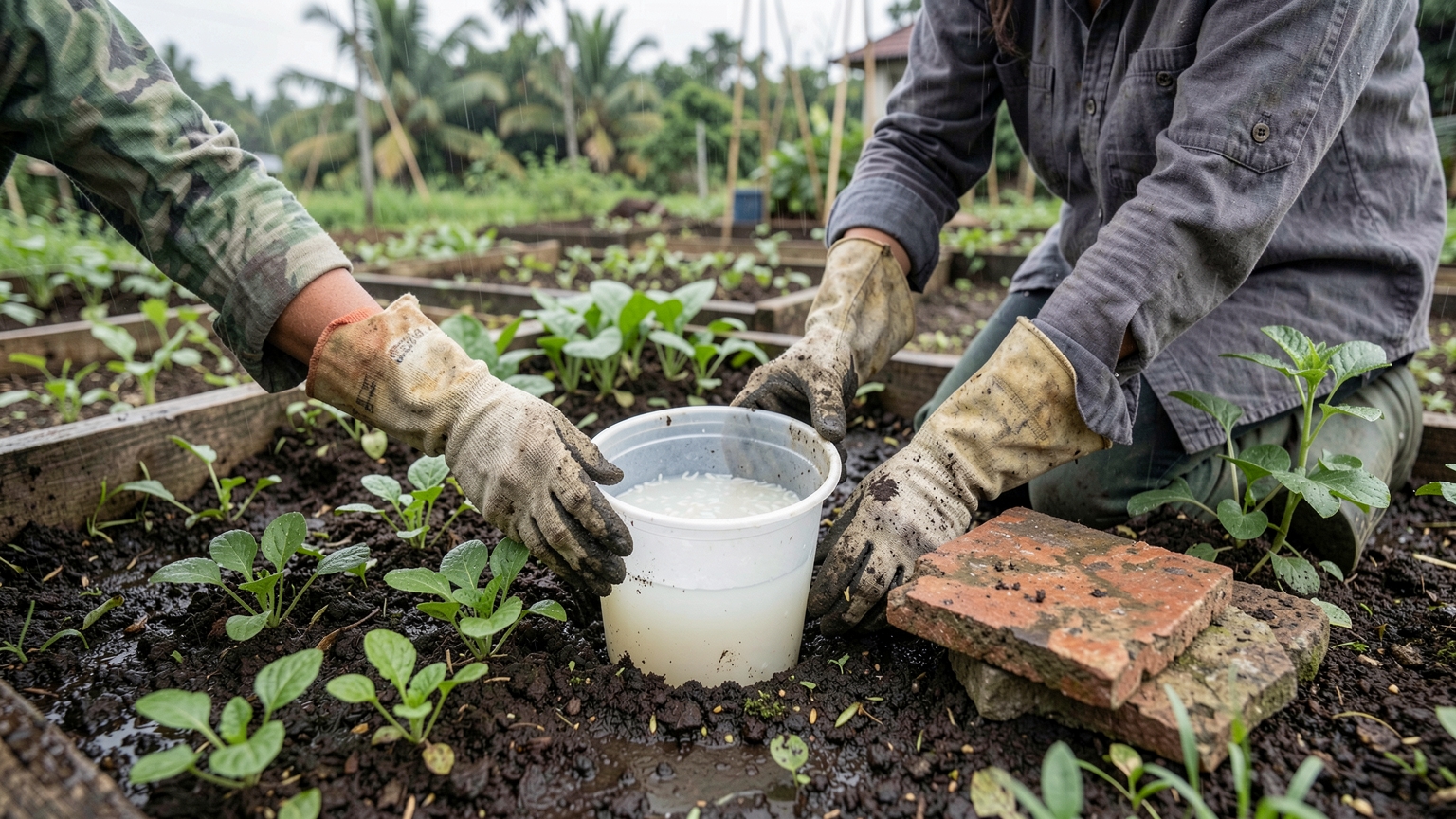
Empty and refill the traps every one or two days, wearing gloves. Rice-water traps are cheaper, but results vary, so test both if you can. Keep traps where small children, pets and ducks cannot drink from them.
Step 3: Build eggshell and ash barriers
Barriers make it harder for slugs and snails to reach young plants. They work best around single seedlings or small beds.
- Save eggshells, rinse them, and dry them in the sun or near the stove. Crush them into small sharp pieces.
- Use only wood ash or rice husk ash from a clean fire. Never use ash from burnt plastic, painted wood or rubbish.
- Wear gloves and a dust mask when handling ash, and keep it away from your eyes. Do not spread it on windy days.
- Make a ring about 5 cm wide around each seedling, or a line along the edge of the bed. Keep ash off the leaves and stems.
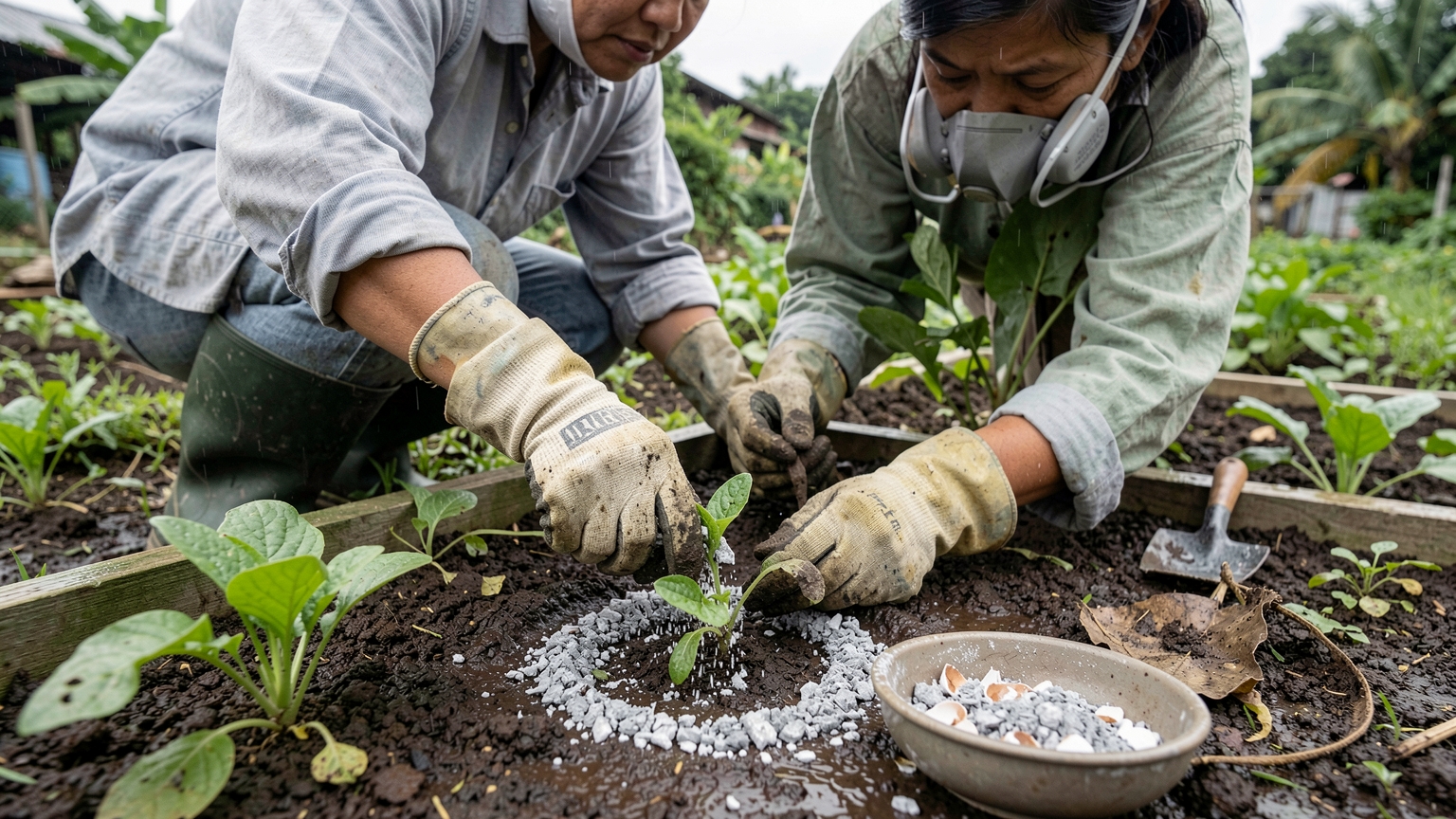
Be honest with yourself about limits. Rain washes ash away and makes it soft, so barriers need to be renewed after each heavy shower. Too much ash can change your soil, so use thin rings, not thick layers. For better protection, place a ring cut from a plastic bottle around each seedling as a collar, pushed a little into the soil.
Step 4: Use ducks the safe and smart way
Ducks love to eat slugs and snails, and many families across the region already keep them. Ducks can help a lot, but they also eat and trample tender seedlings, so plan their visits.
- Fence seedling beds with low netting or bamboo before letting ducks into the garden.
- Let ducks forage between beds of older, stronger plants, along paths and around wet corners where snails hide.
- Bring ducks in for an hour or two in the early morning or late afternoon, when snails are still out.
- Give ducks clean drinking water and a dry place to rest away from flood water.
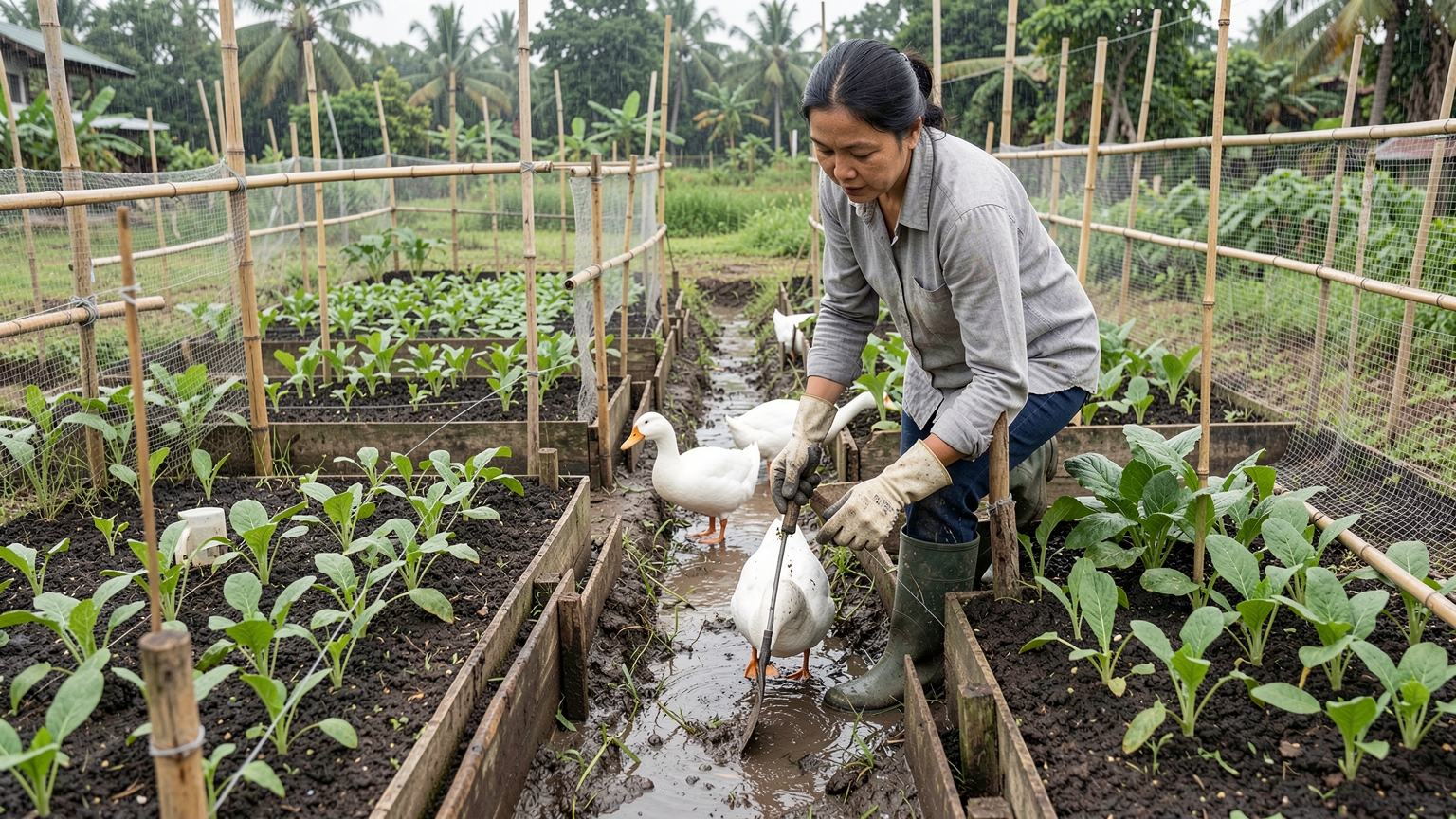
If you use ducks, do not use slug pellets or chemical snail baits anywhere they can reach. Many baits are poisonous to ducks, chickens, dogs and cats. Animal health rules differ by country, so ask a local vet or livestock officer if you are unsure about keeping ducks near food crops.
Garden habits that keep slug and snail numbers down
Small changes make your garden less friendly to slugs and snails in very wet weather.
- Water in the morning, not the evening, when you need to water at all during breaks in the rain.
- Keep grass short and remove weeds, old boards and piles of rubbish near beds.
- Pull thick mulch back a little from the base of seedlings, where slugs like to hide.
- Grow seedlings in trays or pots on a raised table, then plant them out when they are bigger and tougher.
- Use raised beds so water drains away fast and soil does not stay soaked.
- Plant a few extra seedlings, so some losses do not ruin your harvest.
You can also leave a board or a large banana leaf on the ground as a hiding place. Check under it each morning, wearing gloves, and remove the slugs and snails gathered there.
Safety and when to ask for help
Keep safety simple. Wear gloves for every step, wear boots outside at night, and wash your hands after touching snails, traps or ash. Stay out of fast-moving flood water, even shallow water, and do not walk near fallen power lines or flooded electrical sockets. If your garden floods badly, wait until the water goes down before you go in.
If damage keeps going after two or three weeks of these steps, or golden apple snails are coming in from nearby fields, talk to your local agriculture or extension office. They can tell you about local rules and safe control methods for your area. Costs for these methods are low, often from nothing to a few US dollars for beer, cups and netting, but prices vary by country. With steady work, your seedlings and leafy greens have a much better chance of growing through the rain.